Special Relativity
Revolutionized concepts of space, time, and simultaneity; introduced mass–energy equivalence.
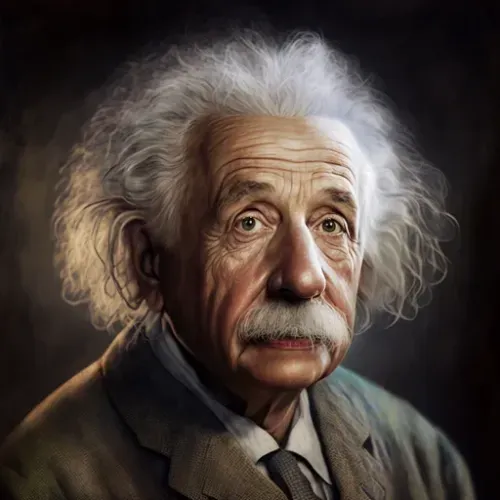
1879–1955
Physicist • Thinker • Humanist
ألبرت أينشتاين (Albert Einstein) وُلِد في أولم، ألمانيا، وأظهر فضولًا مبكرًا حول الطبيعة والتفكير المجرد، على الرغم من أن مسيرته غير التقليدية في المدرسة والمعهد الفيدرالي السويسري كانت تخفي الثورة التي سيشعلها لاحقًا. بعد سنوات كموظف براءات اختراع في برن، نشر سلسلة من الأوراق في عام 1905—سنة المعجزات الخاصة به—التي غيرت فهم الضوء والمادة والطاقة.
وحدت النسبية الخاصة الزمان والمكان وأثبتت أن سرعة الضوء ثابتة لجميع المراقبين، مما أدى إلى المعادلة الشهيرة E=mc². أعادت النسبية العامة، التي اكتملت في عام 1915، صياغة الجاذبية ليس كقوة عبر الفضاء الفارغ ولكن كالتقوس في الزمكان الناتج عن الكتلة والطاقة. تنبأت النظرية بظواهر مثل انحناء ضوء النجوم والموجات الجاذبية، التي تم تأكيدها لاحقًا بالملاحظة.
حصل على جائزة نوبل في عام 1921 لشرحه تأثير الكهروضوئية، وساعد أينشتاين أيضًا في وضع أسس نظرية الكم بينما ناقش تفسيرها بشكل مشهور. كان مناهضًا للحرب وحذر لاحقًا من خطر الأسلحة النووية، هاجر إلى الولايات المتحدة وقضى عقوده الأخيرة في معهد الدراسات المتقدمة، ساعيًا نحو نظرية مجال موحدة ومدافعًا عن حقوق الإنسان والتعاون الدولي.
محطات بارزة في حياة هذا الشخص وإرثه
1879
Born to a middle-class Jewish family in the German Empire.
1905
Published papers on the photoelectric effect, Brownian motion, and special relativity.
1915
Presented field equations describing gravity as spacetime curvature.
1921
Awarded for services to theoretical physics, especially the photoelectric effect.
1955
Died in New Jersey, leaving a legacy as the twentieth century's emblem of scientific genius.
معالم تحدد مساهمة هذا الشخص في التاريخ
Revolutionized concepts of space, time, and simultaneity; introduced mass–energy equivalence.
Provided a new theory of gravitation, predicting black holes, lensing, and expanding cosmos.
Honored for the photoelectric effect, crucial to quantum theory and modern electronics.
Equations and insights that underpin modern cosmology, GPS technology, and astrophysics.
تفاصيل بارزة عن هذه الشخصية
كيف شكّل هذا الشخص العالم الذي ورثناه
لم يحقق أينشتاين تقدمًا في الفيزياء فحسب، بل غير أيضًا كيف تتخيل الإنسانية الكون. دمرت النسبية الفضاء والزمن المطلقين، بينما فتحت مساهماته في نظرية الكم عصر الذرة. جعلت شهرته العلم موضوعًا عامًا للنقاش، وأظهرت صوته الأخلاقي حول الحرب والعنصرية والأسلحة النووية أن الإنجاز الفكري يحمل مسؤولية أخلاقية. اليوم، يتم اختبار نظرياته يوميًا في مسرعات الجسيمات، والتلسكوبات، والأقمار الصناعية للملاحة العالمية.
تأثير دائم يمتد عبر الأجيال
Einstein did more than advance physics—he changed how humanity imagines the universe. Relativity dismantled absolute space and time, while his quantum contributions opened the atomic age. His celebrity made science a public conversation, and his moral voice on war, racism, and nuclear weapons showed that intellectual achievement carries ethical responsibility. Today his theories are tested daily in particle accelerators, telescopes, and the satellites of global navigation. Death in Princeton (1955) remains a defining moment in Albert Einstein's enduring reputation.
ملفات أخرى من نفس العصر أو المجال
موارد تعليمية منتقاة للدراسة المتعمقة