Sherlock Holmes Canon
Created literature's most famous consulting detective and his chronicler, Dr John Watson.
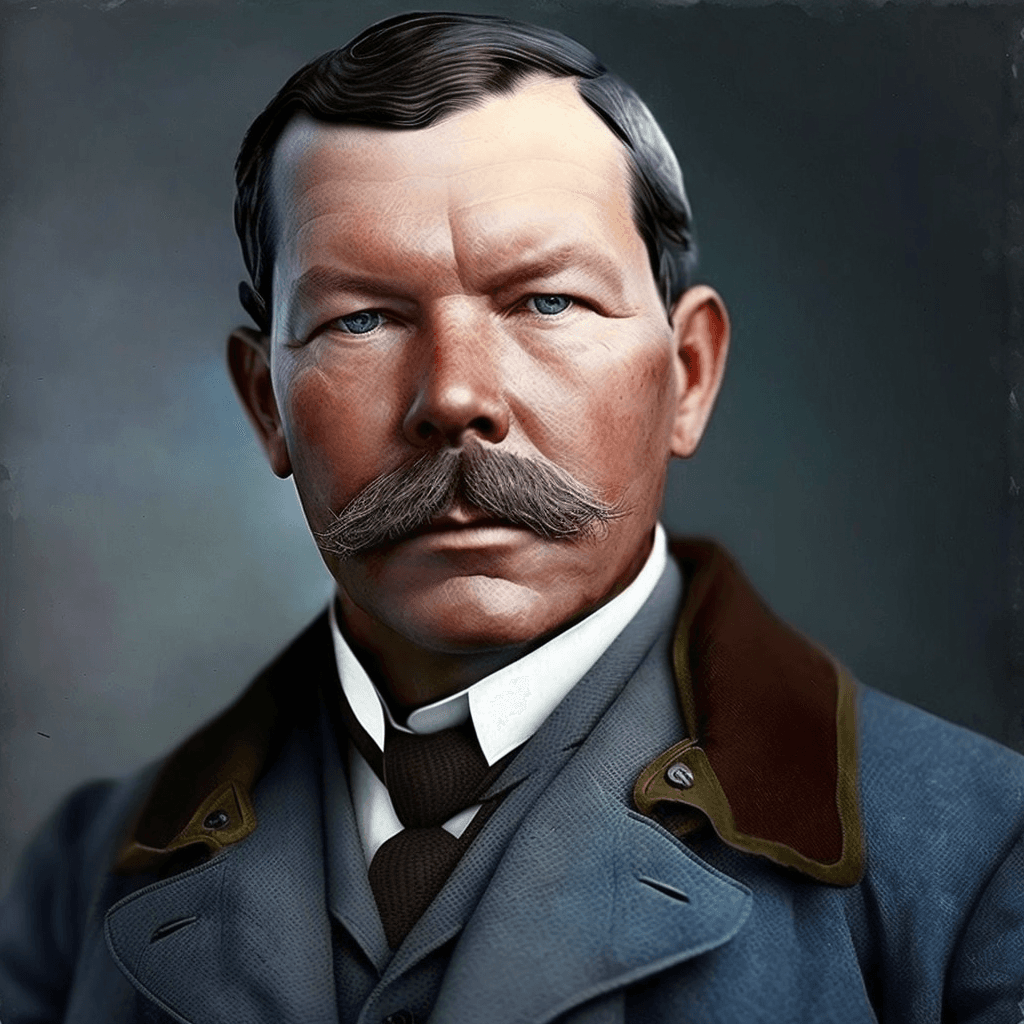
1859–1930
Author • Creator of Sherlock Holmes
Arthur Ignatius Conan Doyle was born on 22 May 1859 in Edinburgh to an artistically talented but financially unstable family; his father Charles struggled with alcoholism and institutionalization, shaping Doyle's lifelong concern with respectability and provision. He studied medicine at the University of Edinburgh under Joseph Bell, whose diagnostic observation from small clues later inspired Sherlock Holmes's methods of reasoning. Student poverty led Doyle to work as a medical assistant on Arctic whaling voyage Hope in 1880 and later as ship's surgeon aboard SS Mayumba to West Africa, adventures that supplied material for sea tales and medical realism. After establishing a general practice in Southsea with modest success, he began publishing fiction in magazines while waiting for patients, treating writing as supplementary income that soon threatened to overshadow medicine. A Study in Scarlet, introducing Holmes and Dr John Watson, appeared in Beeton's Christmas Annual in 1887, pairing forensic logic with vivid London atmosphere and American Western subplot. Doyle modeled Holmes on Bell but amplified eccentricity, cocaine use, violin playing, and contempt for mundane social niceties, creating a character readers found simultaneously admirable and unsettling. Edinburgh's dual identity—Presbyterian sobriety and Gothic Old Town—permeates his atmospherics of fog, gaslight, and moral ambiguity. Marriage to Louisa Hawkins and later relationship with Jean Leckie, whom he married after Louisa's death, reflected Victorian domestic complexities he generally kept private in public commentary. By the early 1890s Holmes's popularity began constraining Doyle's desire to be remembered for historical fiction and serious literary work.
Doyle wrote dozens of Holmes short stories and four novels, including The Sign of the Four, The Hound of the Baskervilles, and The Valley of Fear, building a consulting detective whose deductive rhetoric captivated readers worldwide. Holmes's pipe, deerstalker hat—popularized by Sidney Paget's illustrations—and address at 221B Baker Street became cultural icons even when Doyle himself grew weary of the detective's commercial dominance. In The Final Problem Doyle attempted to kill Holmes off at the Reichenbach Falls struggle with Professor Moriarty, only to revive him under intense public pressure after the outcry of readers and publishers. The Hound of the Baskervilles, set before Holmes's return, demonstrated Doyle could sustain gothic terror within rationalist framework, influencing horror and mystery hybrids. Beyond Holmes, Doyle wrote historical romances such as The White Company, science fiction including The Lost World featuring Professor Challenger, and poetry on war and empire. He served as a physician in the Boer War, wrote influential pamphlets defending British conduct, and was knighted partly for propaganda work rather than solely for fiction. Sport fascinated him: he played cricket, supported boxing, and later championed the Olympics; he also attempted unsuccessfully to stand for Parliament as a Unionist candidate. Serial publication in Strand Magazine tied Holmes to illustrated mass culture, training readers worldwide to expect monthly installments and cliffhanger resolutions. Doyle's prose favored clear exposition of clues, fair-play mystery conventions, and Watson's loyal narration, templates emulated from Agatha Christie to modern police procedurals.
Conan Doyle also pursued public causes with conviction, campaigning to overturn the conviction of George Edalji in a racially charged miscarriage of justice and defending the innocence of Oscar Slater, a German-born Jew wrongfully accused of murder in Scotland. These efforts used Holmesian publicity tactics—pamphlets, newspaper columns, forensic re-examination—to pressure authorities, anticipating later innocence projects. After personal losses in the First World War, including his son Kingsley, Doyle became a leading voice for Spiritualism, lecturing internationally on communication with the dead and provoking admirers of his rational detective. Photographs of fairies at Cottingley, which Doyle defended in The Coming of the Fairies, later admitted as hoax by participants, damaged his scientific reputation among skeptics. He died on 7 July 1930 in Crowborough, Sussex, but Holmes endured through film, radio, and television adaptations from Basil Rathbone to Benedict Cumberbatch. Conan Doyle's fusion of medical observation, serialized mystery, and urban modernity established conventions—deduction, sidekick narration, consulting detective—that define the genre today. Literary scholars note tension between his empirical fiction and occult commitments, reflecting broader Victorian and Edwardian struggles to reconcile science with grief. Holmes became a global archetype influencing policing narratives, forensic science popularization, and modern fan culture including societies that maintain Baker Street as fictional geography. Doyle's historical novels, though less read now, once anchored his self-image as serious man of letters. His career demonstrates how one author can invent a character so powerful it eclipses everything else he wished to achieve, yet that character reshaped how cultures imagine intelligence itself. Medical historians compare Holmes's diagnostic rhetoric with emerging bacteriology and forensic pathology of the 1890s, noting Doyle's effort to keep stories scientifically plausible. Baker Street Irregulars literary society, founded 1934, treats Holmes as living text through pastiche and scholarly annotation. Doyle's Arctic and African travel writing, though less famous than detective fiction, documents imperial medicine and adventure tourism of his generation. Adaptations continue to test whether Holmes's rationalism can coexist with modern special effects without losing deductive charm.
1859 — Born in Edinburgh. Born in Scotland and later studied medicine at the University of Edinburgh.
1887 — A Study in Scarlet. Published the first Sherlock Holmes novel in Beeton's Christmas Annual.
1893 — The Final Problem. Seemingly killed Holmes at the Reichenbach Falls, provoking reader outcry.
1902 — The Hound of the Baskervilles. Released a novel set before Holmes's return that renewed the series' popularity.
1930 — Death in Crowborough. Died in Sussex after decades of literary production and public advocacy.
Key moments across this figure's life and legacy
1859
Born in Scotland and later studied medicine at the University of Edinburgh.
1887
Published the first Sherlock Holmes novel in Beeton's Christmas Annual.
1893
Seemingly killed Holmes at the Reichenbach Falls, provoking reader outcry.
1902
Released a novel set before Holmes's return that renewed the series' popularity.
1930
Died in Sussex after decades of literary production and public advocacy.
Landmarks that define this figure's contribution to history
Created literature's most famous consulting detective and his chronicler, Dr John Watson.
Established forensic reasoning, clue placement, and serial mystery structure emulated worldwide.
Authored an influential science fiction novel introducing Professor Challenger and prehistoric adventure.
Used public stature to challenge wrongful convictions in high-profile Edwardian legal cases.
Notable details about this historical figure
How this figure shaped the world we inherit
Conan Doyle taught mass audiences to associate intelligence with observation, evidence, and methodical inference. Holmes became a global archetype influencing policing narratives, forensic science popularization, and modern fan culture. Even Doyle's later Spiritualism underscores how the same author who championed rational detection also reflected Victorian and Edwardian struggles to reconcile science with grief and the unknown.
Enduring influence across generations
Conan Doyle taught mass audiences to associate intelligence with observation, evidence, and methodical inference. Holmes became a global archetype influencing policing narratives, forensic science popularization, and modern fan culture. Even Doyle's later Spiritualism underscores how the same author who championed rational detection also reflected Victorian and Edwardian struggles to reconcile science with grief and the unknown. Death in Crowborough (1930) remains a defining moment in Arthur Conan Doyle's enduring reputation.
Explore more profiles from the same era or field
Curated educational resources for further study
Start a private conversation and explore their wisdom through Historical Collection AI.