1972 World Championship
Defeated Boris Spassky in Reykjavik to become the eleventh official world chess champion.
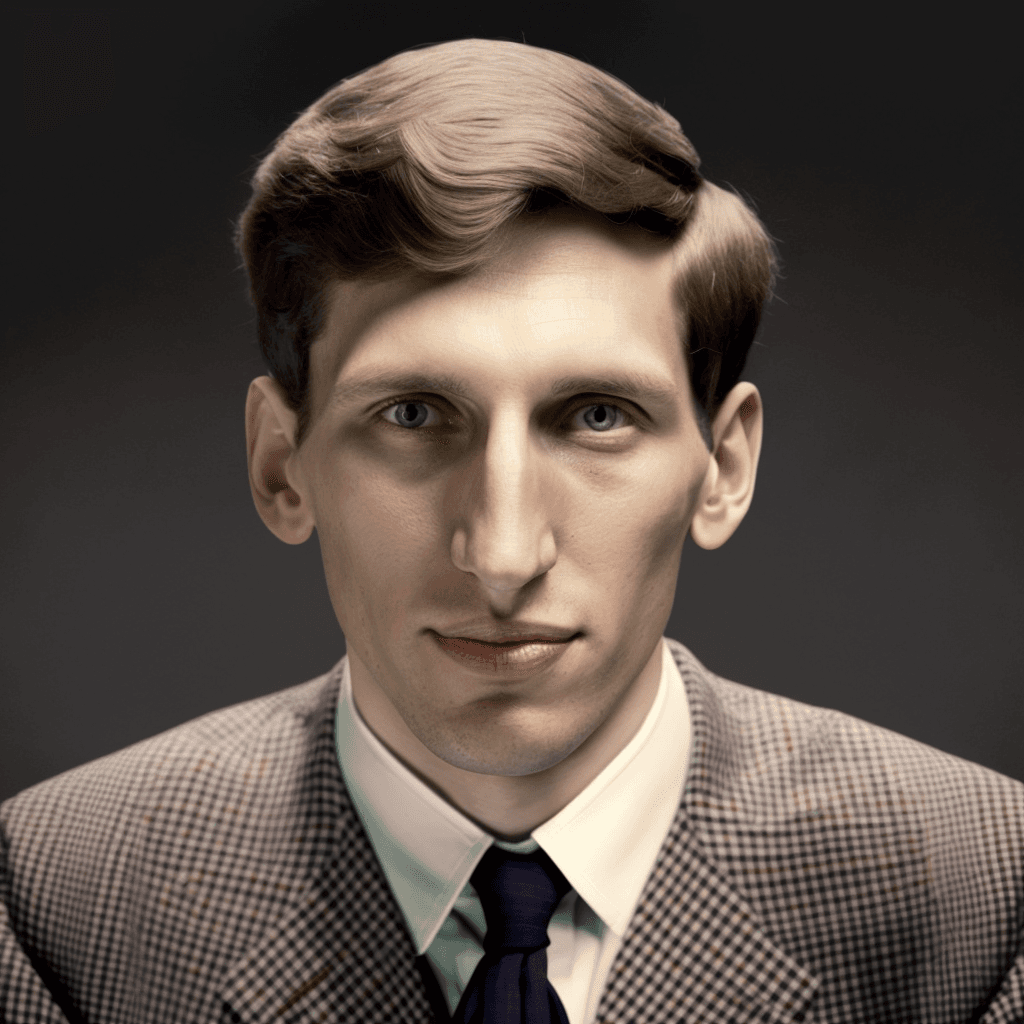
1943–2008
Chess Grandmaster • World Champion
Robert James Fischer was born on 9 March 1943 in Chicago, Illinois, and raised primarily in Brooklyn, New York, by his mother Regina, a nurse and political activist whose ambiguous paternity narratives later fueled Fischer's conspiratorial preoccupations. He learned chess at six from a set purchased cheaply, quickly surpassing adult players at Brooklyn Chess Club and Washington Square Park hustling tables. By thirteen he won the U.S. Junior Championship; at fourteen he became U.S. champion, the youngest to that date, signaling a prodigy whose intensity bordered on monomania. Fischer studied Soviet chess literature voraciously, mastering openings with analytical depth that impressed coaches yet isolated him socially from peers. His aggressive, precise style rewrote opening theory, especially in Sicilian and King's Indian defenses, producing innovations still named Fischer variations in databases. Personality traits emerged early: perfectionism, suspicion of officials, demands for optimal conditions, and abrupt withdrawals when arrangements displeased him. Cold War context framed American chess as culturally marginal until Fischer made it front-page news; U.S. federation struggled to fund his European appearances. He rejected school norms, dropped out of Erasmus Hall High School, and lived modestly with mother or in cheap lodgings while chess consumed waking hours. Teachers and journalists described a youth both brilliant and brittle, capable of courtesy yet prone to insult when feeling disrespected.
Fischer dominated U.S. championships throughout the 1960s but grew increasingly erratic, forfeiting events, accusing organizers of conspiracy, and demanding strict lighting and camera rules. His 1972 world championship match against Soviet titleholder Boris Spassky in Reykjavik, Iceland, became a global media spectacle framed as individual American genius versus Soviet chess machinery subsidized by state sports programs. After early losses and forfeitures over cameras and noise, Fischer won 12.5–8.5, ending twenty-four years of Soviet dominance and triggering chess boom in the West. Television coverage, Fischer's reclusiveness, and geopolitical symbolism elevated the match beyond sport into cultural history studied by Cold War scholars. My 60 Memorable Games, published 1969, remains classic chess literature, praised for clarity, fighting spirit, and honest annotation including losses. Fischer never defended his title; FIDE accepted his 1975 forfeiture when negotiations with challenger Anatoly Karpov over match format collapsed, ending official reign without a board defeat. He disappeared from competitive chess, resurfacing sporadically with escalating antisemitic rhetoric despite Jewish heritage on mother's side, a contradiction psychologists and biographers analyze extensively. 1992 rematch against Spassky in Yugoslavia violated U.N. sanctions, producing U.S. arrest warrant and years of exile. Radio interviews after September 11, 2001 praised attacks and spread hate speech, provoking international condemnation and ending most remaining sympathies.
Fischer died on 17 January 2008 in Reykjavik, where Iceland had granted him residency and citizenship after detainment in Japan, a final irony that the city of his triumph sheltered his last years. His estate disputes and paternity claims continued posthumously in courts. Fischer's 1972 triumph made chess a mass spectator sport, encouraged school programs, and inspired computer chess research culminating in Deep Blue and engines surpassing human champions. Games databases preserve his sharp middle-game attacks studied by generations of players from beginners to grandmasters. Yet commemoration remains contested: chess federations balance honoring sporting achievement against rejecting bigotry in later statements and online forums. Documentaries and dramas revisit Reykjavik match while grappling with mental illness hypotheses and ideological radicalization. Historians note Fischer's role popularizing professional chess economics—prize funds, sponsorship, televised boards—even as he personally distrusted commerce. Women's and global chess diversity movements cite his cultural shadow while rejecting his prejudices. Fischer's career divides opinion: unrivaled talent and popularization on one side, paranoia and bigotry on the other. The 1972 match nonetheless transformed chess into a global media event and inspired generations of players and computer scientists who built engines analyzing positions Fischer once dominated. Chess Olympiad halls display photographs from Reykjavik 1972 alongside engines analyzing positions Fischer once dominated at speeds unimaginable to him. Sports psychologists use his career to discuss perfectionism, isolation, and radicalization in gifted adolescents. Icelandic museums curate exhibits on match diplomacy, tourism boom, and asylum episode as chapter in small-state international relations. School chess clubs still replay his games move by move, teaching tactics while teachers address his later hate speech as cautionary epilogue. Opening theory databases classify hundreds of Fischer variations still played in grandmaster practice and online blitz games. Chess in schools programs use his 1972 match narrative to introduce Cold War history alongside tactical puzzles derived from his published games. Biographers continue releasing archival material on his training regimen and opening preparation, documenting discipline that preceded later withdrawal from competitive play and public controversy. Chess federations today grapple with how to honor his games while condemning hate speech that marred his final decades. Readers and researchers continue to consult biographies, correspondence, and archival collections when reconstructing the context of these achievements. Readers and researchers continue to consult biographies, correspondence, and archival collections when reconstructing the context of these achievements.
1943 — Born in Chicago. Born in Illinois and raised in Brooklyn, New York, learning chess as a child.
1958 — Grandmaster at Fifteen. Achieved grandmaster rank, the youngest to that point in FIDE history.
1972 — Reykjavik Match Victory. Won the world championship against Boris Spassky amid intense Cold War publicity.
1975 — Title Forfeited. Declined to defend against Anatoly Karpov, ending his official reign.
2008 — Death in Iceland. Died in Reykjavik after years in exile and controversy.
Key moments across this figure's life and legacy
1943
Born in Illinois and raised in Brooklyn, New York, learning chess as a child.
1958
Achieved grandmaster rank, the youngest to that point in FIDE history.
1972
Won the world championship against Boris Spassky amid intense Cold War publicity.
1975
Declined to defend against Anatoly Karpov, ending his official reign.
2008
Died in Reykjavik after years in exile and controversy.
Landmarks that define this figure's contribution to history
Defeated Boris Spassky in Reykjavik to become the eleventh official world chess champion.
Earned the grandmaster title at fifteen, setting a record that stood for decades.
Published a highly influential collection of annotated games admired for instructional depth.
Revitalized systems such as the Fischer variation in the King's Indian and Sicilian defenses.
Notable details about this historical figure
How this figure shaped the world we inherit
Fischer's 1972 triumph made chess a global media event and encouraged state investment in Soviet and Western chess programs alike. His games advanced theory and inspired computer analysis that eventually produced superhuman engines. Yet his later hate speech complicates commemoration, reminding historians that athletic genius can coexist with destructive ideology—a tension chess communities continue to navigate.
Enduring influence across generations
Fischer's 1972 triumph made chess a global media event and encouraged state investment in Soviet and Western chess programs alike. His games advanced theory and inspired computer analysis that eventually produced superhuman engines. Yet his later hate speech complicates commemoration, reminding historians that athletic genius can coexist with destructive ideology—a tension chess communities continue to navigate. Death in Iceland (2008) remains a defining moment in Bobby Fischer's enduring reputation.
Explore more profiles from the same era or field
Curated educational resources for further study
Start a private conversation and explore their wisdom through Historical Collection AI.