Secret Recipe Development
Perfected pressure-fried chicken with a proprietary spice blend that defined the KFC product.
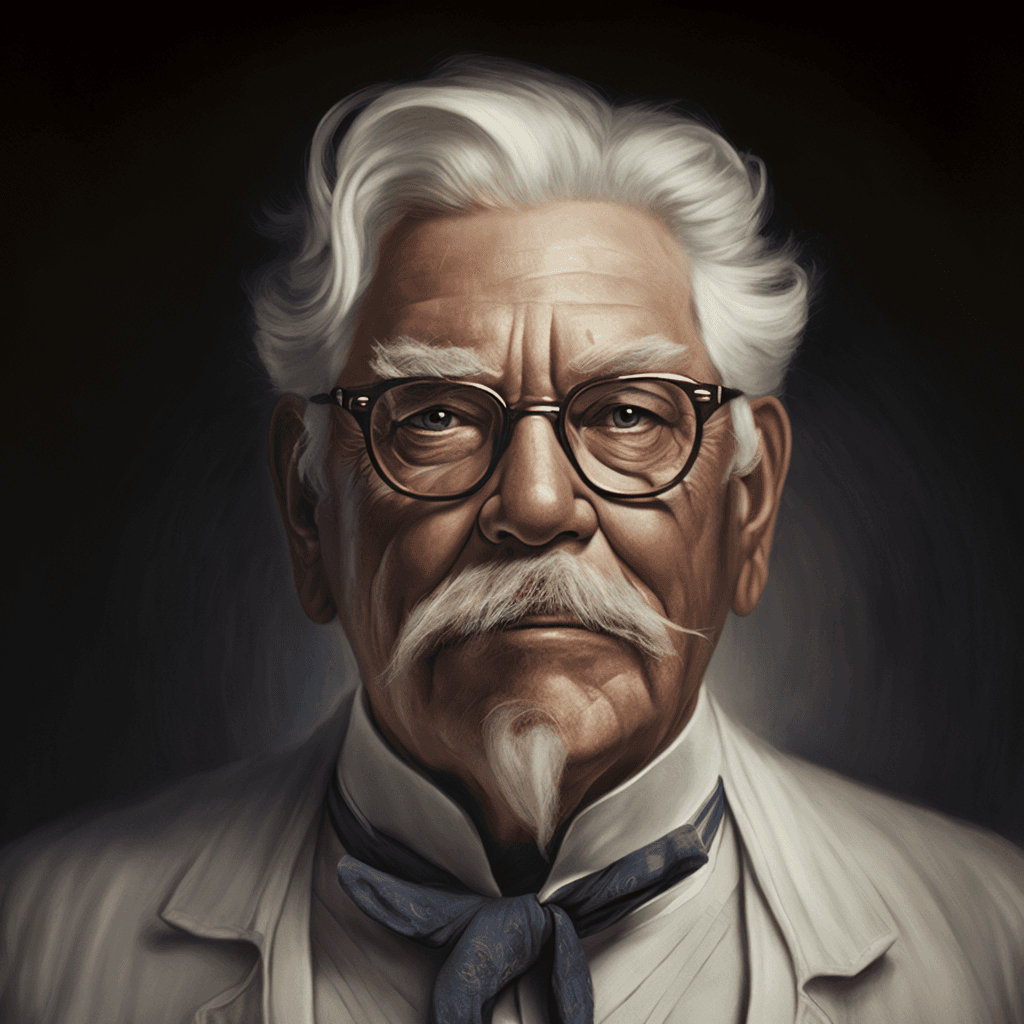
1890–1980
Entrepreneur • Founder • Brand Builder
Harland David Sanders was born in 1890 near Henryville, Indiana, and shouldered adult responsibilities early after his father's death. He worked as a farmhand, steamboat pilot, insurance salesman, and service-station operator before his cooking—not his military rank, which came from Kentucky's honorary militia—became his livelihood. At a Shell station in Corbin, Kentucky, he served travelers fried chicken seasoned with a blend of eleven herbs and spices he perfected through trial and error.
Sanders received an honorary Kentucky colonel title and turned his café into a modest restaurant empire along U.S. Route 25. When a new interstate bypassed Corbin in the 1950s, he auctioned the property at age sixty-five and took to the road with a pressure fryer and a pocketful of spice contracts. His breakthrough came when he franchised the recipe rather than operating every store himself, collecting a nickel per chicken from partners who adopted his standards.
In 1964 Sanders sold the American business to investors led by John Y. Brown Jr., though he remained the brand's white-suited ambassador for years. KFC expanded internationally, making fried chicken a standardized fast-food category worldwide. Sanders died in Louisville in 1980, having turned late-life adversity into one of the twentieth century's most recognizable food brands.
1930 — Corbin Service Station. Opened a Shell station in Kentucky where he first served meals to travelers.
1939 — Pressure Fryer Adoption. Introduced pressure cooking to prepare chicken faster without sacrificing moisture.
1952 — First Franchise. Signed Pete Harman in Salt Lake City as the first official KFC franchisee.
1964 — Sale of KFC. Sold the U.S. company for $2 million while retaining Canadian operations and public role.
1980 — Death in Louisville. Died at ninety after pneumonia; buried in Cave Hill Cemetery in his signature white suit.
Key moments across this figure's life and legacy
1930
Opened a Shell station in Kentucky where he first served meals to travelers.
1939
Introduced pressure cooking to prepare chicken faster without sacrificing moisture.
1952
Signed Pete Harman in Salt Lake City as the first official KFC franchisee.
1964
Sold the U.S. company for $2 million while retaining Canadian operations and public role.
1980
Died at ninety after pneumonia; buried in Cave Hill Cemetery in his signature white suit.
Landmarks that define this figure's contribution to history
Perfected pressure-fried chicken with a proprietary spice blend that defined the KFC product.
Pioneered recipe franchising that let independent operators scale the brand rapidly.
Became his own company's living logo, appearing in advertising well into his eighties.
Notable details about this historical figure
How this figure shaped the world we inherit
Colonel Sanders helped invent modern fast-food franchising by separating recipe ownership from restaurant operation. KFC carried American roadside cuisine into Asia, the Middle East, and beyond, demonstrating how personality-driven marketing and standardized recipes could globalize regional cooking. His rags-to-riches story became a staple of entrepreneurial mythology.
Enduring influence across generations
Colonel Sanders helped invent modern fast-food franchising by separating recipe ownership from restaurant operation. KFC carried American roadside cuisine into Asia, the Middle East, and beyond, demonstrating how personality-driven marketing and standardized recipes could globalize regional cooking. His rags-to-riches story became a staple of entrepreneurial mythology. Death in Louisville (1980) remains a defining moment in Colonel Sanders's enduring reputation.
Explore more profiles from the same era or field
Curated educational resources for further study
Start a private conversation and explore their wisdom through Historical Collection AI.