Concept Album Pioneer
Capitol LPs such as In the Wee Small Hours unified mood and song selection as artistic programs.
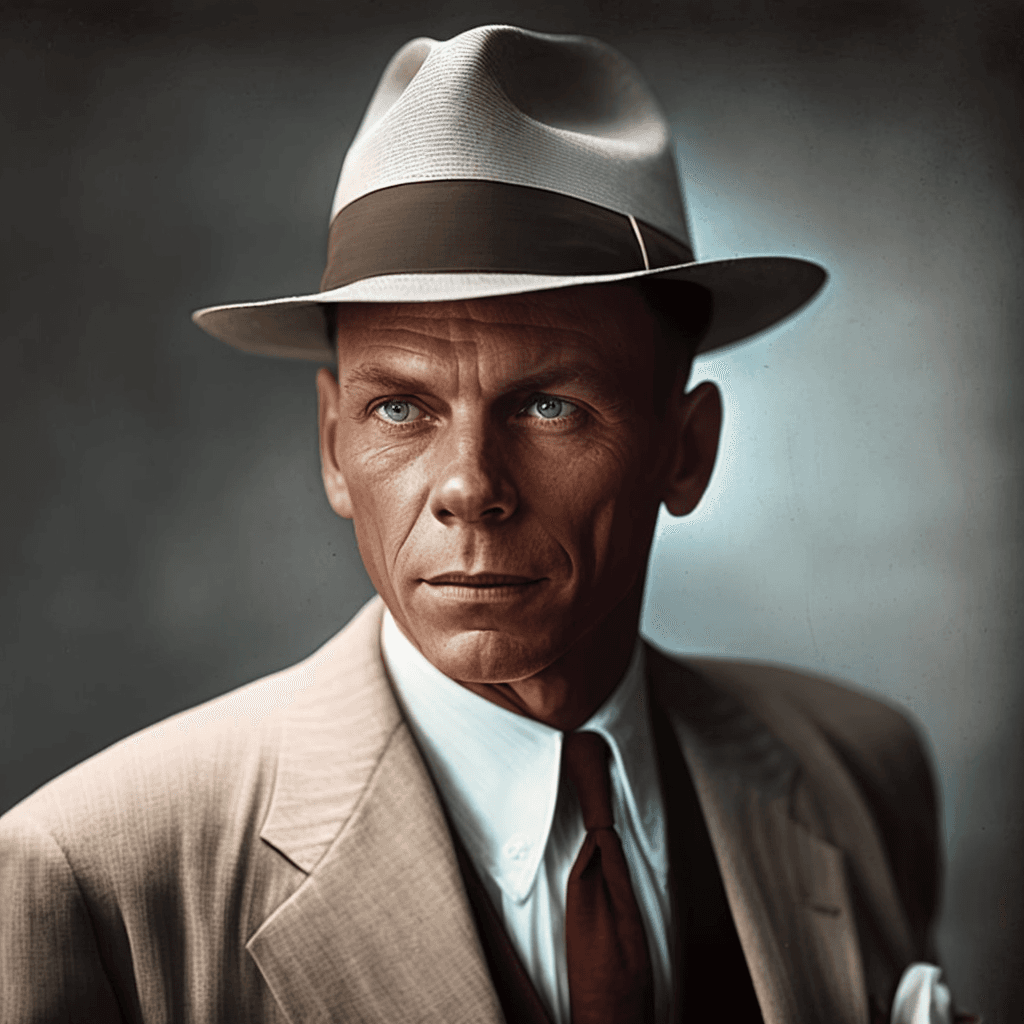
1915–1998
Singer • Entertainer • Cultural Icon
Francis Albert Sinatra was born in 1915 in Hoboken, New Jersey, the only child of Italian immigrant parents. He sang with local bands until Harry James and then Tommy Dorsey gave him national exposure in the big-band era of the early 1940s. Sinatra's thin frame and blue eyes drew swooning crowds—bobby-soxers who transformed pop singing from band feature to solo star vehicle.
After leaving Dorsey in 1942, Sinatra conquered radio, Columbia Records, and eventually Hollywood, winning an Academy Award for From Here to Eternity in 1953 when many had written him off. The Capitol Records years with arranger Nelson Riddle produced concept albums such as In the Wee Small Hours and Songs for Swingin' Lovers!, elevating the LP from singles collection to artistic statement. His voice— relaxed timing, flawless breath control, emotional intimacy— became the benchmark against which popular singers were measured.
Sinatra also co-founded Reprise Records, performed at John F. Kennedy's inaugural gala, and maintained complex ties to Las Vegas, organized crime rumors, and Democratic then Republican politics. The Rat Pack persona fused music, comedy, and machismo. He died in Los Angeles in 1998, leaving a catalog that still defines standards from 'My Way' to 'New York, New York' and a model of longevity through reinvention.
1939 — Tommy Dorsey Era. Joined Dorsey's orchestra and learned breath control that shaped his phrasing.
1945 — Columbia Solo Stardom. Dominated charts with hits during the bobby-soxer craze.
1953 — Oscar for Eternity. Revived his career with an Academy Award-winning film performance.
1960 — Rat Pack Peak. Headlined Las Vegas with Dean Martin and Sammy Davis Jr. amid Kennedy-era glamour.
1998 — Death in Los Angeles. Died at eighty-two; funeral drew celebrities and fans outside St. Theresa Catholic Church.
Key moments across this figure's life and legacy
1939
Joined Dorsey's orchestra and learned breath control that shaped his phrasing.
1945
Dominated charts with hits during the bobby-soxer craze.
1953
Revived his career with an Academy Award-winning film performance.
1960
Headlined Las Vegas with Dean Martin and Sammy Davis Jr. amid Kennedy-era glamour.
1998
Died at eighty-two; funeral drew celebrities and fans outside St. Theresa Catholic Church.
Landmarks that define this figure's contribution to history
Capitol LPs such as In the Wee Small Hours unified mood and song selection as artistic programs.
Won Best Supporting Actor for From Here to Eternity, proving crossover stardom.
Founded his own label to control repertoire and royalties at the height of his fame.
Interpretations of Porter, Gershwin, and Rodgers became definitive for mid-century pop.
Notable details about this historical figure
How this figure shaped the world we inherit
Sinatra transformed the pop singer from band ornament to autonomous artist with album-sized ambition. His phrasing influenced jazz vocalists, rock crooners, and hip-hop samplers alike. Offstage, his entourage politics and Vegas glamour mapped the mid-century American fusion of entertainment, ethnicity, and power that later stars from Elvis to Springsteen would navigate in his shadow.
Enduring influence across generations
Sinatra transformed the pop singer from band ornament to autonomous artist with album-sized ambition. His phrasing influenced jazz vocalists, rock crooners, and hip-hop samplers alike. Offstage, his entourage politics and Vegas glamour mapped the mid-century American fusion of entertainment, ethnicity, and power that later stars from Elvis to Springsteen would navigate in his shadow. Death in Los Angeles (1998) remains a defining moment in Frank Sinatra's enduring reputation.
Explore more profiles from the same era or field
Curated educational resources for further study
Start a private conversation and explore their wisdom through Historical Collection AI.