The Call of the Wild
Published the 1903 novel that made Buck the sled dog an icon of survival and instinct.
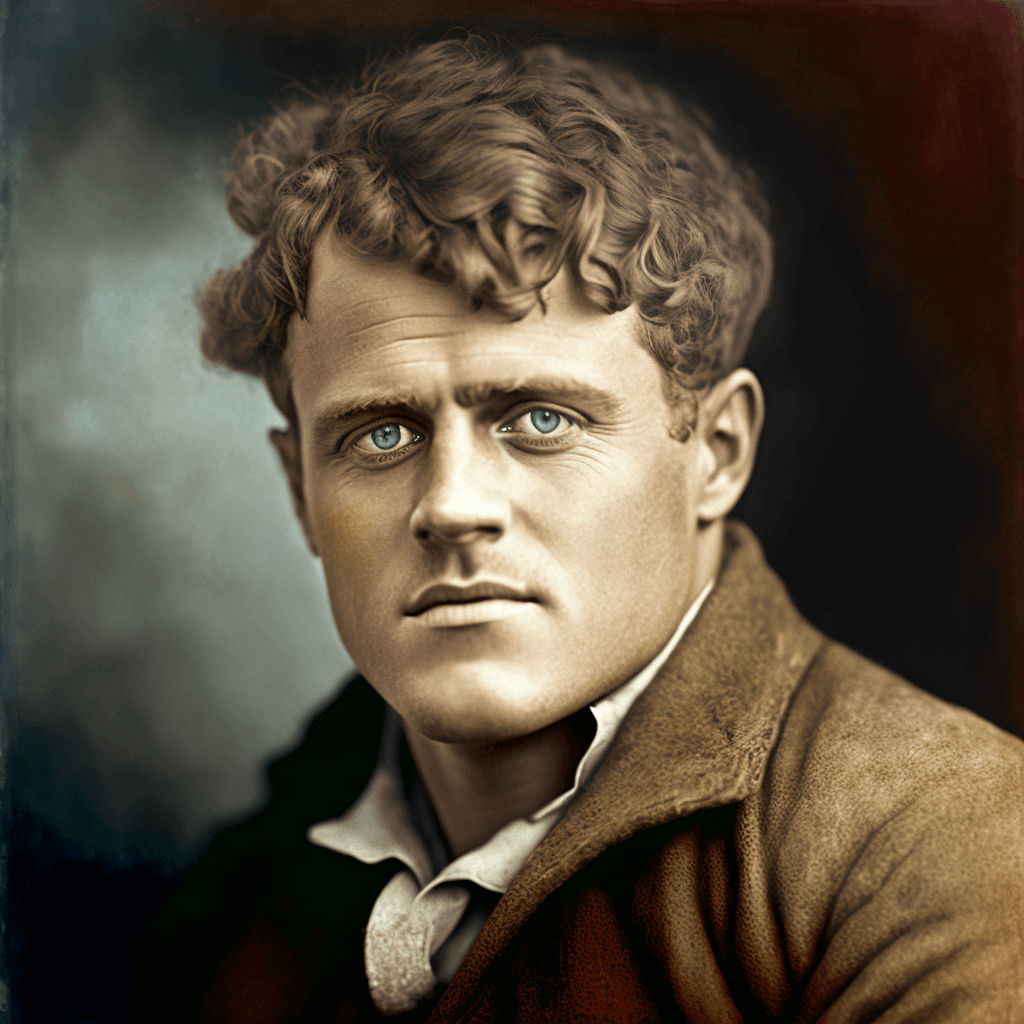
1876–1916
Novelist • Adventurer • Social Observer
Jack London was born John Griffith Chaney in San Francisco in 1876; his mother Flora later married John London, whose surname the boy took. Childhood poverty in Oakland exposed him to waterfront labor, cannery work, and street brawls, experiences he later transmuted into fiction with unusual directness. He educated himself in public libraries, reading Darwin, Marx, and Kipling while sailing on sealing schooners and tramping across America. Determined to escape wage labor, he enrolled at the University of California at Berkeley but left after one semester when money ran out, then joined the Klondike Gold Rush in 1897.
The Yukon winter supplied material for The Call of the Wild and White Fang, stories that anthropomorphized animals yet grounded survival in harsh ecology and market cruelty. London wrote with volcanic productivity—sometimes a thousand words before breakfast—selling stories to magazines that reached millions. The Sea-Wolf explored Nietzschean individualism aboard a sealing ship, while The Iron Heel dystopia imagined oligarchic America decades before genre labels solidified. He built a ranch in Glen Ellen, California, experimented with sustainable agriculture, and reported from the Russo-Japanese War front as a correspondent. Socialist convictions ran through his work, though his taste for adventure and success sometimes sat uneasily beside party orthodoxy.
London burned through earnings on grand houses, ships, and failed schemes, and his health collapsed from kidney disease likely aggravated by alcohol and mercury treatments. He died in 1916 at forty, leaving more than fifty books and a reputation split between literary critics who dismissed his blunt prose and readers who never stopped buying his paperbacks. Translations spread his Yukon myths through Europe, Latin America, and the Soviet Union, where officials praised his class consciousness. Modern environmental writers cite his attention to wilderness ethics, and filmmakers continue adapting The Call of the Wild. London captured an America racing toward industrial power while still measuring manhood against wolves, storms, and open horizon.
1876 — Born in San Francisco. Raised in the Bay Area amid economic instability and manual labor.
1897 — Klondike Gold Rush. Traveled to the Yukon, gathering material for his breakthrough animal stories.
1903 — The Call of the Wild. Published the novel that established international fame.
1908 — Glen Ellen Ranch. Settled on Sonoma County land to pursue scientific farming experiments.
1916 — Death in California. Died at forty on his Beauty Ranch near Glen Ellen.
Key moments across this figure's life and legacy
1876
Raised in the Bay Area amid economic instability and manual labor.
1897
Traveled to the Yukon, gathering material for his breakthrough animal stories.
1903
Published the novel that established international fame.
1908
Settled on Sonoma County land to pursue scientific farming experiments.
1916
Died at forty on his Beauty Ranch near Glen Ellen.
Landmarks that define this figure's contribution to history
Published the 1903 novel that made Buck the sled dog an icon of survival and instinct.
Converted Yukon experience into stories that defined North American adventure literature.
Sustained one of the highest-paid writing careers of his era through relentless output.
Advocated labor rights and criticized industrial inequality in essays and speeches.
Notable details about this historical figure
How this figure shaped the world we inherit
London bridged naturalism, pulp adventure, and political protest at the moment mass-circulation magazines created a new kind of literary celebrity. His Yukon narratives shaped how the world imagined the American frontier, while his socialist essays connected wilderness romance to debates about industrial justice that still echo in environmental and labor writing.
Enduring influence across generations
London bridged naturalism, pulp adventure, and political protest at the moment mass-circulation magazines created a new kind of literary celebrity. His Yukon narratives shaped how the world imagined the American frontier, while his socialist essays connected wilderness romance to debates about industrial justice that still echo in environmental and labor writing. Death in California (1916) remains a defining moment in Jack London's enduring reputation.
Explore more profiles from the same era or field
Curated educational resources for further study
Start a private conversation and explore their wisdom through Historical Collection AI.