Discovery of Polonium and Radium
Isolated new radioactive elements through years of meticulous laboratory work.
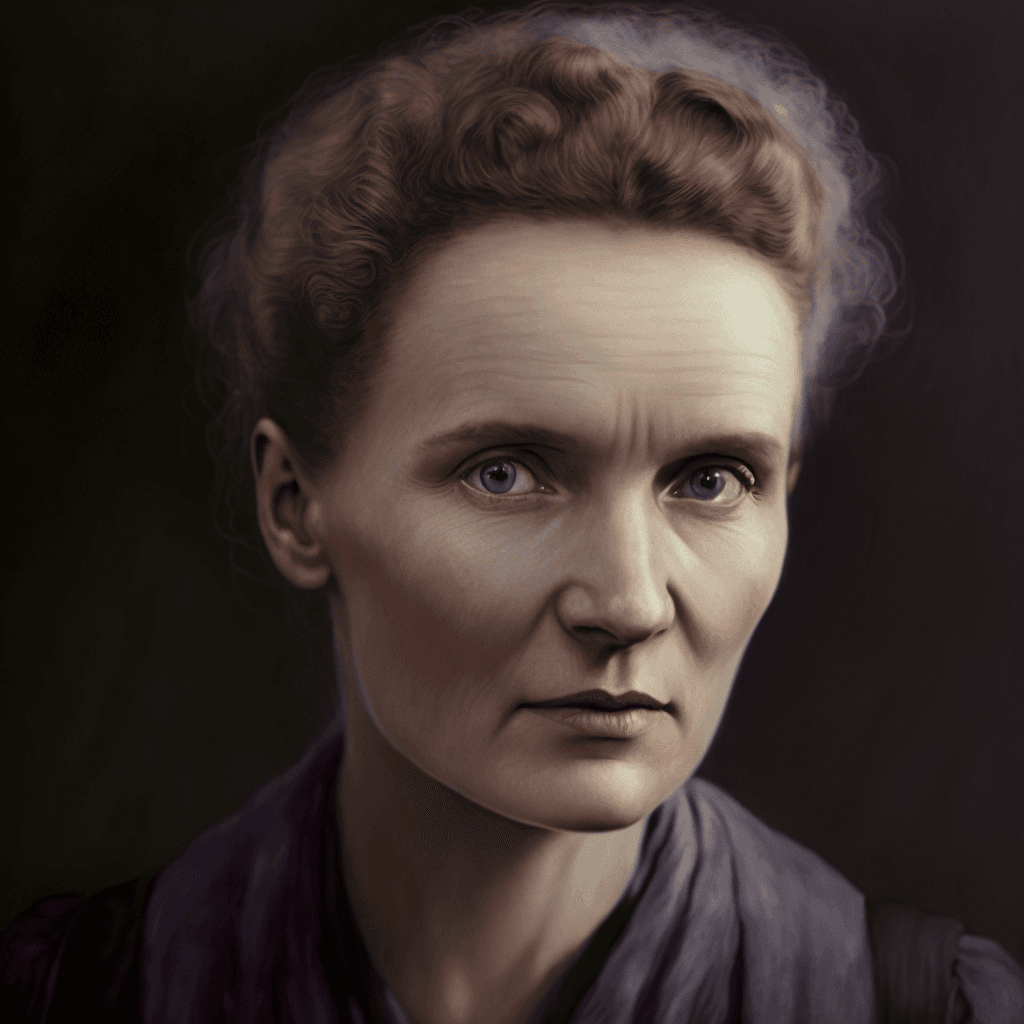
1867–1934
Scientist • Pioneer • Nobel Laureate
Maria Skłodowska was born in Warsaw, in Russian-controlled Poland, where academic opportunities for women were limited. Determined to study science, she moved to Paris, adopted the name Marie, and enrolled at the Sorbonne. There she met Pierre Curie, a physicist who shared her passion for rigorous experiment. Together they investigated invisible rays emitted by uranium, a phenomenon Becquerel had recently discovered.
The Curies coined the term radioactivity and, through painstaking work with pitchblende ore, isolated two new elements: polonium, named for Marie's homeland, and radium. Marie's 1903 Nobel Prize in Physics—shared with Pierre and Becquerel—made her the first woman Nobel laureate. After Pierre's death in 1906, she became the first female professor at the Sorbonne and continued research that earned her a second Nobel, in Chemistry, in 1911.
During World War I, Curie organized mobile X-ray units—petites Curies—to help surgeons locate shrapnel in wounded soldiers. She died in 1934 from aplastic anemia linked to long radiation exposure, before the health risks were fully understood. Her life combined breakthrough discovery, institutional barriers overcome, and service under fire, making her an enduring icon of scientific courage.
1867 — Born in Warsaw. Raised in an educated Polish family under Russian partition.
1891 — Moves to Paris. Studied at the Sorbonne, earning degrees in physics and mathematics.
1898 — Discovers Polonium and Radium. Identified new elements while studying uranium rays with Pierre Curie.
1911 — Second Nobel Prize. Awarded Nobel Prize in Chemistry for isolating radium and studying its properties.
1934 — Death in France. Died from illness linked to radiation; later interred in the Panthéon.
Key moments across this figure's life and legacy
1867
Raised in an educated Polish family under Russian partition.
1891
Studied at the Sorbonne, earning degrees in physics and mathematics.
1898
Identified new elements while studying uranium rays with Pierre Curie.
1911
Awarded Nobel Prize in Chemistry for isolating radium and studying its properties.
1934
Died from illness linked to radiation; later interred in the Panthéon.
Landmarks that define this figure's contribution to history
Isolated new radioactive elements through years of meticulous laboratory work.
Nobel in Physics (1903) and Chemistry (1911)—the first person to win twice.
Advanced understanding of atomic structure and radiation phenomena.
Deployed mobile radiography units that saved countless lives on the battlefield.
Notable details about this historical figure
How this figure shaped the world we inherit
Marie Curie opened the atomic age by showing that atoms were not indivisible and stable but could emit energy and transform. Her prizes shattered gender barriers in science, inspiring generations of women researchers. Radium's medical uses and later nuclear physics trace lineages to her work, while her story remains a touchstone for discussions of ethics, safety, and equity in scientific discovery.
Enduring influence across generations
Marie Curie opened the atomic age by showing that atoms were not indivisible and stable but could emit energy and transform. Her prizes shattered gender barriers in science, inspiring generations of women researchers. Radium's medical uses and later nuclear physics trace lineages to her work, while her story remains a touchstone for discussions of ethics, safety, and equity in scientific discovery. Death in France (1934) remains a defining moment in Marie Curie's enduring reputation.
Explore more profiles from the same era or field
Curated educational resources for further study
Start a private conversation and explore their wisdom through Historical Collection AI.