Co-founding Cubism
Helped invent a new visual grammar of fractured forms and multiple viewpoints.
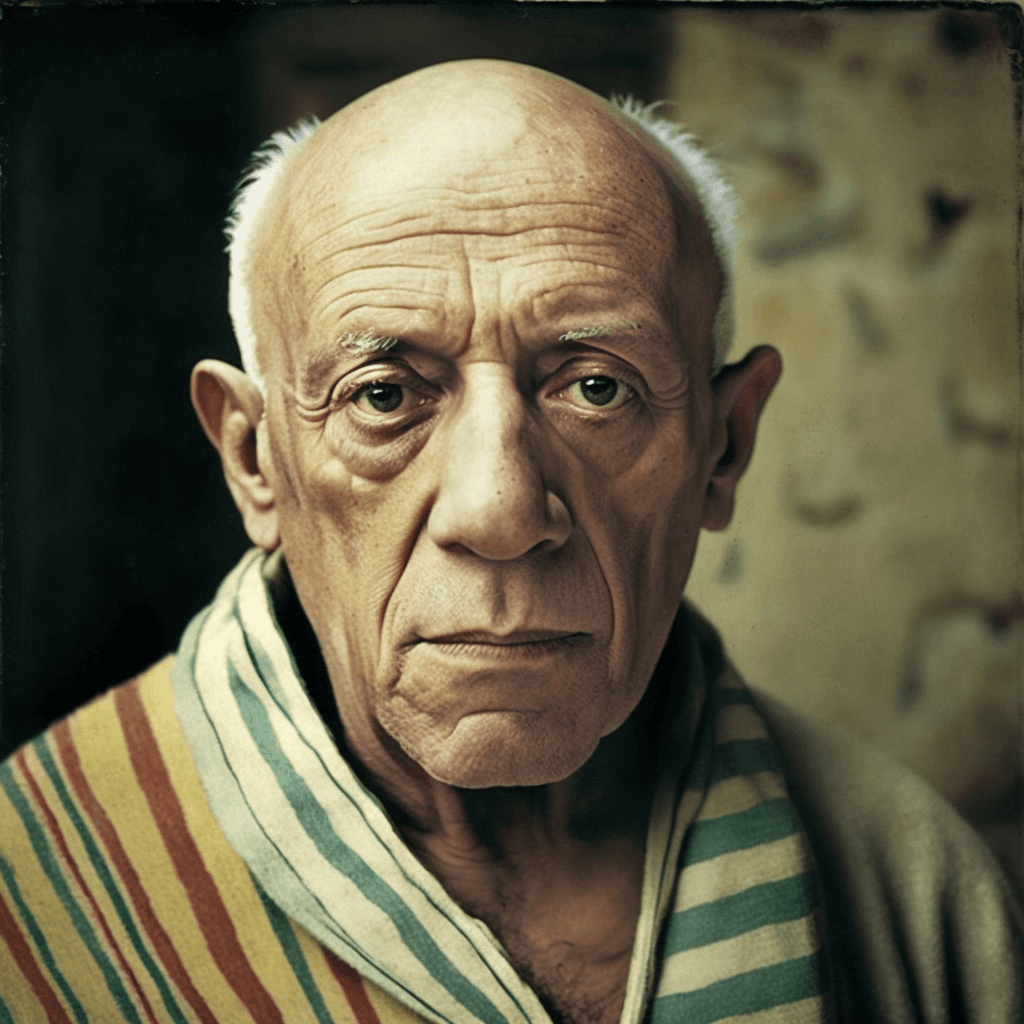
1881-1973
Painter - Innovator - Modernist
Pablo Picasso was born in Malaga, trained early in academic techniques, and moved through Barcelona and Paris as avant-garde circles reshaped European art. His rapid stylistic shifts during the Blue and Rose periods showed unusual range and emotional intensity. By his twenties, he was already a central figure in modernist experimentation.
With Georges Braque, Picasso developed Cubism, fragmenting form and perspective into geometric planes that challenged centuries of representational conventions. Works such as Les Demoiselles d'Avignon and later synthetic Cubist compositions changed painting, sculpture, and design by treating the picture surface as an arena of conceptual construction. He worked across media throughout his life, producing paintings, prints, ceramics, and stage designs.
Picasso's 1937 mural Guernica became one of the twentieth century's defining antiwar images, linking artistic innovation to political witness. His immense productivity and influence shaped museum culture, art markets, and debates about authorship, appropriation, and gender in art history. Whether admired or contested, his legacy remains central to understanding modern and contemporary visual culture.
1881 — Born in Malaga. Born into an artistic family that encouraged early technical training.
1907 — Les Demoiselles d'Avignon. Painted a radical work that signaled transition toward Cubist language.
1909-1914 — Cubist Development. Collaborated with Braque on analytic and synthetic Cubism.
1937 — Paints Guernica. Completed mural for the Paris International Exposition during Spanish Civil War.
1973 — Death in Mougins. Died in France after one of the longest and most influential artistic careers.
Key moments across this figure's life and legacy
1881
Born into an artistic family that encouraged early technical training.
1907
Painted a radical work that signaled transition toward Cubist language.
1909-1914
Collaborated with Braque on analytic and synthetic Cubism.
1937
Completed mural for the Paris International Exposition during Spanish Civil War.
1973
Died in France after one of the longest and most influential artistic careers.
Landmarks that define this figure's contribution to history
Helped invent a new visual grammar of fractured forms and multiple viewpoints.
Created a foundational modernist work that broke with traditional perspective.
Produced an enduring antiwar masterpiece responding to civilian bombing in Spain.
Sustained major output in painting, sculpture, printmaking, and ceramics.
Notable details about this historical figure
How this figure shaped the world we inherit
Picasso reshaped modern perception by proving that art could depict reality through conceptual structure rather than optical imitation alone. Cubism influenced architecture, design, cinema, and later abstraction, while Guernica established a global template for politically engaged art. His work continues to anchor debates about modernism's ambitions, its ethical blind spots, and the social power of visual experimentation.
Enduring influence across generations
Picasso reshaped modern perception by proving that art could depict reality through conceptual structure rather than optical imitation alone. Cubism influenced architecture, design, cinema, and later abstraction, while Guernica established a global template for politically engaged art. His work continues to anchor debates about modernism's ambitions, its ethical blind spots, and the social power of visual experimentation. Death in Mougins (1973) remains a defining moment in Pablo Picasso's enduring reputation.
Explore more profiles from the same era or field
Curated educational resources for further study
Start a private conversation and explore their wisdom through Historical Collection AI.