Pythagorean Theorem Tradition
Anchored a central geometric relation taught across global mathematics curricula.
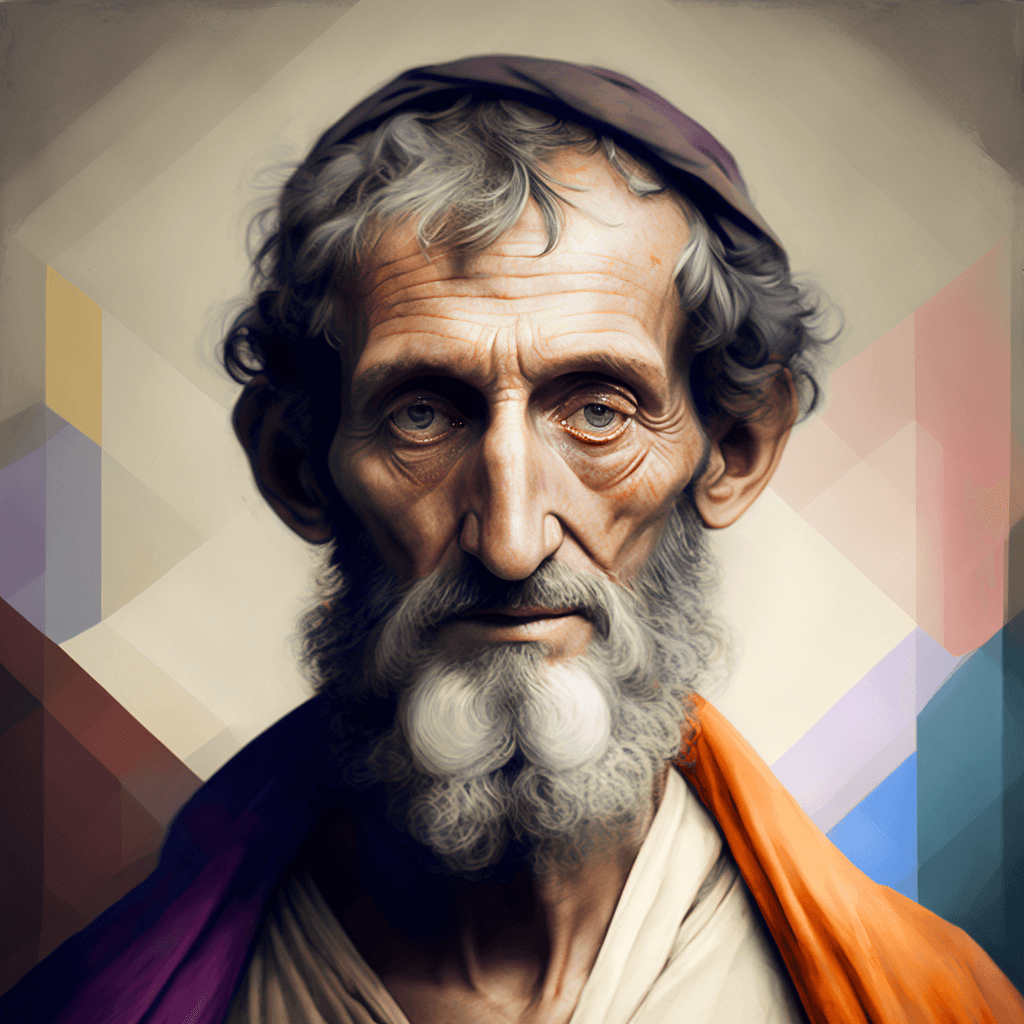
c.570-c.495 BC
Mathematician - Mystic - Philosopher
Pythagoras of Samos traveled widely in the eastern Mediterranean before establishing a philosophical community in Croton in southern Italy. His circle combined mathematics, cosmology, ethics, and disciplined communal practice, making it both an intellectual movement and a social order. Because many teachings were transmitted collectively, separating Pythagoras's own ideas from those of later Pythagoreans is historically difficult.
The theorem bearing his name, relating sides of right triangles, became one of geometry's most enduring principles, though antecedents existed in earlier civilizations. Pythagorean investigations into ratios and harmonics linked mathematics to musical consonance and encouraged the view that numerical relations structure nature. This mathematical orientation influenced Greek philosophy and later scientific thought.
Pythagorean doctrines on the soul, purification, and cosmic order also shaped religious and ethical traditions in the ancient world. From Plato to modern mathematics education, the Pythagorean legacy blends rigorous abstraction with metaphysical ambition. His figure represents the early moment when mathematics became both a practical tool and a philosophical language of reality.
c.570 BC — Born on Samos. Born in the Aegean world during the rise of early Greek philosophy.
c.530 BC — Settles in Croton. Founded a school that combined mathematics, ethics, and communal life.
c.520 BC — Pythagorean Influence Grows. Teachings spread through Magna Graecia via students and political networks.
c.510 BC — Political Upheaval. Community faced opposition and dispersal amid regional instability.
c.495 BC — Death. Died after establishing traditions that outlived him for centuries.
Key moments across this figure's life and legacy
c.570 BC
Born in the Aegean world during the rise of early Greek philosophy.
c.530 BC
Founded a school that combined mathematics, ethics, and communal life.
c.520 BC
Teachings spread through Magna Graecia via students and political networks.
c.510 BC
Community faced opposition and dispersal amid regional instability.
c.495 BC
Died after establishing traditions that outlived him for centuries.
Landmarks that define this figure's contribution to history
Anchored a central geometric relation taught across global mathematics curricula.
Connected numerical ratios to harmonic intervals in musical theory.
Founded a community uniting scientific study with ethical discipline.
Advanced the idea that number underlies physical and metaphysical order.
Notable details about this historical figure
How this figure shaped the world we inherit
Pythagoras helped make mathematics central to philosophical inquiry in the classical world. The Pythagorean conviction that numerical structure explains reality deeply influenced Plato, later Neoplatonism, and scientific rationalism. Even where legend surrounds his biography, his intellectual afterlife demonstrates how a mathematical idea can become a civilizational cornerstone.
Enduring influence across generations
Pythagoras helped make mathematics central to philosophical inquiry in the classical world. The Pythagorean conviction that numerical structure explains reality deeply influenced Plato, later Neoplatonism, and scientific rationalism. Even where legend surrounds his biography, his intellectual afterlife demonstrates how a mathematical idea can become a civilizational cornerstone. Death (c.495 BC) remains a defining moment in Pythagoras's enduring reputation.
Explore more profiles from the same era or field
Curated educational resources for further study
Start a private conversation and explore their wisdom through Historical Collection AI.