Eugene Onegin
Authored a novel in verse that became the foundational work of modern Russian literature.
Discover
Explore influential historical figures from science, philosophy, leadership, art, and culture.
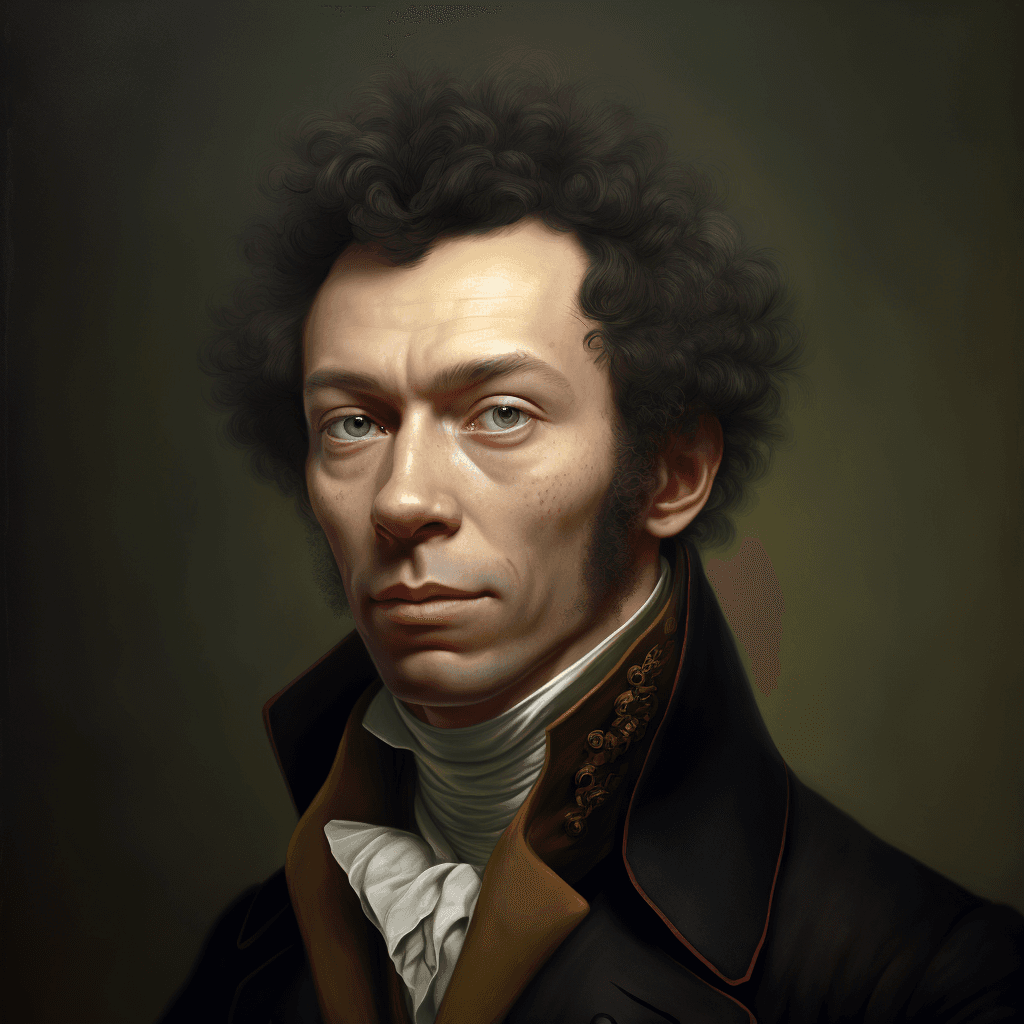
1799–1837
Poet • Novelist • Literary Pioneer
This is a read-only educational profile. Chat, Council Mode, and AI features are not available for historical figures.
Aleksandr Sergeevich Pushkin was born on 26 May 1799 in Moscow into the Russian nobility, a social class that lived between court privilege and provincial estate management while French language and Enlightenment ideas permeated salon culture. He was educated at the Imperial Lyceum at Tsarskoye Selo, a selective institution near Saint Petersburg where students received a humane curriculum of literature, history, and languages and where Pushkin began writing poetry that combined classical form with conversational Russian speech. Lyceum mentors encouraged his talent, and his first published verses appeared in journals while he was still a student, displaying wit, emotional directness, and an ease with meter that older poets found startling. Early works satirized autocracy and clerical hypocrisy, earning official displeasure that would shadow his entire career. After graduation in 1817 he entered the Collegium of Foreign Affairs, a nominal post that allowed time for literary production and salon life in Saint Petersburg. His poem Ode to Liberty and subsequent politically sensitive writings contributed to his exile to the south in 1820, first in the Caucasus and later in Odessa and Mikhailovskoye, his family's rural estate. Southern exile immersed him in folklore, Caucasian landscapes, and Romantic themes that enriched his narrative poetry and plays. Pushkin's genius lay in compressing vast social observation into rhythmic lines that felt both intimate and national, giving Russian literature a voice distinct from the French models that had dominated aristocratic taste. He read Byron, Shakespeare, and Walter Scott, yet transformed borrowed forms into expressions of specifically Russian history, superstition, and administrative absurdity.
Pushkin's Eugene Onegin, a novel in verse begun in 1823 and published in completed form in 1833, redefined Russian narrative by portraying bored aristocrats, provincial life, and unrequited love with ironic precision. The work's stanzas, known as the Onegin stanza, became a technical model emulated by later poets, while characters such as Tatiana Larina and Onegin himself embodied tensions between sincerity and fashionable cynicism. Pushkin also wrote historical drama, including Boris Godunov, which explored tsarist power and popular rumor in language too candid for immediate staging under Nicholas I's censorship. Short prose tales such as The Queen of Spades and The Captain's Daughter blended supernatural tension with psychological realism and meticulous social detail. He engaged deeply with Russian history and folk tradition while maintaining cosmopolitan ties to European literature, translating and adapting works that fed back into his own experiments. As a public figure he navigated court suspicion, censorship, and the volatile honor codes of noble society, repeatedly petitioning for permission to travel and publish. Nicholas I famously declared himself Pushkin's personal censor, a ambiguous honor that brought protection and surveillance simultaneously. Pushkin founded the literary journal Sovremennik, supporting younger writers and debating aesthetics in an era when Russian critics argued over national identity and Westernization. His correspondence reveals a man managing debt, creative ambition, and the exhausting politics of patronage while producing work at a pace that astonished contemporaries.
Pushkin married Natalia Goncharova in 1831 amid intense social and court attention; her beauty and attendance at imperial balls intensified gossip and jealousy within Petersburg society. Rumors involving Baron Georges d'Anthes, a French officer adopted into the Dutch embassy circle, escalated into a duel fought with pistols on 27 January 1837 on the outskirts of Saint Petersburg. Pushkin was mortally wounded and died two days later at thirty-seven, leaving unfinished works and a nation in mourning that transcended literary circles. The tsar's court faced criticism for conditions that made honor killings among elites routine, and Pushkin's death became a symbolic wound in Russian cultural memory. Subsequent writers—from Nikolai Gogol and Fyodor Dostoevsky to Anna Akhmatova and Joseph Brodsky—treated Pushkin as the origin point of Russian literary modernity, the figure who proved Russian could be a language of elite art equal to French and German. Operas, ballets, and films adapted his plots; Tchaikovsky's Eugene Onegin remains a staple of international repertoire. Soviet and post-Soviet education systems made his verses compulsory reading, and statues of Pushkin stand in cities from Moscow to Harbin, reflecting diasporic reverence. Literary scholars analyze his handling of race and empire in works such as The Negro of Peter the Great, rooted in the history of his ancestor Abram Gannibal. Pushkin's language became the standard of literary Russian, shaping spelling, idiom, and poetic address for two centuries. His life and death illustrate how autocratic courts could simultaneously celebrate and suffocate artists whose independence threatened the honor codes on which noble prestige depended. Translators rendered his prose into dozens of languages, and nineteenth-century nationalist movements across Eastern Europe claimed him as a model for vernacular literary independence. Manuscript studies continue to uncover variant readings of Eugene Onegin chapters, revealing how carefully he revised cadence and rhyme across years of serial publication. Contemporary scholarship examines Pushkin's engagement with empire, Caucasus warfare, and serfdom, reading adventure lyrics alongside administrative poems that record bureaucracy's human cost.
Key moments across this figure's life and legacy
1799
Born into the Russian nobility and educated at the Imperial Lyceum at Tsarskoye Selo.
1820
Sent to the Caucasus and Crimea after politically sensitive poems drew official displeasure.
1825
Started serial publication of his masterwork novel in verse.
1831
Married Natalia Goncharova amid intense social and court attention in Saint Petersburg.
1837
Mortally wounded in a duel with Georges d'Anthes and died in Saint Petersburg.
Landmarks that define this figure's contribution to history
Authored a novel in verse that became the foundational work of modern Russian literature.
Merged colloquial Russian with classical poetic forms, setting a durable standard for literary expression.
Wrote a historical drama on tsarist power that challenged theatrical conventions and censorship.
Integrated fairy tales, history, and popular speech into poetry that spoke to a broad Russian readership.
How this figure shaped the world we inherit
Pushkin gave Russian literature a voice that was simultaneously personal, satirical, and national. By breaking with archaic literary conventions and treating everyday speech as poetic material, he enabled the realist and psychological novels that followed. His death turned him into a martyr of artistic freedom in Russian cultural memory, and his works continue to anchor language education, performing arts, and debates over national identity from the nineteenth century to the present.
Explore more profiles from the same era or field
Curated educational resources for further study
Discover historical art and educational content on our media channels