Discovery of Penicillin
Identified antibacterial mold Penicillium notatum in 1928, opening the path to modern antibiotics.
Discover
Explore influential historical figures from science, philosophy, leadership, art, and culture.
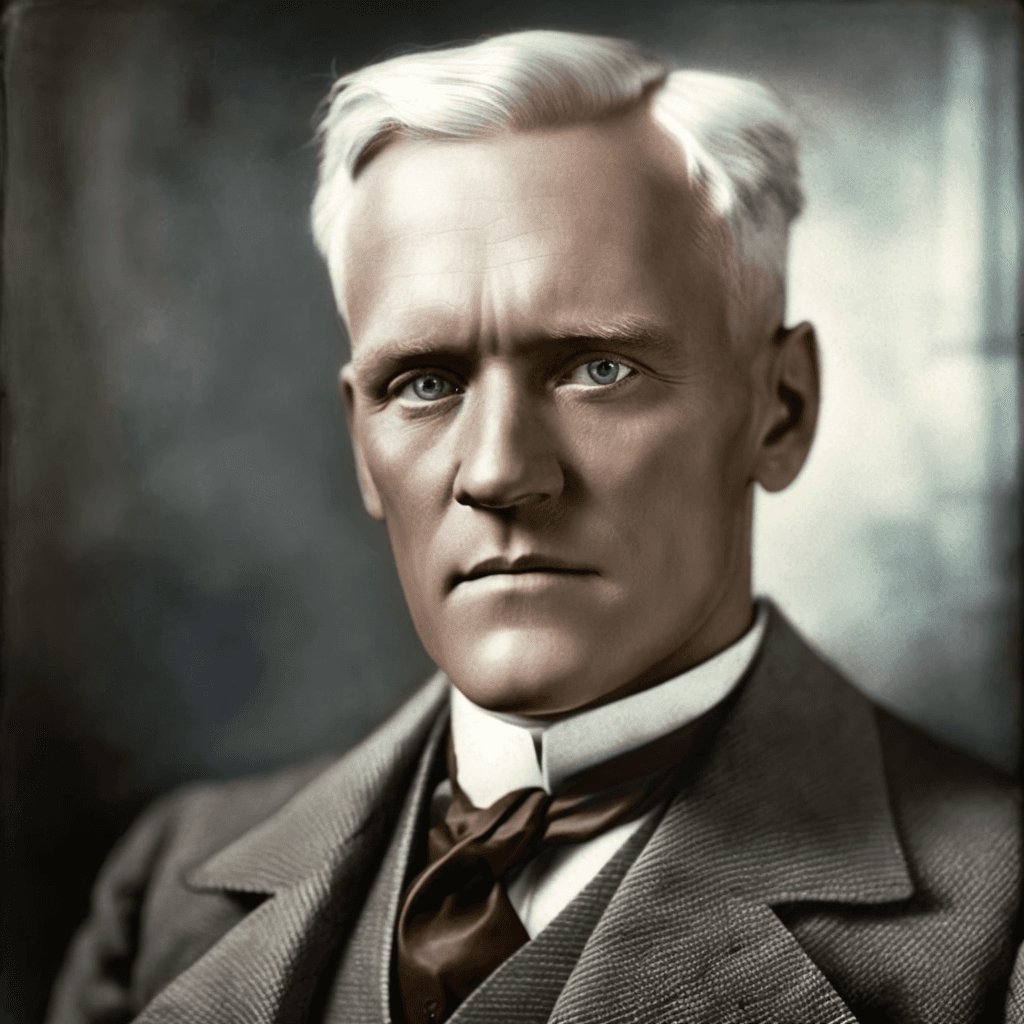
1881–1955
Physician • Discoverer of Penicillin
This is a read-only educational profile. Chat, Council Mode, and AI features are not available for historical figures.
Alexander Fleming was born on 6 August 1881 on a farm at Lochfield near Darvel, Ayrshire, Scotland, the third of four children in a family that could not afford to keep him in school without help from an uncle. He moved to London at thirteen, worked in a shipping office, and then entered St Mary's Hospital Medical School on a scholarship, drawn partly by the school's rifle club. Fleming served as a captain in the Royal Army Medical Corps during World War I, treating wounded soldiers in field hospitals on the Western Front, where he witnessed how antiseptics could harm tissue and fail to stop deep infections. That experience sharpened his interest in how bacteria invaded wounds and how the body's defenses might be assisted rather than damaged by crude chemical treatments.
Returning to St Mary's after the war, Fleming built a reputation for meticulous laboratory observation and unconventional methods, including painting with bacteria on agar plates to produce colored images. On 3 September 1928 he noticed that a mold contaminating a Staphylococcus culture had created a clear ring where bacteria would not grow. He identified the mold as Penicillium notatum and published his findings in 1929, noting the substance's antibacterial properties but struggling to isolate it in quantities useful for treatment. For more than a decade the discovery remained a laboratory curiosity until Howard Florey and Ernst Boris Chain at Oxford developed methods to purify and mass-produce penicillin during World War II. Fleming shared the 1945 Nobel Prize in Physiology or Medicine with Florey and Chain, insisting publicly that the honor belonged to the team that had turned his observation into a lifesaving therapy.
Fleming continued research at St Mary's, became principal of the institute, and was knighted in 1944, yet he warned repeatedly that antibiotic misuse could breed resistant bacteria—a prediction that proved prophetic as penicillin-resistant strains appeared within years of widespread use. He married twice, had one son, and maintained a modest public manner that contrasted with the dramatic scale of his discovery's impact. When he died of a heart attack in London on 11 March 1955, penicillin and its successors had already saved millions of lives from pneumonia, sepsis, syphilis, and battlefield infections. Fleming's story became the classic parable of serendipity in science: a prepared mind noticing what contamination might mean rather than discarding it.
Key moments across this figure's life and legacy
1881
Raised on a Scottish farm before winning scholarships to study medicine in London.
1928
Noticed mold inhibiting bacterial growth on a contaminated Staphylococcus plate at St Mary's.
1929
Reported penicillin's antibacterial effects in the British Journal of Experimental Pathology.
1945
Awarded jointly with Howard Florey and Ernst Boris Chain after wartime mass production saved countless lives.
1955
Died at age 73 after transforming infectious disease treatment worldwide.
Landmarks that define this figure's contribution to history
Identified antibacterial mold Penicillium notatum in 1928, opening the path to modern antibiotics.
Earlier isolated lysozyme in tears and nasal secretions, an enzyme that destroys certain bacteria.
Treated battlefield infections on the Western Front, shaping his critique of harsh antiseptic practice.
Shared the Nobel Prize in Physiology or Medicine for the discovery and development of penicillin.
How this figure shaped the world we inherit
Fleming's discovery of penicillin marked the beginning of the antibiotic age, dramatically reducing deaths from bacterial infections and enabling surgeries, chemotherapy, and organ transplants that would otherwise carry lethal risk. His early warnings about antibiotic resistance anticipated one of the gravest public health challenges of the twenty-first century.
Explore more profiles from the same era or field
Curated educational resources for further study
Discover historical art and educational content on our media channels