October Revolution
Led Bolsheviks to seize power in 1917, ending provisional government rule.
Discover
Explore influential historical figures from science, philosophy, leadership, art, and culture.
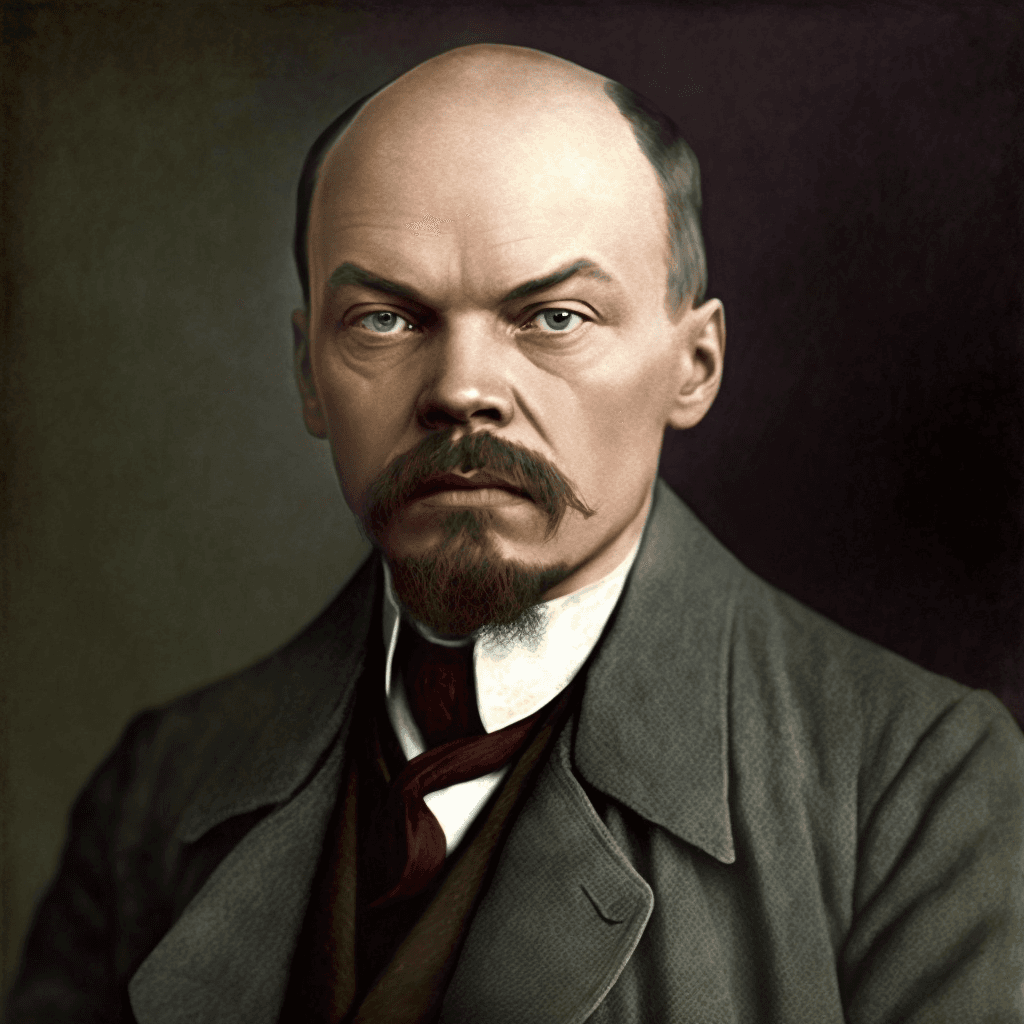
1870–1924
Revolutionary • Founder of the Soviet State
This is a read-only educational profile. Chat, Council Mode, and AI features are not available for historical figures.
Vladimir Ilyich Ulyanov was born on 22 April 1870 in Simbirsk on the Volga, son of a schools inspector whose death and brother Alexander's execution for plotting against the tsar radicalized the family. Expelled from Kazan University for protest, Lenin studied law independently, absorbed Marxism, and moved to Saint Petersburg organizing workers' circles. Arrest and Siberian exile followed; in emigration he developed a disciplined party model, arguing in What Is to Be Done? that a vanguard professional organization must lead the proletariat rather than wait for spontaneous revolution.
Returning in 1917 after the February Revolution overthrew Nicholas II, Lenin published the April Theses demanding "all power to the Soviets," opposing continued war, and steering Bolsheviks toward insurrection. The October Revolution seized Petrograd's key points with modest bloodshed relative to civil war that followed. As chairman of the Council of People's Commissars, Lenin signed the Brest-Litovsk peace ceding territory to Germany, nationalized industry, and suppressed rivals through the Cheka secret police. Civil war, famine, and War Communism devastated Russia before the New Economic Policy partially restored market elements in 1921. An assassination attempt in 1918 left bullet wounds contributing to later strokes that diminished his speech and mobility.
Lenin died on 21 January 1924 in Gorki near Moscow; his body was embalmed and displayed in Red Square, and successors competed to interpret his legacy while Stalin consolidated dictatorship Lenin had not fully foreseen. Leninist parties spread worldwide, influencing Chinese, Cuban, Vietnamese, and anti-colonial movements even as Soviet repression discredited aspects of his model. Historians debate whether NEP indicated pragmatic retreat or whether authoritarian structures were inherent in his vanguard theory. Archives opened after 1991 revealed tactical memos ordering terror against clergy and kulaks during civil war. Lenin remains pivotal—admired by some as theorist of anti-imperial revolution, condemned by others as architect of one-party rule whose name attached to gulags and global ideological conflict lasting decades.
Key moments across this figure's life and legacy
1870
Born Vladimir Ulyanov on the Volga River in imperial Russia.
1903
Helped divide Russian Social Democrats over party organization and strategy.
1917
Directed insurrection that brought Bolsheviks to power in Petrograd.
1918
Signed peace with Germany, ceding territory to exit World War I.
1924
Died after a series of strokes, leaving a contested revolutionary legacy.
Landmarks that define this figure's contribution to history
Led Bolsheviks to seize power in 1917, ending provisional government rule.
Established the Council of People's Commissars and foundational structures of the USSR.
Developed organizational principles in What Is to Be Done? shaping communist parties globally.
Introduced partial market reforms in 1921 to stabilize economy after civil war devastation.
How this figure shaped the world we inherit
Lenin created the first Marxist-Leninist state and exported revolutionary party organization worldwide, shaping Cold War geopolitics and anti-colonial struggles. His combination of ideological rigor and emergency authoritarianism established patterns of one-party rule debated ever since, while his writings remain foundational texts for revolutionary movements and their critics alike.
Explore more profiles from the same era or field
Curated educational resources for further study
Discover historical art and educational content on our media channels