Montgomery Bus Boycott
King's leadership of the 1955–56 boycott helped end segregated seating and launched him as a national civil rights spokesman.
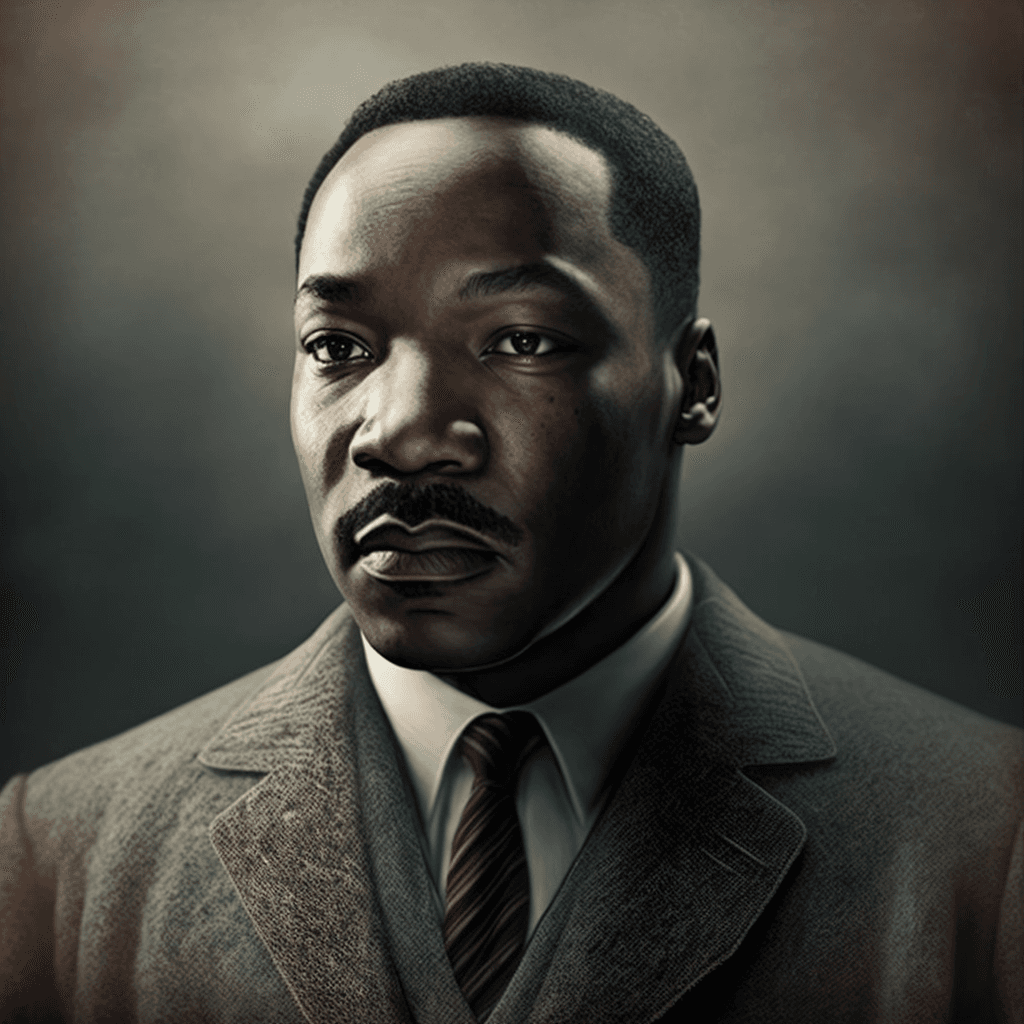
1929–1968
Civil Rights Leader • Orator • Nobel Laureate
Martin Luther King Jr. nació en 1929 en Atlanta, Georgia, hijo de un ministro bautista. Educado en el Morehouse College, el Seminario Teológico Crozer y la Universidad de Boston, absorbió las ideas de resistencia no violenta de Gandhi y la enseñanza del evangelio social cristiano. En 1955, alcanzó prominencia nacional liderando el boicot de autobuses de Montgomery tras el arresto de Rosa Parks.
Como primer presidente de la Conferencia de Liderazgo Cristiano del Sur, King organizó campañas contra la segregación en Birmingham, marchó sobre Washington en 1963 y abogó por la legislación de derechos de voto. Su carta desde la cárcel de Birmingham y sus discursos vincularon el argumento moral con la acción directa. La Ley de Derechos Civiles de 1964 y la Ley de Derechos de Voto de 1965 siguieron a años de protestas, arrestos y violencia blanca.
King amplió su enfoque hacia la justicia económica y la oposición a la Guerra de Vietnam, atrayendo críticas de moderados y del FBI. El 4 de abril de 1968, fue asesinado en Memphis, donde había ido a apoyar a los trabajadores de saneamiento en huelga. Un feriado federal en su honor, establecido en 1983, marca su lugar como el líder más visible de la lucha por la libertad en el siglo XX en Estados Unidos.
Momentos clave en la vida y el legado de esta figura
1929
Born Michael King Jr., he later received his father's adopted name honoring the Protestant reformer Martin Luther.
1955
After Rosa Parks's arrest, King helped coordinate a year-long boycott that desegregated city buses.
1963
Children's marches and national media coverage of police dogs preceded the August March on Washington for Jobs and Freedom.
1964
Landmark federal law banned segregation in public places and employment discrimination— a major goal of King's campaigns.
1968
James Earl Ray shot King at the Lorraine Motel; riots erupted in cities nationwide as mourners gathered for his funeral.
Hitos que definen la contribución de esta figura a la historia
King's leadership of the 1955–56 boycott helped end segregated seating and launched him as a national civil rights spokesman.
His 'I Have a Dream' address before the Lincoln Memorial in 1963 became the movement's most quoted call for racial equality.
Awarded in 1964 at age thirty-five, the prize recognized nonviolent campaigns that produced landmark U.S. civil rights legislation.
Protests and the Selma-to-Montgomery march in 1965 built pressure for the Voting Rights Act signed that August.
Detalles notables sobre esta figura
Cómo esta figura moldeó el mundo que heredamos
La fusión de la ética cristiana y la no violencia gandhiana de King dio un lenguaje moral a la desmantelación de la segregación Jim Crow. Su martirio aceleró la legislación de vivienda justa y fijó los derechos civiles en el centro de la identidad cívica estadounidense, incluso cuando activistas posteriores debatieron sus estrategias y su agenda económica inconclusa.
Influencia duradera a través de generaciones
King's fusion of Christian ethics and Gandhian nonviolence gave moral language to dismantling Jim Crow segregation. His martyrdom accelerated fair housing legislation and fixed civil rights at the center of American civic identity, even as later activists debated his strategies and unfinished economic agenda. Assassination in Memphis (1968) remains a defining moment in Martin Luther King Jr.'s enduring reputation.
Más perfiles de la misma época o campo
Recursos educativos seleccionados para profundizar
Inicia una conversación privada con Historical Collection AI.