Pioneered Russian Realist Satire
Introduced a distinctive blend of grotesque humor and social criticism that shaped Dostoevsky, Chekhov, and generations of Russian writers.
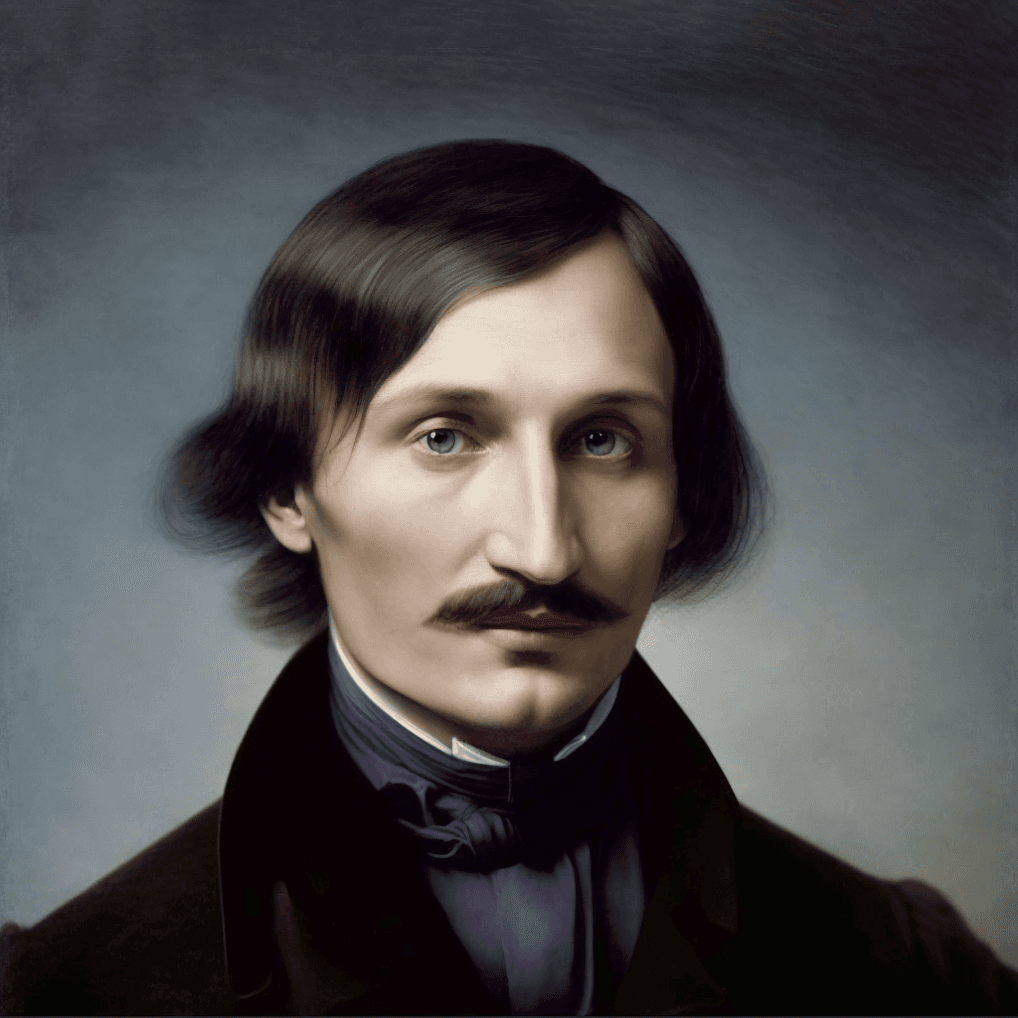
1809–1852
Novelist • Playwright • Satirist
Nacido en 1809 en Sorochyntsi, en lo que hoy es Ucrania, Nikolai Gogol creció entre los cuentos populares y las costumbres provinciales que más tarde animarían su ficción. Tras mudarse a San Petersburgo, luchó por encontrar su voz literaria hasta que el éxito de *Noches en una granja cerca de Dikanka* lo estableció como un escritor capaz de hacer que lo sobrenatural se sintiera íntimamente ruso.
Sus obras maestras—*El capote*, *Almas muertas* y la obra *El inspector*—exponían la corrupción, la vanidad y la vacuidad espiritual con precisión cómica y urgencia moral. Los personajes de Gogol, desde el desafortunado funcionario Akaky Akakievich hasta el estafador Chichikov, se convirtieron en arquetipos de una sociedad atrapada entre la tradición y la modernidad.
En sus últimos años, Gogol cayó bajo la influencia de un estricto consejero espiritual y quemó la segunda parte de *Almas muertas*, un acto que sorprendió al mundo literario. Murió en Moscú en 1852 tras un severo ayuno, dejando a la literatura rusa permanentemente marcada por su fusión de realismo, fantasía y crítica social profética.
Momentos clave en la vida y el legado de esta figura
1809
Grew up in a Ukrainian gentry family, absorbing folk stories and rural customs that later shaped his early fiction.
1831
Moved to the imperial capital and published *Evenings on a Farm Near Dikanka*, launching his career with tales of witches and Cossack adventure.
1836
His satirical play exposing provincial graft premiered under Tsar Nicholas I, who reportedly said everyone got the blame except himself.
1842
Released the first part of his novel about Chichikov's scheme to purchase deceased serfs, cementing his reputation as Russia's sharpest social critic.
1852
Died after destroying manuscripts and undergoing a punishing fast, leaving Russian literature mourning the loss of his unfinished masterwork.
Hitos que definen la contribución de esta figura a la historia
Introduced a distinctive blend of grotesque humor and social criticism that shaped Dostoevsky, Chekhov, and generations of Russian writers.
Created an unfinished epic novel whose portrait of a nation buying and selling 'dead souls' became one of literature's sharpest indictments of moral decay.
Works like *The Overcoat* and *The Nose* demonstrated how brief fiction could carry philosophical weight and transform everyday misery into universal symbol.
Drew on Cossack legends and village life to enrich imperial Russian literature with regional voices rarely heard in the capital.
Detalles notables sobre esta figura
Cómo esta figura moldeó el mundo que heredamos
Gogol redefinió lo que la prosa rusa podía hacer, demostrando que la risa y el horror podían exponer las fallas más profundas de una sociedad. Sus personajes y frases entraron en el habla cotidiana, y su influencia se extiende a través del realismo, el modernismo y la comedia oscura de la ficción del siglo XX en todo el mundo.
Influencia duradera a través de generaciones
Gogol redefined what Russian prose could do, proving that laughter and horror could expose a society's deepest faults. His characters and phrases entered everyday speech, and his influence runs through realism, modernism, and the dark comedy of twentieth-century fiction worldwide. Death in Moscow (1852) remains a defining moment in Nikolai Gogol's enduring reputation.
Más perfiles de la misma época o campo
Recursos educativos seleccionados para profundizar
Inicia una conversación privada con Historical Collection AI.