Co-founding Cubism
Helped invent a new visual grammar of fractured forms and multiple viewpoints.
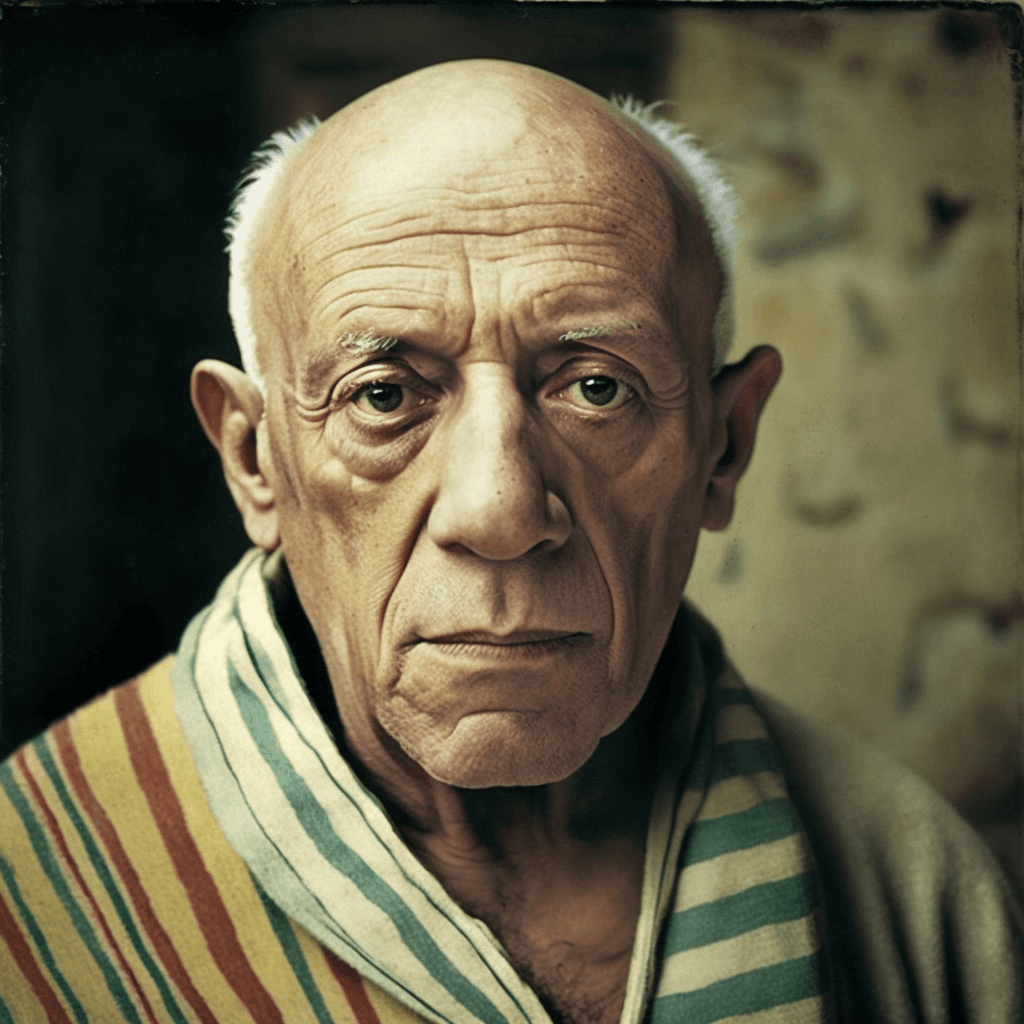
1881-1973
Painter - Innovator - Modernist
Pablo Picasso nació en Málaga, se formó temprano en técnicas académicas y se movió a través de Barcelona y París mientras los círculos de vanguardia remodelaban el arte europeo. Sus rápidos cambios estilísticos durante los períodos Azul y Rosa mostraron un rango inusual y una intensidad emocional. A los veinte años, ya era una figura central en la experimentación modernista.
Con Georges Braque, Picasso desarrolló el Cubismo, fragmentando la forma y la perspectiva en planos geométricos que desafiaron siglos de convenciones representacionales. Obras como Les Demoiselles d'Avignon y más tarde composiciones cubistas sintéticas cambiaron la pintura, la escultura y el diseño al tratar la superficie pictórica como una arena de construcción conceptual. Trabajó en diversos medios a lo largo de su vida, produciendo pinturas, grabados, cerámicas y diseños escénicos.
El mural Guernica de Picasso de 1937 se convirtió en una de las imágenes anti-belicistas definitorias del siglo XX, vinculando la innovación artística con el testimonio político. Su inmensa productividad e influencia moldearon la cultura de los museos, los mercados de arte y los debates sobre la autoría, la apropiación y el género en la historia del arte. Ya sea admirado o cuestionado, su legado sigue siendo central para entender la cultura visual moderna y contemporánea.
Momentos clave en la vida y el legado de esta figura
1881
Born into an artistic family that encouraged early technical training.
1907
Painted a radical work that signaled transition toward Cubist language.
1909-1914
Collaborated with Braque on analytic and synthetic Cubism.
1937
Completed mural for the Paris International Exposition during Spanish Civil War.
1973
Died in France after one of the longest and most influential artistic careers.
Hitos que definen la contribución de esta figura a la historia
Helped invent a new visual grammar of fractured forms and multiple viewpoints.
Created a foundational modernist work that broke with traditional perspective.
Produced an enduring antiwar masterpiece responding to civilian bombing in Spain.
Sustained major output in painting, sculpture, printmaking, and ceramics.
Detalles notables sobre esta figura
Cómo esta figura moldeó el mundo que heredamos
Picasso remodeló la percepción moderna al demostrar que el arte podía representar la realidad a través de una estructura conceptual en lugar de una mera imitación óptica. El Cubismo influyó en la arquitectura, el diseño, el cine y más tarde en la abstracción, mientras que Guernica estableció un modelo global para el arte comprometido políticamente. Su trabajo continúa anclando debates sobre las ambiciones del modernismo, sus puntos ciegos éticos y el poder social de la experimentación visual.
Influencia duradera a través de generaciones
Picasso reshaped modern perception by proving that art could depict reality through conceptual structure rather than optical imitation alone. Cubism influenced architecture, design, cinema, and later abstraction, while Guernica established a global template for politically engaged art. His work continues to anchor debates about modernism's ambitions, its ethical blind spots, and the social power of visual experimentation. Death in Mougins (1973) remains a defining moment in Pablo Picasso's enduring reputation.
Más perfiles de la misma época o campo
Recursos educativos seleccionados para profundizar
Inicia una conversación privada con Historical Collection AI.