Three World Cup Victories
The only player to win FIFA World Cups in 1958, 1962, and 1970, anchoring Brazil's golden era of attacking football.
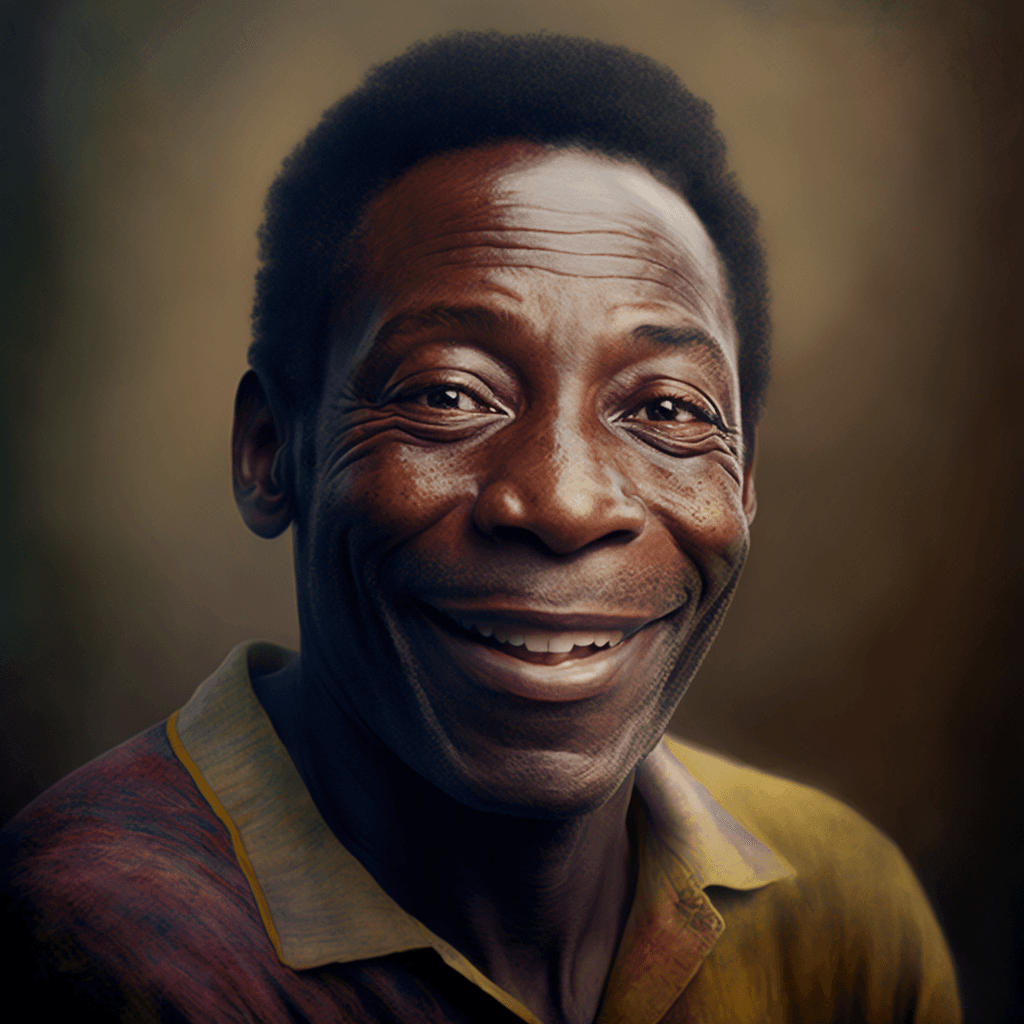
1940–2022
Football Legend • Global Ambassador
Edson Arantes do Nascimento nació en 1940 en Três Corações, Brasil, y ganó el apodo de Pelé cuando era niño jugando descalzo con una media llena de papel. Se unió al Santos FC a los quince años y debutó con Brasil a los dieciséis, anunciando un talento que combinaba velocidad explosiva, poder aéreo y creatividad poco comunes en un solo jugador.
Pelé ganó su primera Copa Mundial en 1958 a los diecisiete años, añadiendo títulos en 1962 y 1970—este último con un equipo que muchos consideran el mejor jamás ensamblado. Sus goles, incluido el primer tanto en la final de 1970 contra Italia, fueron vistos por cientos de millones en televisión, expandiendo la popularidad del fútbol a nuevos continentes.
Tras retirarse del Santos, jugó brevemente para el New York Cosmos, ayudando a lanzar el fútbol profesional en Estados Unidos. Durante décadas, sirvió como embajador de la UNESCO y defensor de programas para jóvenes, utilizando su fama para promover la educación y la paz hasta su muerte en 2022 a los 82 años.
Momentos clave en la vida y el legado de esta figura
1940
Raised in poverty in Bauru, learning football with improvised balls and extraordinary natural ability.
1958
Scored twice in the final against Sweden, becoming the youngest World Cup winner and a worldwide sensation.
1970
Headlined Brazil's triumphant campaign, including a header in the final that epitomized the team's joyful artistry.
1975
Helped popularize soccer in the United States alongside other international stars, drawing record crowds to NASL matches.
2022
Mourned globally as 'O Rei'—the King—whose name became synonymous with football itself.
Hitos que definen la contribución de esta figura a la historia
The only player to win FIFA World Cups in 1958, 1962, and 1970, anchoring Brazil's golden era of attacking football.
Reached a milestone tally recognized worldwide, symbolizing individual brilliance within a team-oriented sport.
Led Santos to multiple Copa Libertadores and Intercontinental Cup titles, dominating South American club football through the 1960s.
Promoted the sport across Africa, Asia, and North America, including a pivotal role in the North American Soccer League's growth.
Detalles notables sobre esta figura
Cómo esta figura moldeó el mundo que heredamos
Pelé convirtió el fútbol en un lenguaje universal. Su brillantez televisada en las Copas Mundiales de 1958 y 1970 ayudó a hacer del deporte el juego más visto del mundo, mientras que su defensa tras la carrera vinculó el atletismo a la educación y la comprensión internacional en el Sur Global.
Influencia duradera a través de generaciones
Pelé turned football into a universal language. His televised brilliance in the 1958 and 1970 World Cups helped make the sport the world's most watched game, while his post-career advocacy linked athletics to education and international understanding across the Global South. Death at 82 (2022) remains a defining moment in Pelé's enduring reputation.
Más perfiles de la misma época o campo
Recursos educativos seleccionados para profundizar
Inicia una conversación privada con Historical Collection AI.