Founded the United Arab Emirates
Led the 1971 unification of seven emirates into a federal state, serving as president for over three decades.
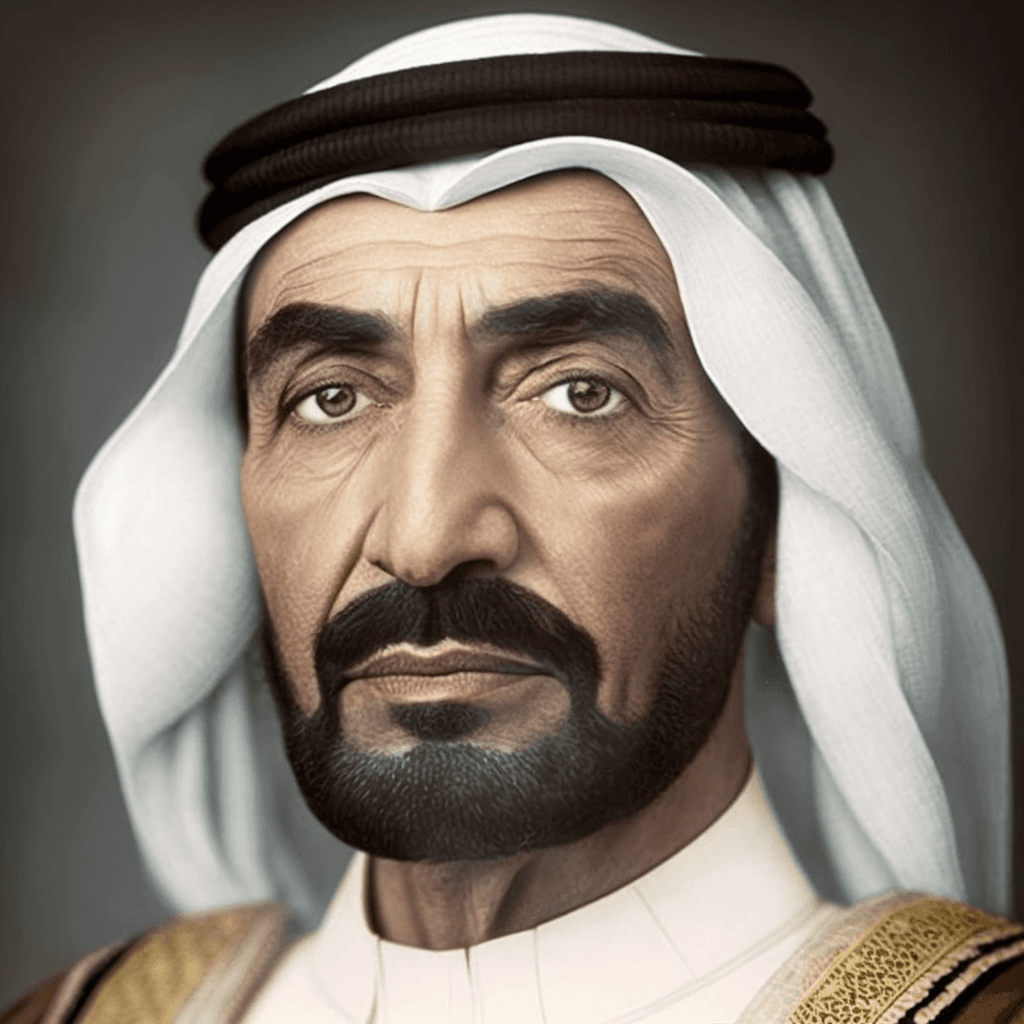
1918–2004
Founder of the UAE • Statesman
Nacido alrededor de 1918 en Abu Dhabi, Sheikh Zayed bin Sultan Al Nahyan creció en una sociedad beduina donde los derechos de agua y pastoreo moldeaban la supervivencia. Nombrado gobernante de Al Ain en 1946 y emir de Abu Dhabi en 1966, utilizó la creciente riqueza petrolera para construir escuelas, hospitales y viviendas en lugar de acumular ingresos para una élite estrecha.
Zayed reconoció que los emiratos individuales no podían asegurar su futuro solos. Negoció con funcionarios británicos y otros gobernantes para formar los Emiratos Árabes Unidos el 2 de diciembre de 1971, cuando siete emiratos se unieron bajo una constitución federal. Como presidente hasta su muerte, equilibró la consulta tribal con la inversión centralizada en infraestructura, aviación y educación.
Su política exterior favoreció la solidaridad árabe, la mediación y la generosa ayuda a los países en desarrollo. Zayed también abogó por la conservación ambiental, fundando el Hospital de Halcones de Abu Dhabi y patrocinando proyectos de reforestación en el desierto. Cuando murió en 2004, los EAU se habían convertido en un centro financiero y un puente diplomático entre Oriente y Occidente—una transformación inseparable de su liderazgo paciente y orientado al consenso.
Momentos clave en la vida y el legado de esta figura
1918
Raised in the Al Nahyan ruling family amid the pearling economy and gradual discovery of oil resources.
1966
Assumed leadership and accelerated modernization using growing petroleum exports.
1971
Proclaimed federation on December 2; elected first president of the newly independent United Arab Emirates.
1990s
Increased overseas development assistance, establishing the UAE as one of the world's largest aid donors per capita.
2004
Mourned across the Arab world; national mourning reflected his status as founding father of the modern UAE.
Hitos que definen la contribución de esta figura a la historia
Led the 1971 unification of seven emirates into a federal state, serving as president for over three decades.
Directed revenues toward universal education, healthcare, and housing, raising living standards dramatically across the Gulf.
Positioned the UAE as a diplomatic intermediary in Arab disputes, emphasizing dialogue over prolonged confrontation.
Established protected areas and breeding programs for endangered species, including the Arabian oryx and falconry traditions.
Detalles notables sobre esta figura
Cómo esta figura moldeó el mundo que heredamos
Sheikh Zayed demostró cómo la riqueza de un estado petrolero podía financiar una rápida modernización sin borrar completamente las tradiciones de gobernanza tribal. La federación que construyó se convirtió en un modelo de estabilidad en el Golfo, y su énfasis en la tolerancia y la filantropía moldeó la identidad internacional de los EAU en el siglo XXI.
Influencia duradera a través de generaciones
Sheikh Zayed demonstrated how petro-state wealth could fund rapid modernization without entirely erasing tribal governance traditions. The federation he built became a model for Gulf stability, and his emphasis on tolerance and philanthropy shaped the UAE's international identity in the twenty-first century. Death at 86 (2004) remains a defining moment in Sheikh Zayed bin Sultan Al Nahyan's enduring reputation.
Más perfiles de la misma época o campo
Recursos educativos seleccionados para profundizar
Inicia una conversación privada con Historical Collection AI.