Nineteen Eighty-Four
Published a dystopian novel whose concepts of surveillance and language control define modern political discourse.
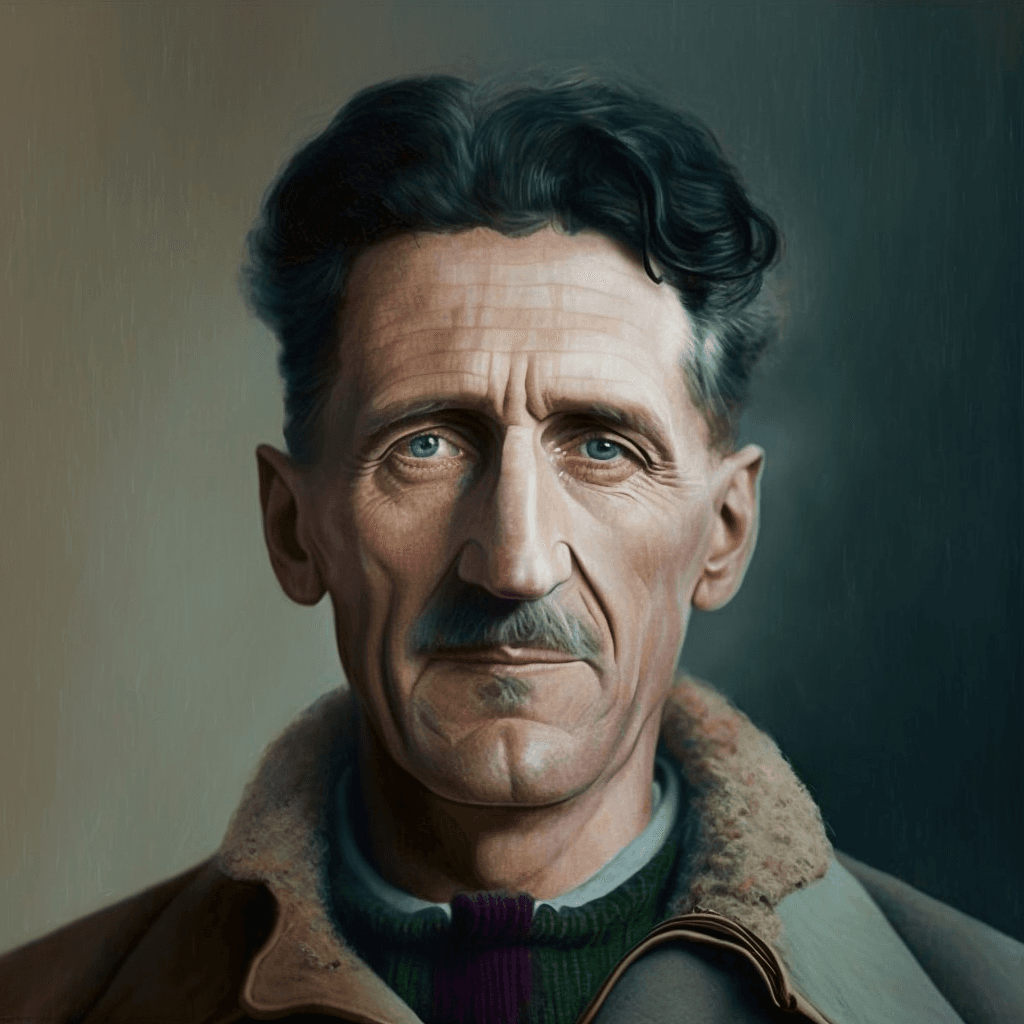
1903–1950
Author • Essayist • Social Critic
Eric Arthur Blair, qui écrivait sous le nom de George Orwell, est né en 1903 à Motihari, en Inde britannique, où son père travaillait au Département de l'Opium. Éduqué à Eton grâce à une bourse, il rejeta le service impérial et rejoignit plutôt la Police impériale indienne en Birmanie, une expérience qui produisit le mémorial Burmese Days et une haine durable de l'arrogance coloniale. De retour en Europe, il erra parmi les pauvres, lava des plats à Paris et documenta les difficultés dans Down and Out in Paris and London.
Orwell combattit avec la milice POUM pendant la guerre civile espagnole, où il fut blessé au cou et fut témoin de la répression stalinienne des factions de gauche rivales— événements cristallisés dans Homage to Catalonia. Pendant la Seconde Guerre mondiale, il travailla pour la BBC et écrivit pour Tribune, affinant le style de prose clair et concret qui devint sa marque de fabrique. Animal Farm (1945) satirisa l'Union soviétique sous forme de fable ; Nineteen Eighty-Four (1949), achevé alors qu'il souffrait de tuberculose, imagina un État qui contrôlait la réalité par le langage, la surveillance et la guerre perpétuelle.
Orwell mourut en janvier 1950 dans un hôpital de Londres à quarante-six ans, laissant des essais sur la politique et le langage qui demeurent inégalés en clarté. Les termes qu'il popularisa— Big Brother, thoughtcrime, Newspeak— devinrent un vocabulaire permanent pour discuter de la propagande et de l'autoritarisme tant dans les démocraties que dans les dictatures.
Moments clés de la vie et de l'héritage de cette figure
1922
Served five years in the Indian Imperial Police, absorbing anti-imperial convictions.
1936
Joined POUM militia in Barcelona; wounded and forced to flee Stalinist purges.
1945
Released the anti-Stalinist fable after wartime publishing delays.
1949
Published his final novel while gravely ill with pulmonary tuberculosis.
1950
Died at University College Hospital; buried under his real name in Oxfordshire.
Jalons qui définissent la contribution de cette figure à l'histoire
Published a dystopian novel whose concepts of surveillance and language control define modern political discourse.
Wrote an allegorical fable exposing the corruption of revolutionary ideals.
Documented the Spanish Civil War with firsthand witness to factional betrayal on the left.
Essay prescribing clarity and honesty as moral duties of writers under political pressure.
Détails notables sur cette figure
Comment cette figure a façonné le monde que nous avons hérité
Orwell fournit le vocabulaire avec lequel les démocraties critiquent leurs propres appareils de propagande. Nineteen Eighty-Four et Animal Farm circulent en traduction partout où les gouvernements manipulent la vérité, faisant de lui peut-être le romancier politique le plus cité du vingtième siècle. Ses règles pour une prose claire continuent de former des journalistes et des activistes qui considèrent le langage comme un champ de bataille plutôt que comme une décoration.
Influence durable à travers les générations
Orwell supplied the vocabulary with which democracies critique their own propaganda apparatuses. Nineteen Eighty-Four and Animal Farm circulate in translation wherever governments manipulate truth, making him perhaps the most cited political novelist of the twentieth century. His rules for clear prose continue to train journalists and activists who treat language as a battlefield rather than decoration. Death in London (1950) remains a defining moment in George Orwell's enduring reputation.
D'autres profils de la même époque ou du même domaine
Ressources éducatives sélectionnées pour approfondir
Entamez une conversation privée via Historical Collection AI.