First Female British Prime Minister
Thatcher won three consecutive general elections (1979, 1983, 1987), the longest continuous tenure of any twentieth-century British premier.
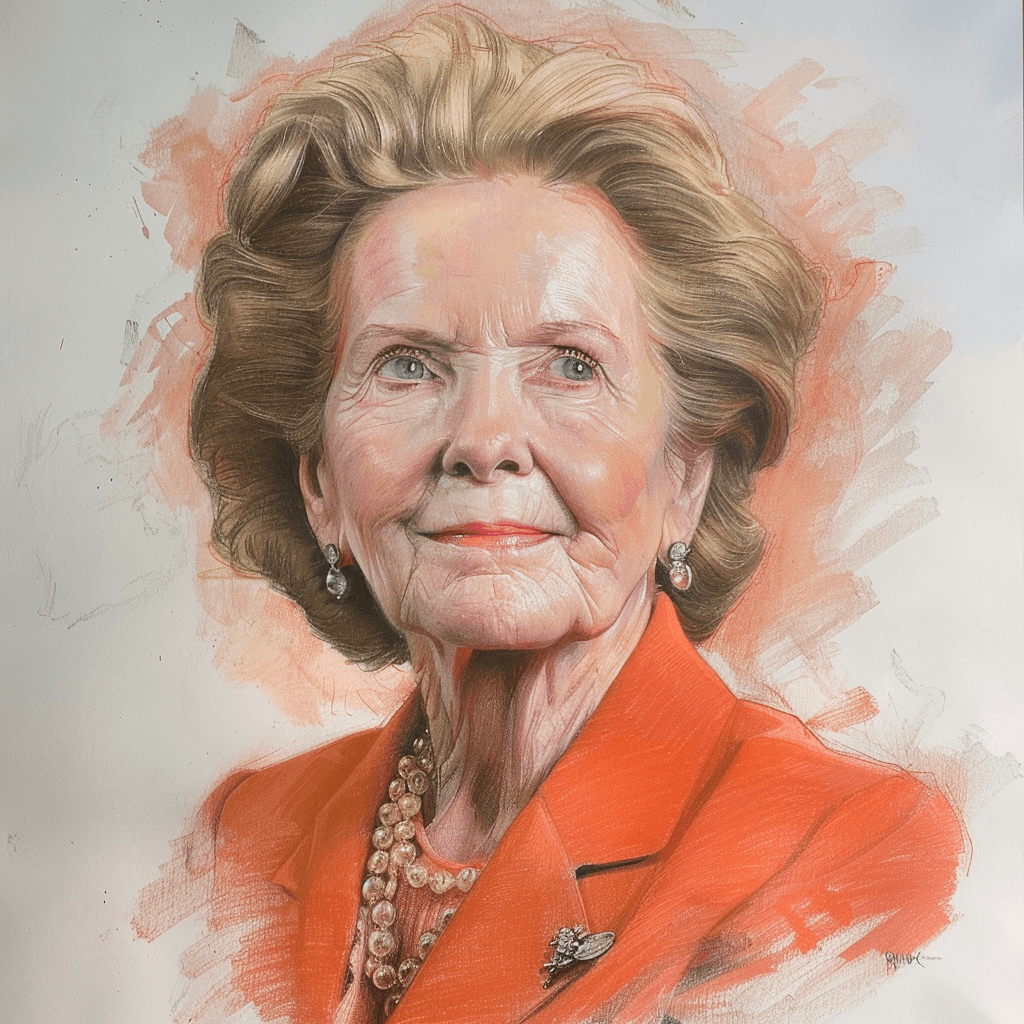
1925–2013
Prime Minister • Stateswoman • Iron Lady
Margaret Hilda Roberts est née en 1925 au-dessus de l'épicerie de son père à Grantham, dans le Lincolnshire. Éduquée à Oxford, elle a travaillé comme chimiste de recherche et avocate avant d'entrer au Parlement en 1959. En tant que secrétaire à l'éducation, elle a réduit le financement du lait scolaire, gagnant une notoriété précoce, mais son leadership décisif pendant la crise énergétique des années 1970 l'a aidée à remporter la direction des conservateurs en 1975.
Devenue Première ministre en 1979, Thatcher a poursuivi une économie monétariste, vendu des services publics et des logements sociaux, et réduit les taux d'imposition les plus élevés. Elle a envoyé une force opérationnelle pour reprendre les îles Falkland après l'invasion argentine de 1982, a survécu à l'attentat à la bombe de l'IRA dans son hôtel de Brighton en 1984, et a brisé le National Union of Mineworkers après une grève d'un an. À l'étranger, elle a formé un partenariat anti-soviétique étroit avec le président américain Ronald Reagan tout en engageant prudemment Mikhaïl Gorbatchev.
L'augmentation des taxes sur les voix et les disputes au sein du cabinet concernant l'intégration européenne ont érodé son autorité. Contraite de démissionner en novembre 1990, elle est restée à la Chambre des Lords en tant que baronne Thatcher et voix influente dans la politique conservatrice jusqu'à sa mort en 2013. Ses partisans lui attribuent le mérite d'avoir inversé le déclin britannique ; ses détracteurs soulignent l'augmentation des inégalités et les pertes d'emplois industriels.
Moments clés de la vie et de l'héritage de cette figure
1925
Raised by Methodist parents who emphasized thrift and self-reliance, she won a scholarship to study chemistry at Oxford.
1979
The Conservatives defeated James Callaghan's Labour government amid strikes and economic stagnation remembered as the 'Winter of Discontent.'
1984
A protracted confrontation with the NUM ended in union defeat and accelerated pit closures across coalfield communities.
1984
The IRA attack on her party conference killed five people; Thatcher insisted the conference continue the next morning.
1990
Michael Heseltine's leadership challenge and waning cabinet support led her to step down after more than eleven years in office.
Jalons qui définissent la contribution de cette figure à l'histoire
Thatcher won three consecutive general elections (1979, 1983, 1987), the longest continuous tenure of any twentieth-century British premier.
Her government dispatched a naval task force that recaptured the islands in 1982, boosting national morale and her political standing.
She sold state-owned telecom, gas, and airline assets to private investors, reshaping Britain's mixed economy toward market principles.
Working with Reagan, she supported NATO rearmament and later welcomed Soviet reform while maintaining firm anti-communist rhetoric.
Détails notables sur cette figure
Comment cette figure a façonné le monde que nous avons hérité
Le thatchérisme—privatisation, déréglementation et scepticisme à l'égard du consensus de l'État-providence—redéfinissait la politique britannique et influençait les réformes de marché du Chili à l'Europe de l'Est. Son mandat reste un point de référence dans les débats sur l'inégalité économique, le pouvoir syndical et le rôle de l'État dans les sociétés industrielles.
Influence durable à travers les générations
Thatcherism—privatization, deregulation, and skepticism of welfare-state consensus—redefined British politics and influenced market reforms from Chile to Eastern Europe. Her tenure remains a touchstone in debates over economic inequality, union power, and the role of the state in industrial societies. Resignation (1990) remains a defining moment in Margaret Thatcher's enduring reputation.
D'autres profils de la même époque ou du même domaine
Ressources éducatives sélectionnées pour approfondir
Entamez une conversation privée via Historical Collection AI.