Unified the German Empire
Orchestrated the diplomatic and military sequence that merged German states into a single empire under Prussian dominance in 1871.
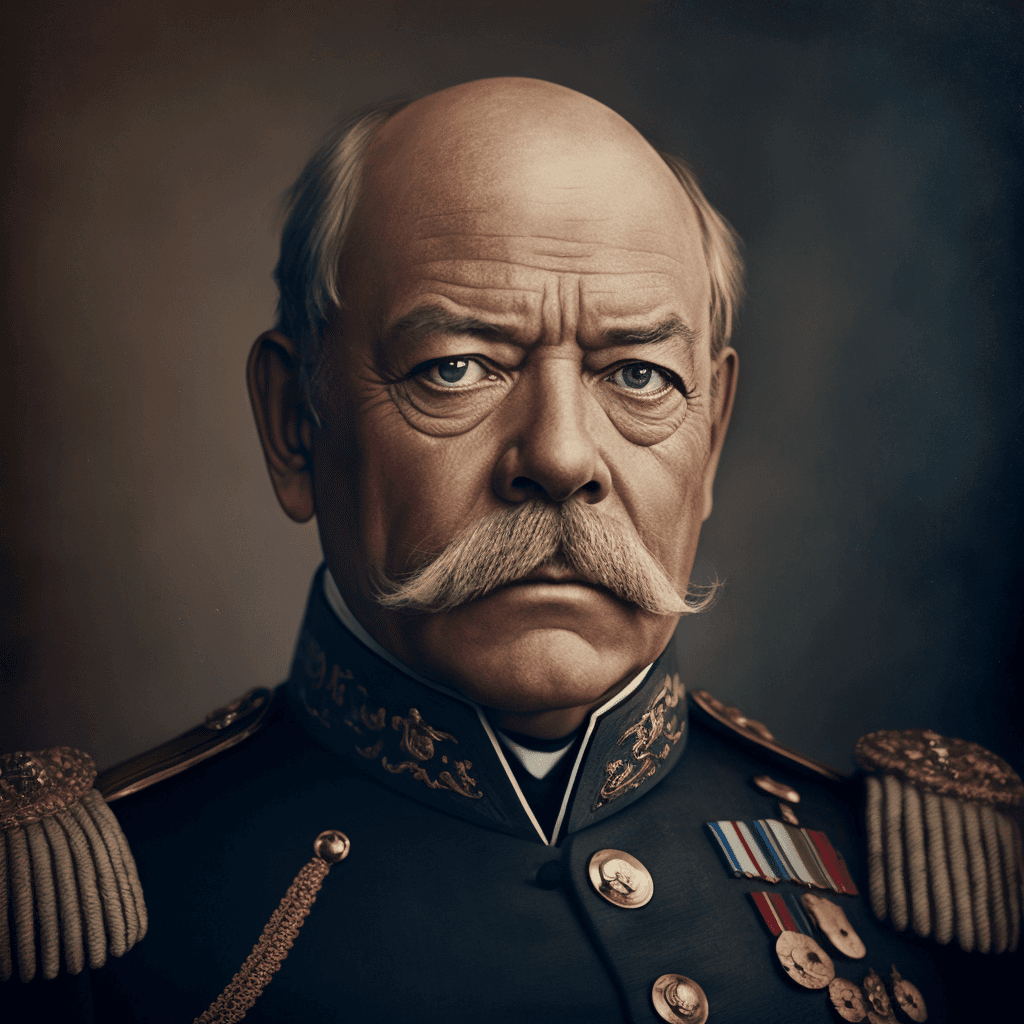
1815–1898
Statesman • Architect of German Unity
Né en 1815 dans une famille de Junkers en Prusse, Otto von Bismarck est entré en politique en tant que député conservateur qui a d'abord résisté au nationalisme libéral. Son poste d'ambassadeur prussien à Paris et à Saint-Pétersbourg lui a appris à lire l'équilibre des pouvoirs avec une froide précision, des compétences qu'il utiliserait sans pitié une fois que le roi Guillaume Ier l'aurait nommé ministre-président en 1862.
Bismarck a orchestré trois guerres rapides—contre le Danemark, l'Autriche et la France—qui ont ouvert la voie à l'unification allemande sous la direction prussienne. Proclamé empereur allemand à Versailles en 1871, il a construit un empire constitutionnel qui préservait l'autorité royale tout en canalisant l'énergie nationaliste dans un appareil d'État moderne.
En tant que chancelier jusqu'en 1890, il a été le pionnier de l'assurance sociale, a manipulé des alliances pour isoler la France et a traité le débat parlementaire comme un outil plutôt qu'une contrainte. Écarté par Guillaume II, il a passé ses dernières années à mettre en garde contre une ambition impériale imprudente, laissant une Allemagne unifiée dont le pouvoir et les tensions allaient redessiner le XXe siècle.
Moments clés de la vie et de l'héritage de cette figure
1815
Raised in the Prussian aristocracy, studying law before entering conservative politics in the fragmented German Confederation.
1862
Took control of Prussian government and declared that great questions would be settled by 'iron and blood,' not speeches.
1871
After defeating France, Wilhelm I was proclaimed German Emperor in the Hall of Mirrors, completing unification.
1884
Acquired protectorates in Africa and the Pacific, extending German influence overseas while maintaining continental priorities.
1890
Forced from office after clashing with the new emperor, ending an era of cautious balance in European diplomacy.
Jalons qui définissent la contribution de cette figure à l'histoire
Orchestrated the diplomatic and military sequence that merged German states into a single empire under Prussian dominance in 1871.
Pioneered a foreign policy based on shifting alliances and calculated force, keeping France isolated while avoiding general European war for two decades.
Introduced health, accident, and old-age insurance in the 1880s, partly to undercut socialist appeal and stabilize industrial society.
Balanced monarchical authority, bureaucratic efficiency, and limited parliamentarism in a constitutional order that endured until 1918.
Détails notables sur cette figure
Comment cette figure a façonné le monde que nous avons hérité
L'unification de l'Allemagne par Bismarck a redessiné la carte de l'Europe et créé une puissance industrielle dont la rivalité avec la Grande-Bretagne et la France a contribué à préparer le terrain pour la Première Guerre mondiale. Son mélange de gouvernance autoritaire et de réforme sociale a influencé l'art de gouverner bien au-delà de l'Allemagne, faisant de 'Realpolitik' un terme permanent dans le vocabulaire diplomatique.
Influence durable à travers les générations
Bismarck's unification of Germany redrew the map of Europe and created a industrial powerhouse whose rivalry with Britain and France helped set the stage for World War I. His blend of authoritarian governance and social reform influenced statecraft far beyond Germany, making 'Realpolitik' a permanent term in diplomatic vocabulary. Dismissed by Wilhelm II (1890) remains a defining moment in Otto von Bismarck's enduring reputation.
D'autres profils de la même époque ou du même domaine
Ressources éducatives sélectionnées pour approfondir
Entamez une conversation privée via Historical Collection AI.