Critique of Anthropomorphic Polytheism
Argued that humans project their own forms onto gods, undermining traditional Greek mythology's moral authority.
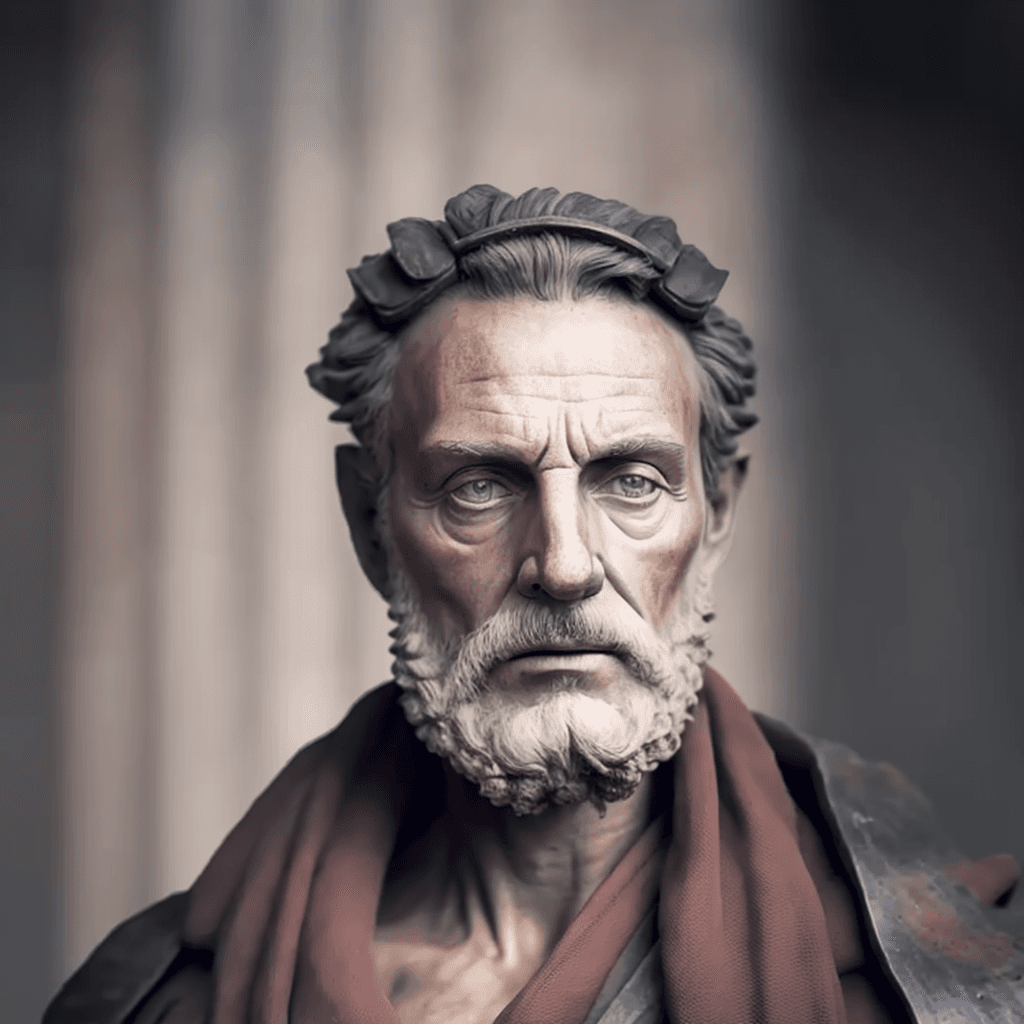
c. 570–478 BC
Philosopher • Poet • Critical Thinker
Né vers 570 av. J.-C. à Colophon, en Ionie, Xenophanes a quitté sa ville après la conquête perse et a passé une grande partie de sa longue vie en tant que poète-philosophe itinérant dans les colonies grecques de Sicile et du sud de l'Italie. Il récitait des élégies lors de symposiums, critiquant Homère et Hésiode pour avoir attribué le vol et l'adultère aux dieux et arguant que si les bovins pouvaient peindre, ils représenteraient les dieux sous forme de bovins.
Xenophanes a proposé un dieu suprême unique, différent des mortels par son corps ou son esprit — 'tout œil, tout esprit, tout oreille' — qui déplace toutes choses par la pensée seule. Cette critique théologique a anticipé le monothéisme philosophique ultérieur et le naturalisme scientifique. Il a également observé des coquillages fossilisés à l'intérieur des terres et a déduit que la terre avait autrefois été submergée, offrant un aperçu géologique précoce.
Bien qu'aucune de ses œuvres ne survive intégralement, des fragments cités par des auteurs ultérieurs révèlent un penseur qui a fait le lien entre poésie et philosophie. Il a influencé l'école éléatique, en particulier Parménide, et ses attaques contre l'anthropomorphisme divin ont résonné à travers Socrate, Platon et la tradition occidentale de la religion rationnelle.
Moments clés de la vie et de l'héritage de cette figure
c. 570 BCE
Grew up in Ionia during the flourishing of Pre-Socratic inquiry before Persian expansion disrupted the region.
c. 540 BCE
Left Colophon after Persian takeover, performing poetry in Greek cities of Sicily and Magna Graecia.
c. 500 BCE
Wrote satirical elegies and hymns proposing a unified, non-human god governing by mind alone.
c. 480 BCE
Noted marine fossils inland, inferring geological change—a rare empirical insight in early Greek thought.
c. 478 BCE
Tradition places his long life at roughly a century; fragments preserved by Simplicius and others ensured his posthumous influence.
Jalons qui définissent la contribution de cette figure à l'histoire
Argued that humans project their own forms onto gods, undermining traditional Greek mythology's moral authority.
Described a single greatest god unlike mortals, moving the divine toward abstract unity and moral perfection.
Interpreted fossil impressions of seaweed and fish as evidence that land was once submerged, anticipating paleontology.
His rational method and emphasis on unity influenced Parmenides and the development of metaphysics.
Détails notables sur cette figure
Comment cette figure a façonné le monde que nous avons hérité
Xenophanes a ouvert la voie du récit mythique à la théologie critique et à l'explication naturelle. Son insistance sur le fait que la connaissance croît par l'enquête plutôt que par la tradition a influencé la naissance de la philosophie occidentale et continue d'informer les débats sur la religion, la science et les limites de la projection humaine dans la description du divin.
Influence durable à travers les générations
Xenophanes opened the path from mythic storytelling to critical theology and natural explanation. His insistence that knowledge grows through inquiry rather than tradition influenced the birth of Western philosophy and continues to inform debates about religion, science, and the limits of human projection in describing the divine. Death in Elea or Syracuse (c. 478 BCE) remains a defining moment in Xenophanes's enduring reputation.
D'autres profils de la même époque ou du même domaine
Ressources éducatives sélectionnées pour approfondir
Entamez une conversation privée via Historical Collection AI.