Unification of Mongol Tribes
Consolidated fragmented steppe clans into a durable imperial polity.
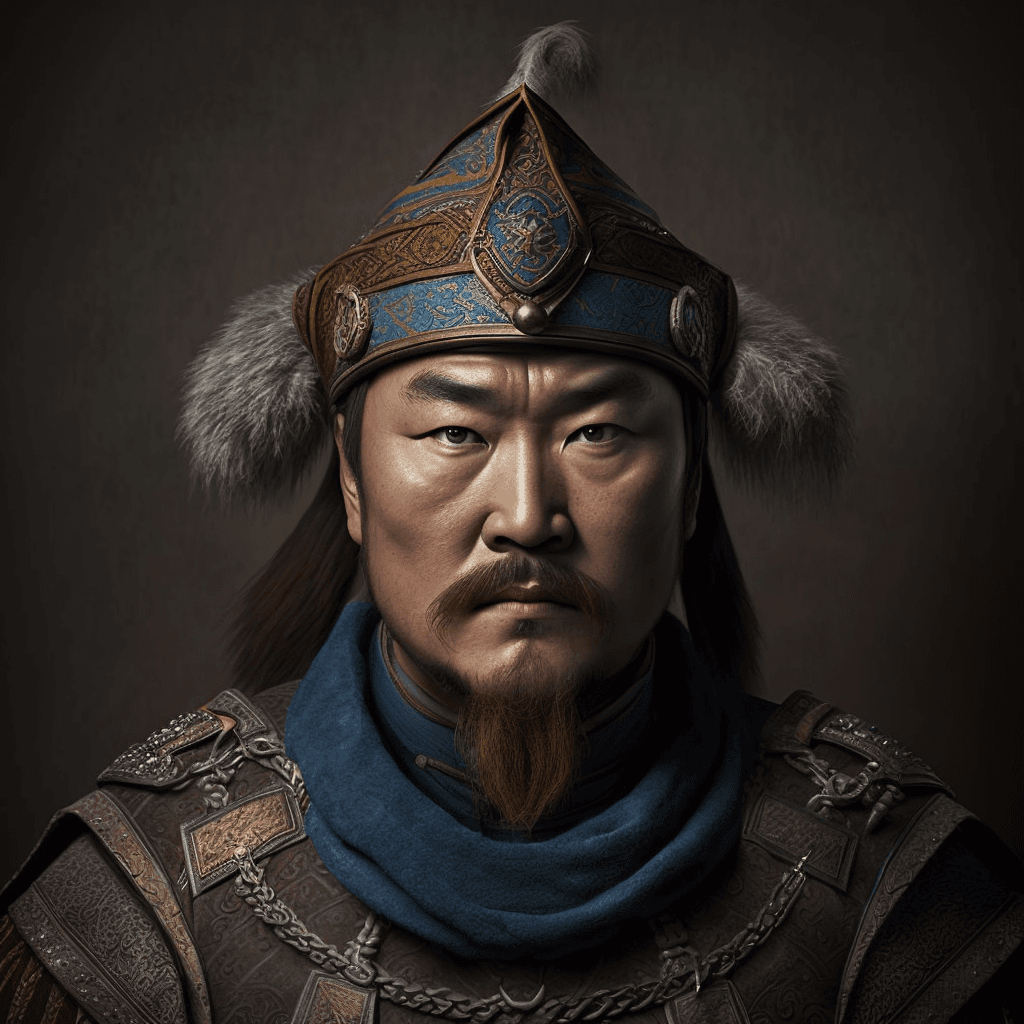
c.1162-1227
Conqueror - Lawgiver - Empire Builder
Родившись как Темучин на монгольской степи, Чингисхан (Genghis Khan) появился на свет в насильственном политическом ландшафте конкурирующих кланов, меняющихся альянсов и хрупкого выживания. После многих лет лишений, пленения и войны он создал коалиции через меритократическое военное продвижение и строгую дисциплину. В 1206 году курултай провозгласил его Чингисханом, что ознаменовало формальное объединение основных монгольских племён.
Он реорганизовал монгольские силы в гибкие десятичные единицы, акцентируя внимание на мобильности, сборе разведывательной информации и согласованных кавалерийских тактиках. Кампании против династии Цзинь, Хорезмской империи и других держав расширили монгольский контроль над обширными территориями. Хотя его завоевания часто сопровождались массовыми разрушениями, он также институционализировал коммуникационные маршруты, правовые рамки и защиту торговли и посланников.
Наследники Чингисхана построили крупнейшую смежную наземную империю в истории, связывая Восточную Азию, исламский мир и Европу через усиленный обмен товарами, технологиями и идеями. Историки продолжают обсуждать его наследие, балансируя между выдающимся государственным управлением и военной инновацией против значительных человеческих потерь. Его восхождение остаётся одним из самых драматичных преобразований политической власти в истории.
Ключевые моменты жизни и наследия этой личности
c.1162
Born near the Onon River into a minor Borjigin lineage.
1206
Recognized as supreme leader at a tribal assembly after unification campaigns.
1211
Launched major invasions into North China with sustained strategic success.
1219-1221
Defeated the Khwarazmian Empire across Central Asia and Persia.
1227
Died while campaigning against Western Xia; succession passed to his heirs.
Вехи, определяющие вклад этой личности в историю
Consolidated fragmented steppe clans into a durable imperial polity.
Introduced highly mobile command structures and disciplined cavalry operations.
Established a governing code emphasizing order, loyalty, and diplomatic protections.
Opened transcontinental routes that expanded trade and cultural transmission.
Примечательные детали об этой личности
Как эта личность изменила мир, который мы унаследовали
Чингисхан переупорядочил евразийскую геополитику, создав институты и военные системы, способные проецировать силу на беспрецедентные расстояния. Монгольская империя, которая последовала за этим, способствовала обмену вдоль Шелкового пути, влияя на торговлю, дипломатию, передачу технологий и даже экологию передачи болезней. Его наследие иллюстрирует, как империя может одновременно генерировать интеграцию, инновации и катастрофическое насилие на континентальном уровне.
Влияние на последующие поколения
Genghis Khan reordered Eurasian geopolitics by creating institutions and military systems capable of projecting power across unprecedented distances. The Mongol imperium that followed facilitated exchange along the Silk Roads, affecting commerce, diplomacy, technology transfer, and even the ecology of disease transmission. His legacy illustrates how empire can simultaneously generate integration, innovation, and catastrophic violence on a continental scale. Death During Campaign (1227) remains a defining moment in Genghis Khan's enduring reputation.
Другие профили той же эпохи или области
Подобранные образовательные ресурсы для дальнейшего изучения
Начните беседу и изучите мудрость через Historical Collection AI.