Pioneered Russian Realist Satire
Introduced a distinctive blend of grotesque humor and social criticism that shaped Dostoevsky, Chekhov, and generations of Russian writers.
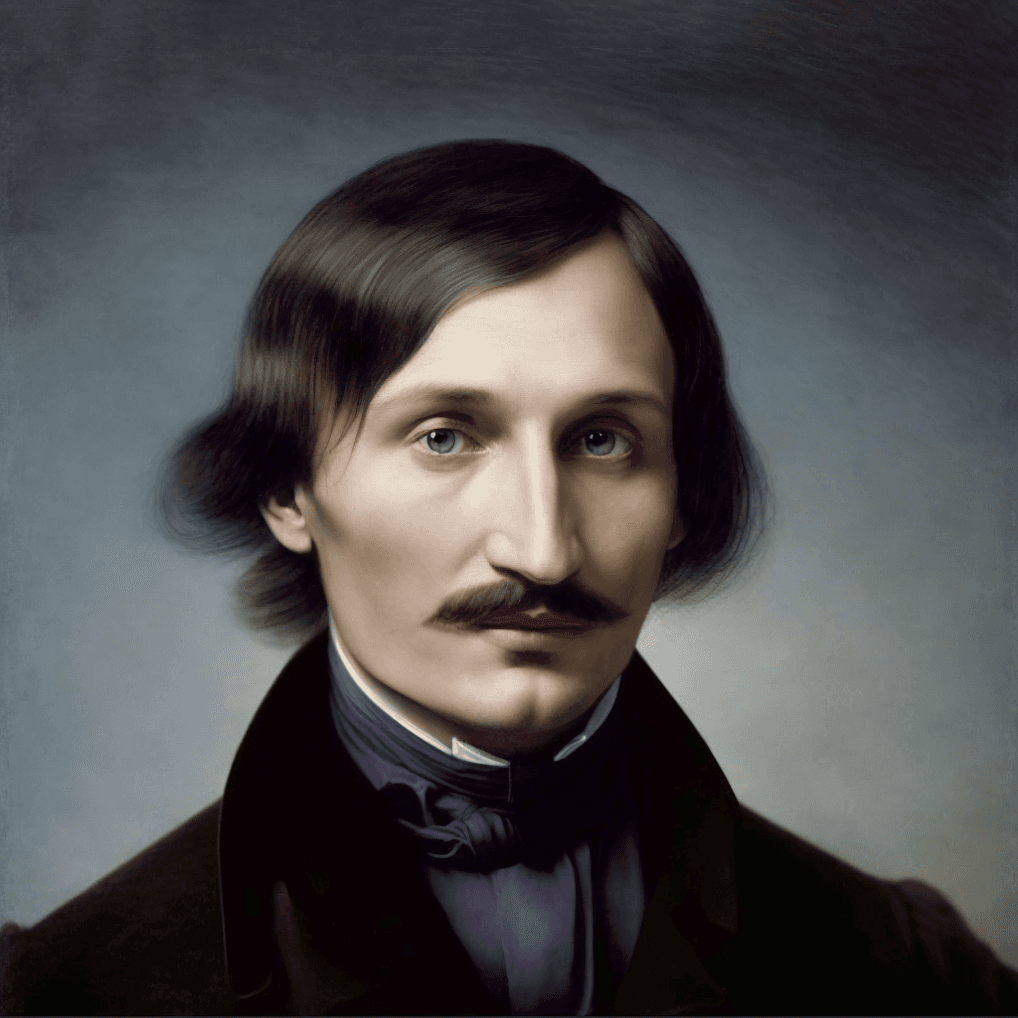
1809–1852
Novelist • Playwright • Satirist
Николай Гоголь (Nikolai Gogol) родился в 1809 году в Сорочинцах, на территории современной Украины, и вырос среди народных сказок и провинциальных обычаев, которые позже оживили его художественное творчество. После переезда в Санкт-Петербург он долго искал свой литературный голос, пока успех *Вечеров на хуторе близ Диканьки* не утвердил его как писателя, способного сделать сверхъестественное интимно русским.
Его шедевры — *Шинель*, *Мертвые души* и пьеса *Ревизор* — обнажили коррупцию, тщеславие и духовную пустоту с комической точностью и моральной настойчивостью. Персонажи Гоголя, от неудачливого чиновника Акакия Акакиевича до мошенника Чичикова, стали архетипами общества, застрявшего между традицией и современностью.
В последние годы жизни Гоголь попал под влияние строгого духовного наставника и сжег вторую часть *Мертвых душ*, что шокировало литературный мир. Он умер в Москве в 1852 году после строгого поста, оставив русскую литературу навсегда отмеченной его слиянием реализма, фантазии и пророческой социальной критики.
Ключевые моменты жизни и наследия этой личности
1809
Grew up in a Ukrainian gentry family, absorbing folk stories and rural customs that later shaped his early fiction.
1831
Moved to the imperial capital and published *Evenings on a Farm Near Dikanka*, launching his career with tales of witches and Cossack adventure.
1836
His satirical play exposing provincial graft premiered under Tsar Nicholas I, who reportedly said everyone got the blame except himself.
1842
Released the first part of his novel about Chichikov's scheme to purchase deceased serfs, cementing his reputation as Russia's sharpest social critic.
1852
Died after destroying manuscripts and undergoing a punishing fast, leaving Russian literature mourning the loss of his unfinished masterwork.
Вехи, определяющие вклад этой личности в историю
Introduced a distinctive blend of grotesque humor and social criticism that shaped Dostoevsky, Chekhov, and generations of Russian writers.
Created an unfinished epic novel whose portrait of a nation buying and selling 'dead souls' became one of literature's sharpest indictments of moral decay.
Works like *The Overcoat* and *The Nose* demonstrated how brief fiction could carry philosophical weight and transform everyday misery into universal symbol.
Drew on Cossack legends and village life to enrich imperial Russian literature with regional voices rarely heard in the capital.
Примечательные детали об этой личности
Как эта личность изменила мир, который мы унаследовали
Гоголь переопределил, что может делать русская проза, доказав, что смех и ужас могут обнажить самые глубокие недостатки общества. Его персонажи и фразы вошли в повседневную речь, а его влияние ощущается в реализме, модернизме и темной комедии мировой прозы XX века.
Влияние на последующие поколения
Gogol redefined what Russian prose could do, proving that laughter and horror could expose a society's deepest faults. His characters and phrases entered everyday speech, and his influence runs through realism, modernism, and the dark comedy of twentieth-century fiction worldwide. Death in Moscow (1852) remains a defining moment in Nikolai Gogol's enduring reputation.
Другие профили той же эпохи или области
Подобранные образовательные ресурсы для дальнейшего изучения
Начните беседу и изучите мудрость через Historical Collection AI.