Unified the German Empire
Orchestrated the diplomatic and military sequence that merged German states into a single empire under Prussian dominance in 1871.
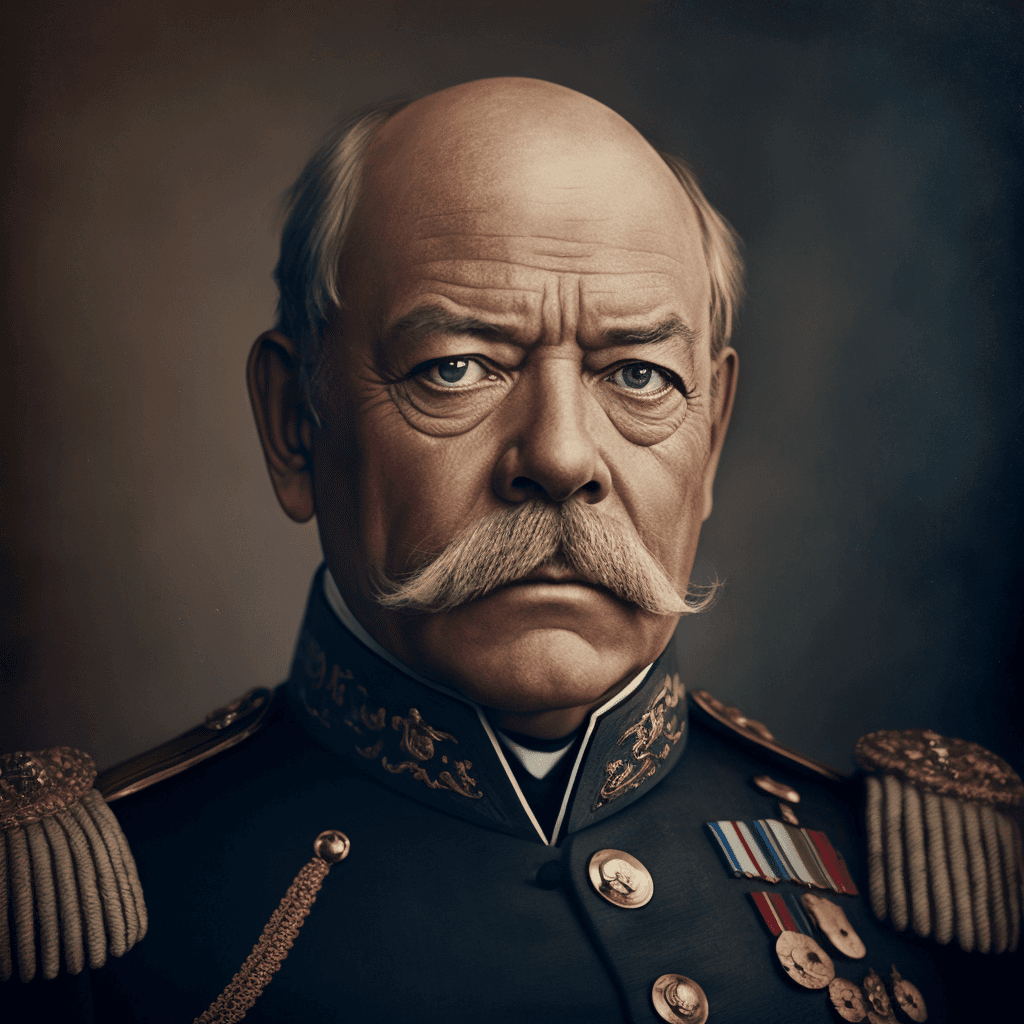
1815–1898
Statesman • Architect of German Unity
Отто фон Бисмарк (Otto von Bismarck) родился в 1815 году в семье юнкеров в Пруссии и вошел в политику как консервативный депутат, который изначально сопротивлялся либеральному национализму. Его назначение прусским послом в Париже и Санкт-Петербурге научило его холодной точности в чтении баланса сил, навыков, которые он использовал безжалостно, когда король Вильгельм I назначил его министром-президентом в 1862 году.
Бисмарк организовал три быстрые войны — против Дании, Австрии и Франции — которые очистили путь к германскому объединению под прусским руководством. Провозглашенный германским императором в Версале в 1871 году, он построил конституционную империю, которая сохранила королевскую власть, одновременно направляя национальную энергию в современный государственный аппарат.
В качестве канцлера до 1890 года он стал пионером социального страхования, манипулировал альянсами, чтобы изолировать Францию, и рассматривал парламентские дебаты как инструмент, а не ограничение. Уволенный Вильгельмом II, он провел свои последние годы, предостерегая от безрассудных имперских амбиций, оставив объединенную Германию, чья мощь и напряженность изменили XX век.
Ключевые моменты жизни и наследия этой личности
1815
Raised in the Prussian aristocracy, studying law before entering conservative politics in the fragmented German Confederation.
1862
Took control of Prussian government and declared that great questions would be settled by 'iron and blood,' not speeches.
1871
After defeating France, Wilhelm I was proclaimed German Emperor in the Hall of Mirrors, completing unification.
1884
Acquired protectorates in Africa and the Pacific, extending German influence overseas while maintaining continental priorities.
1890
Forced from office after clashing with the new emperor, ending an era of cautious balance in European diplomacy.
Вехи, определяющие вклад этой личности в историю
Orchestrated the diplomatic and military sequence that merged German states into a single empire under Prussian dominance in 1871.
Pioneered a foreign policy based on shifting alliances and calculated force, keeping France isolated while avoiding general European war for two decades.
Introduced health, accident, and old-age insurance in the 1880s, partly to undercut socialist appeal and stabilize industrial society.
Balanced monarchical authority, bureaucratic efficiency, and limited parliamentarism in a constitutional order that endured until 1918.
Примечательные детали об этой личности
Как эта личность изменила мир, который мы унаследовали
Объединение Германии Бисмарком изменило карту Европы и создало индустриальную державу, чье соперничество с Британией и Францией помогло подготовить почву для Первой мировой войны. Его сочетание авторитарного управления и социальных реформ оказало влияние на государственное управление далеко за пределами Германии, сделав 'реальную политику' постоянным термином в дипломатической лексике.
Влияние на последующие поколения
Bismarck's unification of Germany redrew the map of Europe and created a industrial powerhouse whose rivalry with Britain and France helped set the stage for World War I. His blend of authoritarian governance and social reform influenced statecraft far beyond Germany, making 'Realpolitik' a permanent term in diplomatic vocabulary. Dismissed by Wilhelm II (1890) remains a defining moment in Otto von Bismarck's enduring reputation.
Другие профили той же эпохи или области
Подобранные образовательные ресурсы для дальнейшего изучения
Начните беседу и изучите мудрость через Historical Collection AI.