First U.S. Woman MD
Graduated from Geneva Medical College in 1849, breaking the gender barrier in American medicine.
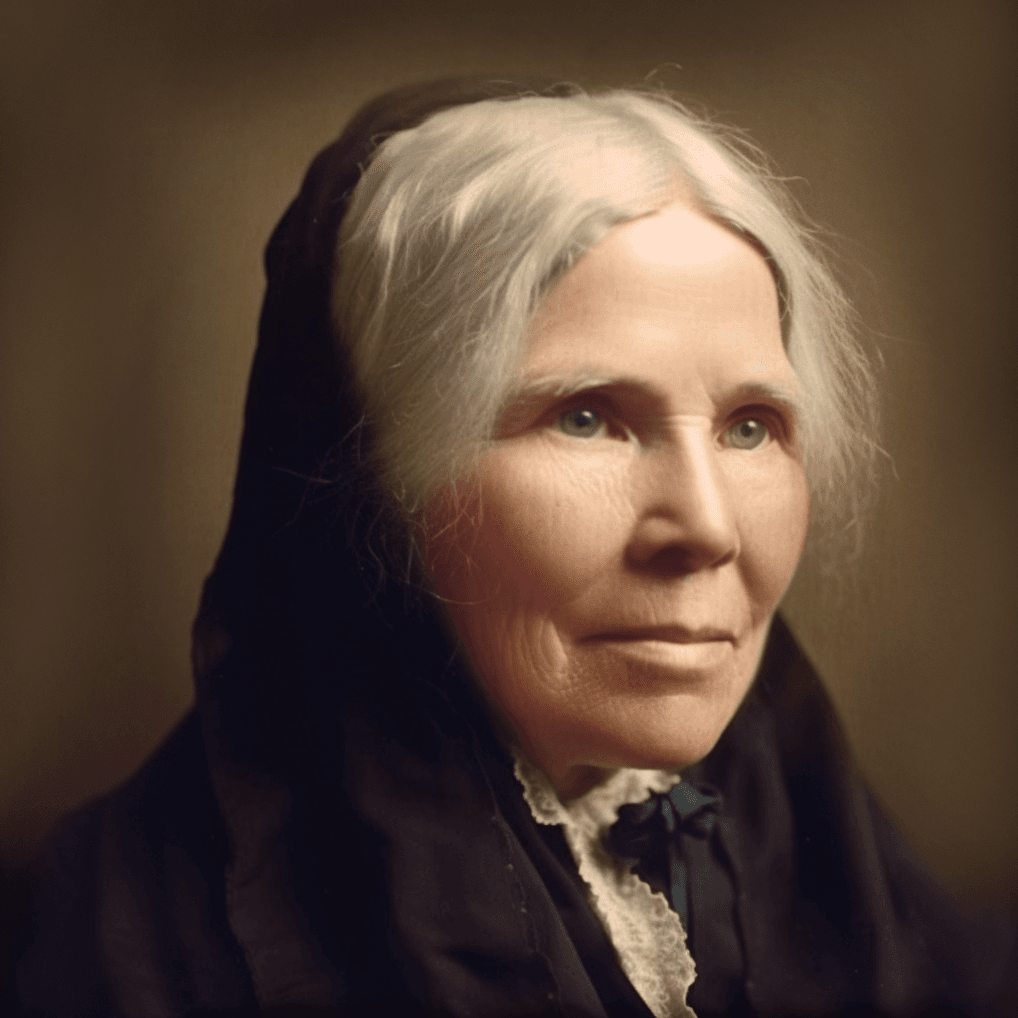
1821–1910
Physician • First Woman MD in the United States
Elizabeth Blackwell was born on 3 February 1821 in Bristol, England, the third of nine children in a Quaker-inspired liberal household that valued education and abolitionism. After financial reverses, the family emigrated to New York and later Cincinnati, where her father died leaving the Blackwell women in reduced circumstances. Elizabeth taught school, disliked the idea of marriage as sole destiny, and turned to medicine partly after a dying friend remarked that a female physician might have eased her suffering. Every medical school she approached rejected her application until Geneva Medical College in upstate New York admitted her in 1847—reportedly as a faculty joke that the student body voted to accept, unaware she would excel.
Blackwell graduated first in her class on 23 January 1849, becoming the first woman in America to receive an MD, though the New York State Medical Society refused her membership and hospitals barred her from clinical posts. She studied in Paris and London, losing sight in one eye after treating a patient with purulent ophthalmia, yet persisted in establishing practice in New York City. With her sister Emily Blackwell—also a physician—and Dr. Marie Zakrzewska, she founded the New York Infirmary for Indigent Women and Children in 1857, providing care and training for female medical students denied hospital access elsewhere. During the Civil War she organized the Women's Central Association of Relief and helped train nurses for the Sanitary Commission, insisting on professional standards rather than amateur charity alone.
Blackwell returned to England in 1869, helped found the London School of Medicine for Women, and wrote on public health, moral education, and social reform while maintaining transatlantic correspondence with reformers. She opposed some contemporary feminist tactics yet championed women's right to medical careers on equal intellectual terms. Her autobiography and lectures influenced Victorian debates about women's work, purity, and bodily autonomy. She died on 31 May 1910 in Hastings, Sussex, having seen medical schools across Britain and America admit women in growing numbers. Blackwell's life demonstrated that professional gatekeeping could be broken by persistence, institutional creation, and the strategic use of public moral argument.
1821 — Born in Bristol. Raised in a reform-minded family that emigrated to the United States in her youth.
1847 — Admitted to Geneva Medical College. Entered the only school that accepted her after widespread rejection.
1849 — Medical Degree. Graduated first in her class, becoming the first woman MD in the United States.
1857 — New York Infirmary Founded. Opened a clinic and teaching hospital with Emily Blackwell and Marie Zakrzewska.
1910 — Death in England. Died in Hastings after decades advancing women's medical education on both sides of the Atlantic.
Key moments across this figure's life and legacy
1821
Raised in a reform-minded family that emigrated to the United States in her youth.
1847
Entered the only school that accepted her after widespread rejection.
1849
Graduated first in her class, becoming the first woman MD in the United States.
1857
Opened a clinic and teaching hospital with Emily Blackwell and Marie Zakrzewska.
1910
Died in Hastings after decades advancing women's medical education on both sides of the Atlantic.
Landmarks that define this figure's contribution to history
Graduated from Geneva Medical College in 1849, breaking the gender barrier in American medicine.
Co-founded a hospital serving poor women and children while training female physicians.
Organized sanitary relief and nurse training standards for Union medical efforts.
Helped establish British medical education for women in the late nineteenth century.
Notable details about this historical figure
How this figure shaped the world we inherit
Blackwell shattered the assumption that women lacked the temperament or intellect for clinical medicine, creating institutions that trained successors and modeled professional equality. Her career remains foundational for histories of women in science, nursing, and public health reform.
Enduring influence across generations
Blackwell shattered the assumption that women lacked the temperament or intellect for clinical medicine, creating institutions that trained successors and modeled professional equality. Her career remains foundational for histories of women in science, nursing, and public health reform. Death in England (1910) remains a defining moment in Elizabeth Blackwell's enduring reputation.
Explore more profiles from the same era or field
Curated educational resources for further study
Start a private conversation and explore their wisdom through Historical Collection AI.