Pygmalion
Created the definitive comedy of manners about language, class, and identity later adapted as My Fair Lady.
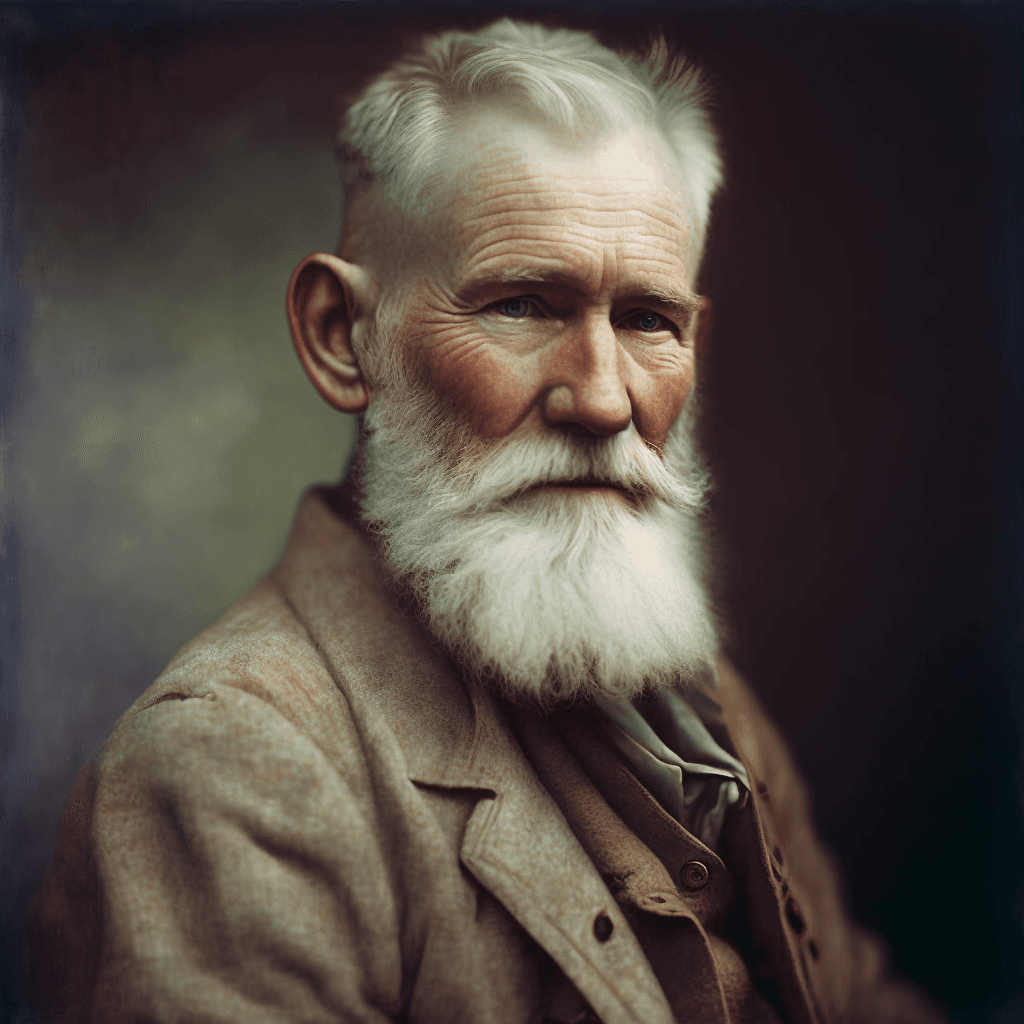
1856–1950
Playwright • Critic • Nobel Laureate
George Bernard Shaw was born in 1856 in Dublin to an unsuccessful grain merchant and a music teacher who eventually left for London, taking young Shaw with her. He rejected formal schooling, worked in an estate office, then threw himself into London's socialist circles, vegetarianism, and the Fabian Society, where his pamphlets argued for gradual reform rather than revolution. Music criticism and theater reviews paid his bills while he honed a prose style of paradox and provocation.
Shaw's plays refused Victorian sentiment. Pygmalion turned class mobility into comedy by teaching a flower girl to pass as a duchess; Mrs. Warren's Profession confronted prostitution; Major Barbara linked religion with munitions manufacturing. He insisted on lengthy prefaces that explained his ideas as thoroughly as the dramas enacted them. Man and Superman introduced the concept of the Life Force, while Saint Joan treated Joan of Arc as a revolutionary proto-Protestant rather than a sentimental martyr.
Awarded the Nobel Prize in 1925— which he accepted only after initial refusal— Shaw remained prolific into old age, corresponding with dictators and democrats alike and never abandoning his role as public irritant. He died in 1950 at Ayot St Lawrence after a fall in his garden, having left a body of more than fifty plays that made the stage a forum for ethical argument dressed in laughter.
1876 — Arrival in London. Moved to London and began writing novels, criticism, and socialist tracts.
1894 — Arms and the Man. Achieved West End success with an anti-romantic war comedy.
1912 — Pygmalion Premiered. Opened the play that became his most enduring popular work.
1925 — Nobel Prize. Awarded the literature prize while continuing to publish controversial prefaces.
1950 — Death in Hertfordshire. Died at ninety-four after injuring his leg while pruning trees.
Key moments across this figure's life and legacy
1876
Moved to London and began writing novels, criticism, and socialist tracts.
1894
Achieved West End success with an anti-romantic war comedy.
1912
Opened the play that became his most enduring popular work.
1925
Awarded the literature prize while continuing to publish controversial prefaces.
1950
Died at ninety-four after injuring his leg while pruning trees.
Landmarks that define this figure's contribution to history
Created the definitive comedy of manners about language, class, and identity later adapted as My Fair Lady.
Helped shape British democratic socialism through pamphlets and policy advocacy.
Honored in 1925 for a career merging drama with social criticism.
Reimagined Joan of Arc as a tragic realist heroine rather than pious legend.
Notable details about this historical figure
How this figure shaped the world we inherit
Shaw made the theater a courtroom for ideas about capitalism, feminism, and war at a time when drama was expected to entertain rather than argue. His prefaces and plays influenced the development of modern political satire from Brecht to television comedy. Pygmalion alone permanently altered how audiences think about accent, class performance, and the social construction of respectability.
Enduring influence across generations
Shaw made the theater a courtroom for ideas about capitalism, feminism, and war at a time when drama was expected to entertain rather than argue. His prefaces and plays influenced the development of modern political satire from Brecht to television comedy. Pygmalion alone permanently altered how audiences think about accent, class performance, and the social construction of respectability. Death in Hertfordshire (1950) remains a defining moment in George Bernard Shaw's enduring reputation.
Explore more profiles from the same era or field
Curated educational resources for further study
Start a private conversation and explore their wisdom through Historical Collection AI.