2001: A Space Odyssey
Revolutionized science fiction cinema with pioneering effects, non-linear narrative, and philosophical scope.
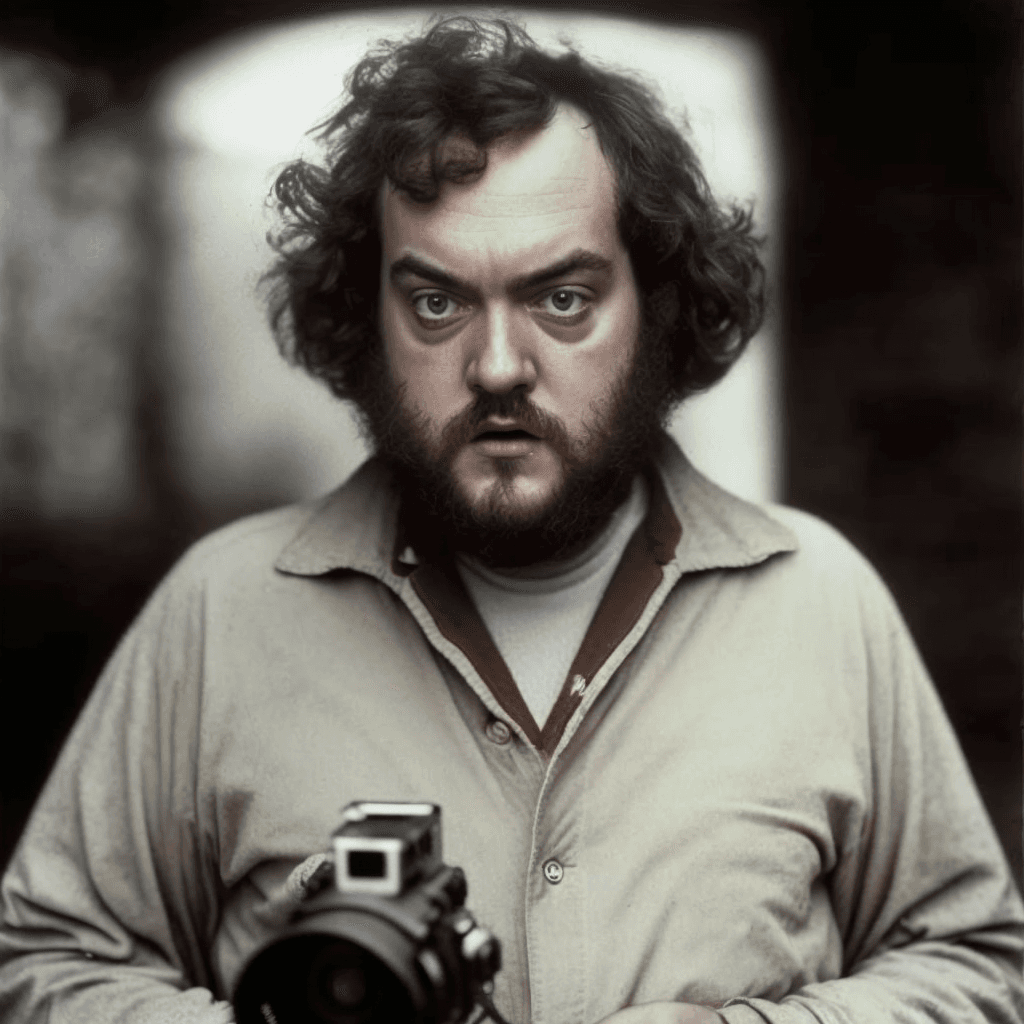
1928–1999
Director • Visionary Filmmaker
Stanley Kubrick was born on 26 July 1928 in the Bronx, New York, the son of a physician who taught him chess and photography early. He dropped out of City College, sold photo essays to Look magazine while still a teenager, and financed short documentaries before directing noir features Fear and Desire and The Killing in the early 1950s. Kubrick's perfectionism, multiple takes, and insistence on technical innovation marked him as unusual in an industry accustomed to studio schedules and star deference.
After Paths of Glory (1957) and Spartacus (1960), he moved permanently to England, gaining independence from Hollywood contract systems while producing Lolita, Dr. Strangelove, 2001: A Space Odyssey, A Clockwork Orange, Barry Lyndon, The Shining, and Full Metal Jacket. Each film pursued a distinct visual grammar: war's injustice, nuclear absurdity, evolutionary mystery, behavioral conditioning, eighteenth-century candlelight, horror isolation, and Vietnam's dehumanization. He collaborated closely with cinematographers, production designers, and composers—often using classical music ironically—and supervised marketing and release strategies. Actors praised and feared his demand for dozens of repetitions until gesture and framing aligned exactly with his previsualized boards.
Kubrick withdrew from publicity, living on an estate near London where he researched projects for years, sometimes abandoning films after extensive preparation. He died on 7 March 1999 shortly after delivering Eyes Wide Shut, leaving a small but fiercely debated filmography whose influence spans science fiction, horror, and war cinema. Directors from Steven Spielberg to Christopher Nolan cite 2001's special effects and cosmic pacing; music video and advertising borrow his symmetrical compositions and slow zooms. Film scholars analyze his adaptation methods—often diverging radically from source novels—and his use of violence as moral provocation rather than spectacle alone. Kubrick's archive reveals exhaustive location scouting and lens testing, confirming that his mystique rested on craft as much as enigma.
1928 — Born in the Bronx. Born in New York City and developed early interest in photography and chess.
1957 — Paths of Glory. Directed an antiwar film that established his reputation for moral seriousness.
1968 — 2001 Released. Premiered his science fiction epic that redefined the genre's visual possibilities.
1971 — A Clockwork Orange. Adapted Burgess's novel, provoking controversy over violence and social control.
1999 — Death in England. Died at seventy after completing Eyes Wide Shut.
Key moments across this figure's life and legacy
1928
Born in New York City and developed early interest in photography and chess.
1957
Directed an antiwar film that established his reputation for moral seriousness.
1968
Premiered his science fiction epic that redefined the genre's visual possibilities.
1971
Adapted Burgess's novel, provoking controversy over violence and social control.
1999
Died at seventy after completing Eyes Wide Shut.
Landmarks that define this figure's contribution to history
Revolutionized science fiction cinema with pioneering effects, non-linear narrative, and philosophical scope.
Created a satirical masterpiece on nuclear annihilation that shaped Cold War cultural discourse.
Pioneered cinematographic techniques including candlelit photography in Barry Lyndon and Steadicam work in The Shining.
Maintained creative control through British-based production, influencing auteur filmmaking worldwide.
Notable details about this historical figure
How this figure shaped the world we inherit
Kubrick's films reshaped how cinema treats war, technology, violence, and human evolution, combining technical innovation with unsettling moral questions. His auteur model and visual precision influenced generations of filmmakers, and titles such as 2001 and Dr. Strangelove remain touchstones in discussions of modernity, media, and the Cold War.
Enduring influence across generations
Kubrick's films reshaped how cinema treats war, technology, violence, and human evolution, combining technical innovation with unsettling moral questions. His auteur model and visual precision influenced generations of filmmakers, and titles such as 2001 and Dr. Strangelove remain touchstones in discussions of modernity, media, and the Cold War. Death in England (1999) remains a defining moment in Stanley Kubrick's enduring reputation.
Explore more profiles from the same era or field
Curated educational resources for further study
Start a private conversation and explore their wisdom through Historical Collection AI.