Voltaic Pile
Invented the first chemical battery capable of producing a steady electric current.
Discover
Explore influential historical figures from science, philosophy, leadership, art, and culture.
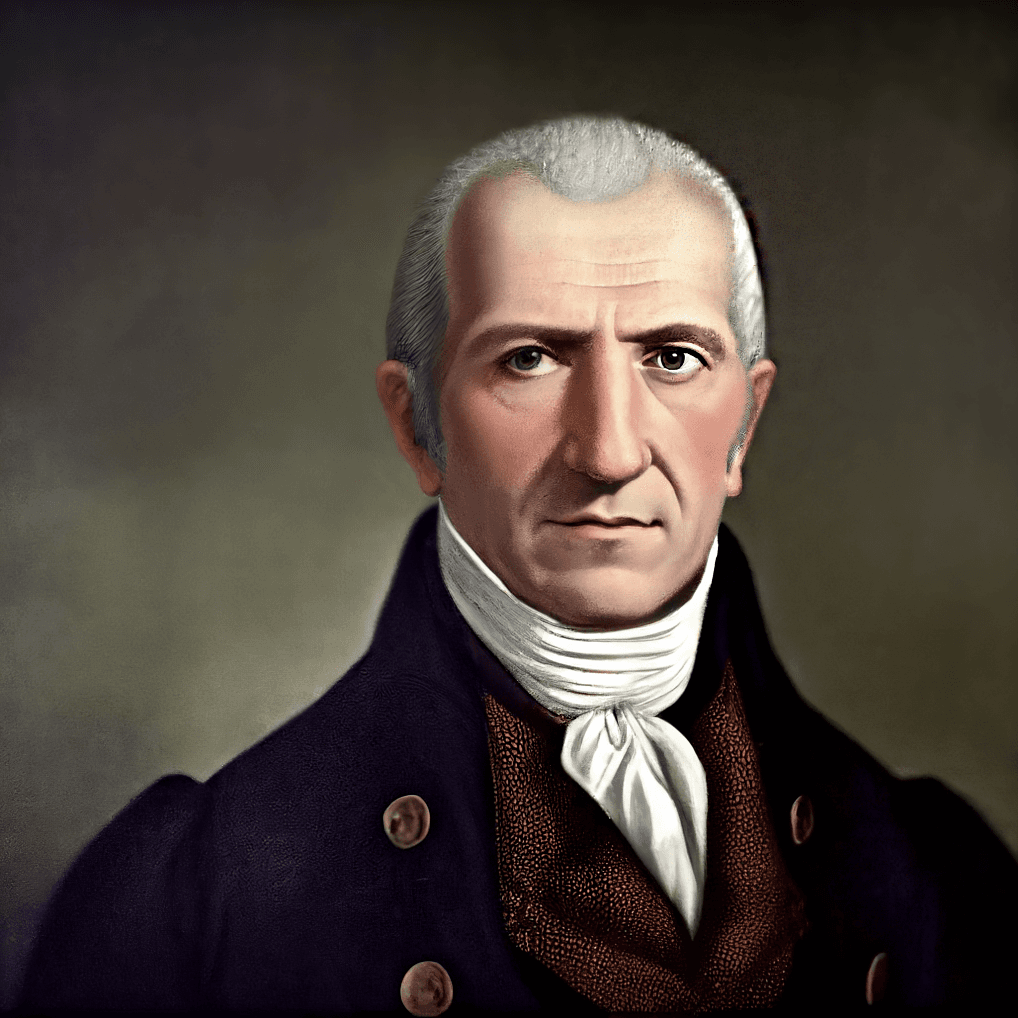
1745–1827
Physicist • Inventor • Pioneer of Electricity
This is a read-only educational profile. Chat, Council Mode, and AI features are not available for historical figures.
Alessandro Giuseppe Antonio Anastasio Volta was born on 18 February 1745 in Como, in the Duchy of Milan, a lakeside city with a tradition of silk commerce and learned societies that encouraged local inquiry. He showed early aptitude for physics and poetry, composing verses in Italian and Latin while experimenting with electrical devices as a teenager. Educated within the Enlightenment tradition, he corresponded with leading scientists across Europe and held professorships in experimental physics at the Royal School in Como and later at the University of Pavia, where he built a reputation for lucid demonstration lectures. Volta's research focused on electricity, gases, and the strange effects reported when dissimilar metals contact moist conductors, topics that occupied natural philosophers from Bologna to London. In 1776 he identified and isolated methane, which he called inflammable air from marshlands, contributing to pneumatic chemistry and the growing catalog of distinct gases. His temperament combined civic pride in Como with ambition for recognition from Parisian academies and royal patrons; he wrote clear prose and designed instruments that audiences could see and replicate. Volta traveled to major scientific centers, presenting results before skeptical colleagues who demanded repeatable experiments rather than anecdote. Unlike some contemporaries who treated electricity as theatrical spectacle, Volta pursued quantitative comparison: which metals paired most strongly, how humidity affected contact, and how long sparks could be sustained. By the 1780s he was among Italy's most cited electricians, respected by Benjamin Franklin's circle and by French academicians who debated competing theories of fluid and fire.
In the 1780s and 1790s Volta investigated what Luigi Galvani called animal electricity—the twitching of frog legs when metal instruments touched nerves during dissection. Galvani interpreted the phenomenon as intrinsic electrical fluid within animal tissue; Volta argued that the twitching arose from metal contact and moisture forming a closed circuit, not from a special vital force. The debate, sometimes personalized in pamphlets and letters, became one of the most famous disputes in early electrical science. To prove his contact theory, Volta stacked alternating discs of zinc and copper separated by brine-soaked cardboard or cloth, creating the voltaic pile in 1799. This device produced a continuous current, unlike earlier electrostatic machines that delivered brief shocks, and opened the era of electrochemistry and sustained electric power. Volta announced his discovery in a letter to the Royal Society of London in 1800; news spread rapidly to Paris, where Napoleon Bonaparte, then First Consul, summoned him for demonstration and honored him with a medal and a senatorial seat in the Kingdom of Italy. Laboratories across Europe replicated the pile within months, isolating new elements and studying chemical decomposition through electrolysis. Humphry Davy at the Royal Institution used voltaic cells to isolate sodium and potassium, demonstrating how Volta's invention transformed chemistry as well as physics. Volta's careful choice of materials and stacking geometry showed that battery voltage depended on the number of pairs and the nature of electrolyte, establishing design principles still taught in introductory engineering.
Volta retired from active research in his later years but lived long enough to see his invention transform laboratories, industry, and public imagination across Europe. He returned to Como, received honors from multiple states, and continued correspondence while declining some of the more speculative extensions others proposed for his device. The pile enabled telegraph experiments, electroplating, and medical applications that ranged from genuine nerve studies to dubious cures, a pattern common when powerful new tools outpace regulatory understanding. In 1881 the International Electrical Congress named the volt, the unit of electrical potential difference, after him, fixing his name in every circuit diagram and power specification. Historians of science credit Volta with shifting electricity from parlor spectacle to measurable, reproducible energy suitable for engineering calculation. Modern portable electronics depend on descendants of his stacked-cell concept, even though lithium-ion chemistry would have been unimaginable in Pavia. Volta died in Como on 5 March 1827, mourned as a benefactor of science and a symbol of Italian contribution to Enlightenment knowledge. Como's Tempio Voltiano museum preserves his instruments and manuscripts, attracting students who learn that the battery began as a argument about frog legs and metal. His career illustrates how empirical patience and theoretical clarity can resolve disputes that metaphysical language alone cannot settle. From electrochemistry to the electrical grid, the path from Volta's tabletop stack to planetary energy systems remains one of the decisive arcs of modern technology. Instrument makers in Como reproduced his designs for classroom demonstration, and nineteenth-century physics textbooks illustrated the pile as the ancestor of modern cells. Volta corresponded with royal patrons about establishing prizes for agricultural chemistry tied to electric experimentation. Maritime telegraph pioneers later adapted stacked-cell concepts for early submarine cable tests, extending his influence beyond the laboratory bench into communication history. Today high-school physics curricula worldwide still narrate the Galvani-Volta debate as the origin story of batteries powering phones and electric vehicles.
Key moments across this figure's life and legacy
1745
Born in Como, Lombardy, and later taught physics at local and regional institutions.
1770s
Conducted experiments on static electricity and gases while corresponding with European savants.
1791
Challenged animal electricity theory after Galvani's frog experiments became widely discussed.
1800
Reported his battery to the Royal Society, revolutionizing electrochemical research.
1827
Died in Como after a career that linked Enlightenment science to industrial electricity.
Landmarks that define this figure's contribution to history
Invented the first chemical battery capable of producing a steady electric current.
Demonstrated that electricity in Galvani's experiments arose from metal contact, not animal tissue alone.
Identified and studied methane, contributing to early pneumatic chemistry.
Gave his name to the volt, the standard unit of electrical potential difference.
How this figure shaped the world we inherit
Volta converted electrical curiosity into a reliable technology. The voltaic pile made current available on demand, enabling electrochemistry, telegraphy, and eventually the electrical grid. By clarifying the chemistry of metal contact and inventing practical storage of charge, he moved physics from demonstration to engineering, and the volt remains a daily measure of the energy that powers modern civilization.
Explore more profiles from the same era or field
Curated educational resources for further study
Discover historical art and educational content on our media channels