Revolutionary Short Fiction
Crafted stories that replaced plot twists with atmosphere, detail, and psychological nuance.
Discover
Explore influential historical figures from science, philosophy, leadership, art, and culture.
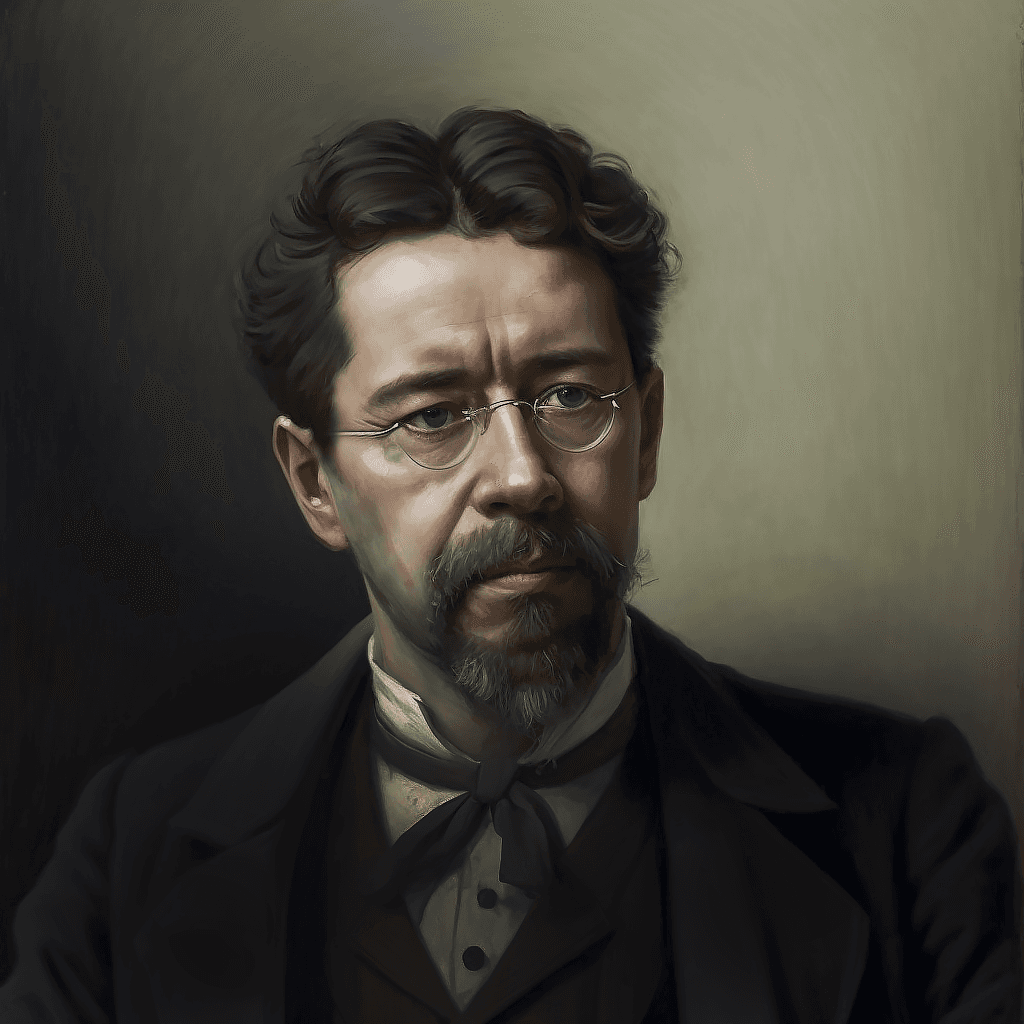
1860–1904
Playwright • Short Story Master • Physician
This is a read-only educational profile. Chat, Council Mode, and AI features are not available for historical figures.
Anton Pavlovich Chekhov was born on 29 January 1860 in Taganrog, a port on the Sea of Azov, the son of a grocer and former serf who beat his children and managed the family shop with harsh discipline. Chekhov helped support the household after his father's bankruptcy, selling goods and tutoring while studying medicine at Moscow University on scholarship. He began publishing humorous sketches under pseudonyms in popular magazines to pay tuition, gradually deepening his tone as he observed the boredom, vanity, and quiet desperation of provincial Russian life. His early volume of stories and his motto "Medicine is my lawful wife and literature my mistress" captured a dual career that would define his brief adulthood.
By the 1880s Chekhov was a prolific author of stories such as "The Steppe," "A Boring Story," and "The Lady with the Dog," works that avoided melodrama and moral sermonizing in favor of precise detail and unresolved endings. He practiced medicine during a cholera epidemic, traveled to Sakhalin Island to document penal colony conditions, and built a house in Yalta where tuberculosis forced him to spend winters. His major plays—The Seagull, Uncle Vanya, Three Sisters, and The Cherry Orchard—initially baffled audiences expecting conventional plot arcs, yet they revolutionized drama by treating ordinary speech, pauses, and failed dreams as sufficient tragedy. Chekhov married actress Olga Knipper, corresponded with her affectionately from Yalta, and supported younger writers including Maxim Gorky.
Chekhov died of tuberculosis on 15 July 1904 in Badenweiler, Germany, at forty-four, leaving a body of work that influenced Joyce, Kafka, Hemingway, and virtually every modern playwright. Directors from Stanislavski to Cheek by Jowl reinterpreted his plays as studies in subtext and social change at the end of the tsarist era. His medical eye informed clinical descriptions of psychology and class; his refusal to judge characters outright made him the master of compassionate irony. Russian literature gained in Chekhov a writer who proved that a gun not fired on stage could still change everything in the audience's mind.
Key moments across this figure's life and legacy
1860
Raised in a merchant family on the Sea of Azov before studying medicine in Moscow.
1886
Gained encouragement from editor Aleksey Suvorin and published influential early stories.
1890
Documented convict life in a remote penal colony, producing a major work of social reportage.
1896
Endured a disastrous first performance before the play became a cornerstone of modern drama.
1904
Died of tuberculosis at forty-four, leaving four landmark plays and hundreds of stories.
Landmarks that define this figure's contribution to history
Crafted stories that replaced plot twists with atmosphere, detail, and psychological nuance.
Wrote The Seagull, Uncle Vanya, Three Sisters, and The Cherry Orchard, transforming modern theater.
Conducted a census and report on penal conditions after traveling to the remote island in 1890.
Treated patients without charge in Melikhovo and during cholera outbreaks while writing prolifically.
How this figure shaped the world we inherit
Chekhov taught writers and dramatists to trust ambiguity, ordinary language, and emotional restraint, shaping twentieth-century fiction and theater from Stanislavski's method acting to the short story workshops of Iowa and beyond. His portrait of a Russia poised between feudal memory and uncertain modernity remains a reference for understanding social transition without heroic cliché.
Explore more profiles from the same era or field
Curated educational resources for further study
Discover historical art and educational content on our media channels