Continental Army Command
Led American forces through the Revolutionary War to independence at Yorktown.
Discover
Explore influential historical figures from science, philosophy, leadership, art, and culture.
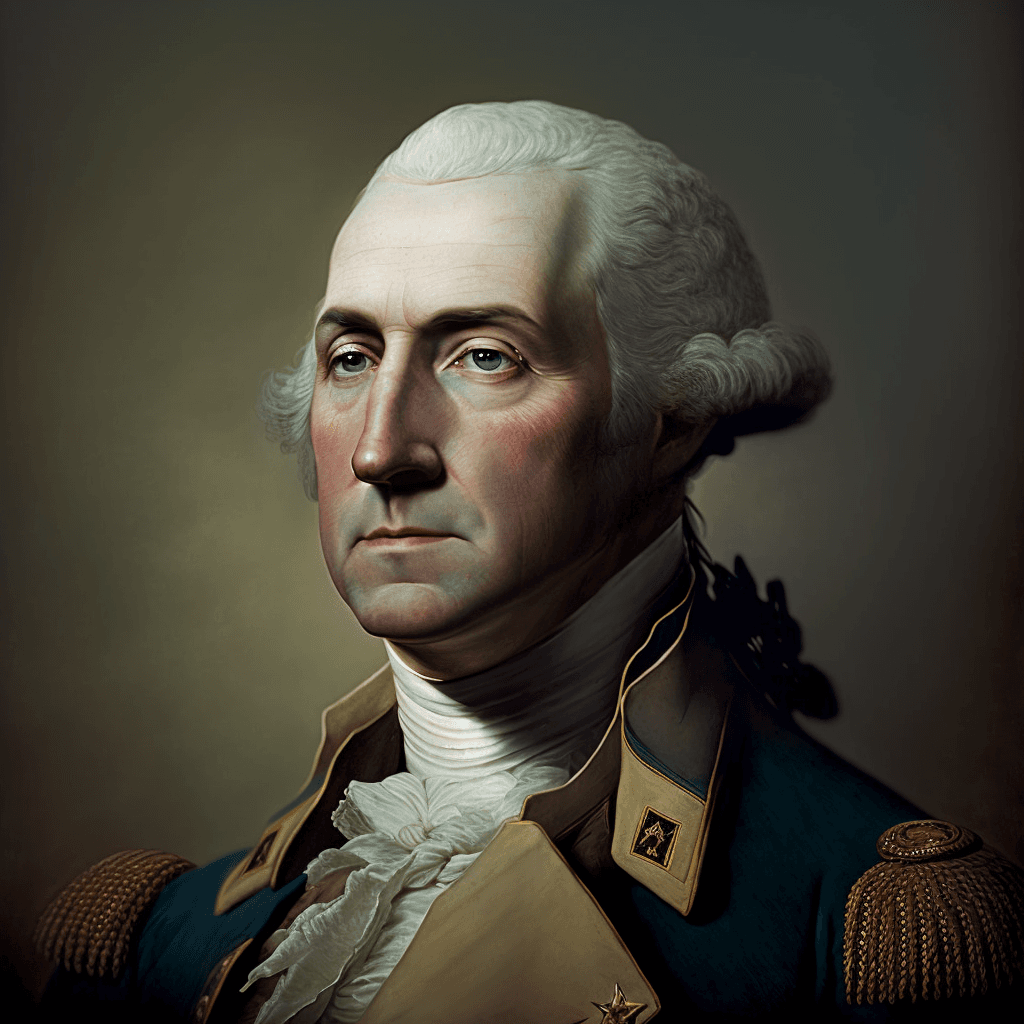
1732–1799
Founding Father • First U.S. President
This is a read-only educational profile. Chat, Council Mode, and AI features are not available for historical figures.
George Washington was born in 1732 on a plantation along the Potomac in colonial Virginia, inheriting modest land and status that careful marriage and surveying work expanded. He gained military experience in the French and Indian War, then retired to Mount Vernon until imperial taxes and Boston's resistance drew him back into public life. The Second Continental Congress chose him to command the Continental Army in 1775, betting that a Virginian aristocrat could unify fractious colonies.
Washington lost more battles than he won, yet kept the army intact through Valley Forge, strategic retreats, and the crucial Franco-American victory at Yorktown in 1781. His restraint— refusing kingship, resigning his commission, accepting limited presidential power— became foundational American mythology. As president from 1789 to 1797 he established cabinet precedent, navigated neutrality between Britain and France, and suppressed the Whiskey Rebellion while warning in his Farewell Address against permanent foreign alliances and party factionalism.
Washington owned hundreds of enslaved people throughout most of his life, freeing them only in his will upon his wife Martha's death—a contradiction modern Americans grapple with alongside his republican example. He died at Mount Vernon in 1799 of a throat infection, mourned as the indispensable man whose character, as much as his generalship, held the fragile union together.
Key moments across this figure's life and legacy
1775
Congress selected Washington to lead Continental forces against Britain.
1781
Accepted Cornwallis's surrender, effectively ending major combat in the war.
1787
Chaired debates in Philadelphia that produced the federal Constitution.
1789
Took office in New York as the first president under the new government.
1799
Died after a brief illness; the nation observed mourning for months.
Landmarks that define this figure's contribution to history
Led American forces through the Revolutionary War to independence at Yorktown.
Established executive precedents for cabinet governance and peaceful transfer of power.
Warned against partisan excess and entangling alliances in a document still cited in policy debates.
Presided over the Philadelphia convention that drafted the U.S. Constitution.
How this figure shaped the world we inherit
Washington embodied the American experiment's bet that republican government could survive without a hereditary monarch. His voluntary relinquishment of power influenced liberation movements from Latin America to modern constitutional design. Debates over slavery at Mount Vernon complicate but do not erase his role as the symbolic anchor of U.S. national identity from currency to capital city name.
Explore more profiles from the same era or field
Curated educational resources for further study
Discover historical art and educational content on our media channels