Classical Conditioning
Demonstrated that neutral stimuli paired with rewards elicit learned reflex responses.
Discover
Explore influential historical figures from science, philosophy, leadership, art, and culture.
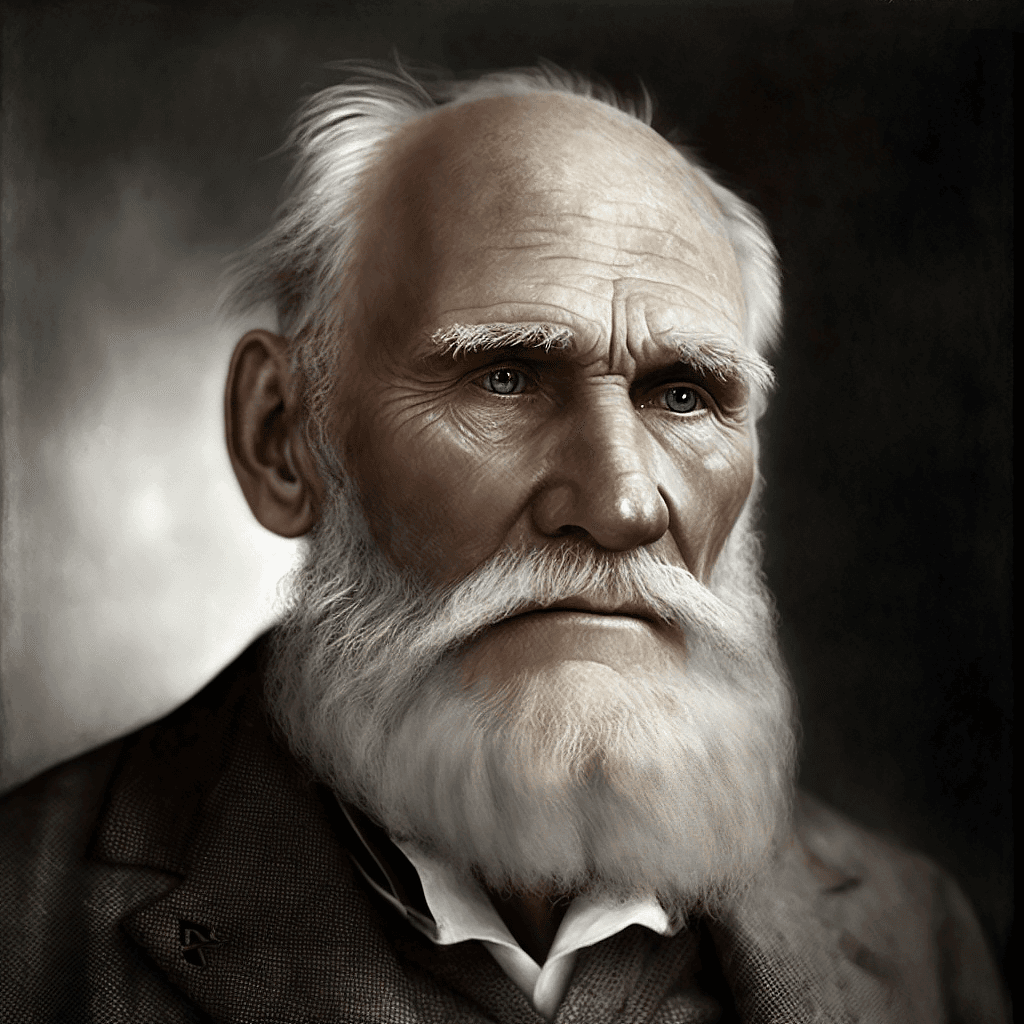
1849–1936
Physiologist • Pioneer of Classical Conditioning
This is a read-only educational profile. Chat, Council Mode, and AI features are not available for historical figures.
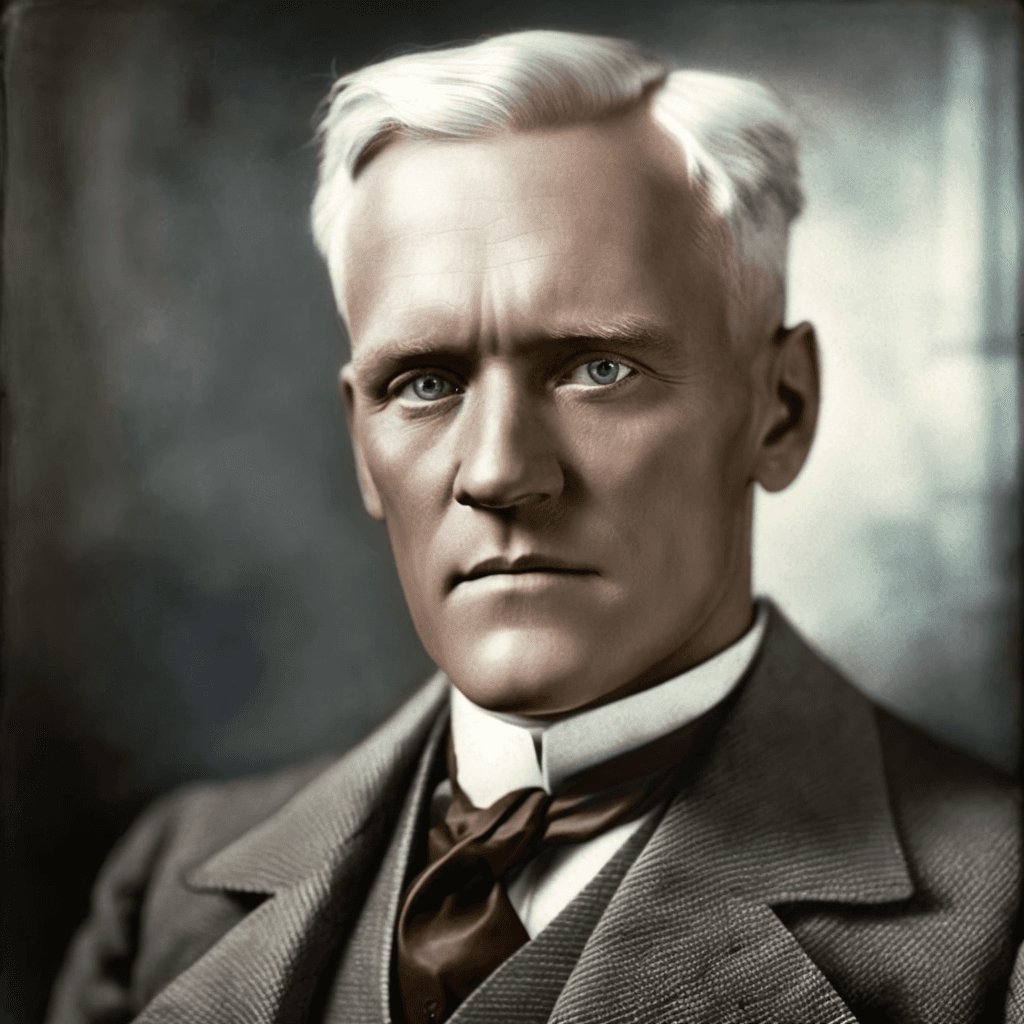
Ivan Petrovich Pavlov was born in 1849 in Ryazan, the son of a village priest who hoped his eldest child might enter the church. Instead Pavlov studied natural sciences at the University of St. Petersburg and medicine at the Imperial Medical Academy, gravitating toward physiology under Carl Ludwig in Leipzig and Rudolf Heidenhain in Breslau. He returned to Russia in 1890 to direct the physiological laboratory at the Institute of Experimental Medicine in St. Petersburg, where he spent decades investigating digestion with surgical precision. His method implanted fistulas in dogs to measure gastric secretions, work that earned the Nobel Prize in Physiology or Medicine in 1904.
While studying salivation Pavlov noticed that dogs drooled before food arrived when they associated lab coats or footsteps with feeding. He termed psychical secretion and systematically paired neutral stimuli—bells, metronomes, lights—with meat powder until the signal alone provoked saliva. His concepts of unconditional and conditional reflexes, reinforcement, extinction, and inhibition supplied a vocabulary for learned behavior that crossed into psychology despite his own reluctance to call himself a psychologist. After the 1917 revolution Soviet authorities initially threatened to exile him as a bourgeois scientist, yet Lenin personally intervened to protect his laboratory, recognizing the prestige his Nobel brought the new state.
Pavlov expanded research to human psychiatry, exploring experimental neuroses in animals and lecturing on typology until his death in 1936. He remained a methodological materialist, insisting that mental phenomena must be traced to observable physiological events. Behaviorists such as John B. Watson and B. F. Skinner adapted his conditioning framework, sometimes simplifying nuances he had carefully measured. Today Pavlov's dogs are cultural shorthand for habit formation, and his work underpins therapies treating phobias, addiction cues, and learning disorders. His career shows how imperial Russian science survived revolution by promising measurable results leaders could display to the world.
Key moments across this figure's life and legacy
1849
Raised in a clerical family before turning to laboratory medicine.
1890
Assumed leadership of the St. Petersburg lab where digestion studies flourished.
1904
Awarded for physiology of digestion, not yet for conditioning work.
1927
Released lectures summarizing decades of conditioning experiments.
1936
Died at eighty-six after supervising research through the early Soviet era.
Landmarks that define this figure's contribution to history
Demonstrated that neutral stimuli paired with rewards elicit learned reflex responses.
Mapped gastric and pancreatic secretions using surgical fistulas, earning the 1904 Nobel Prize.
Induced and studied stress disorders in animals to model psychiatric breakdown.
Classified nervous system strengths and weaknesses to explain individual behavioral differences.
How this figure shaped the world we inherit
Pavlov supplied behavioral science with an experimental language for learning that connected glands and neurons to habits, fears, and therapy. From advertising cues to clinical desensitization, the conditioned reflex remains one of the most cited bridges between physiology and the study of mind.
Explore more profiles from the same era or field
Curated educational resources for further study
Discover historical art and educational content on our media channels