Fall of the Persian Empire
Defeated Darius III and seized the largest empire the Greek world had yet encountered.
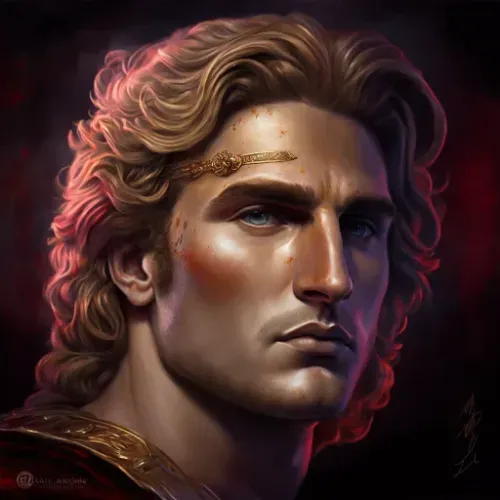
356–323 BC
Conqueror • Strategist • King
Alejandro III de Macedonia fue educado por Aristóteles, inmerso en los ideales homéricos de heroísmo y forjado en la corte marcial de su padre, Filipo II. Cuando Filipo fue asesinado en 336 a.C., el rey de veinte años aseguró el trono de Macedonia y aplastó las rebeliones en Grecia. Luego se volvió hacia el este, lanzando una campaña contra el Imperio Persa que llevaría a sus ejércitos a través de tres continentes.
Las victorias en Granico, Issos y Gaugamela destrozaron el poder persa; Alejandro absorbió la administración persa, se casó con Roxana y adoptó elementos de la realeza oriental para mantener unido su vasto reino. Fundó ciudades—muchas llamadas Alejandría—que se convirtieron en centros de comercio y cultura helenística desde Egipto hasta Asia Central. Sin embargo, las constantes campañas, la intriga en la corte y la tensión de gobernar a pueblos diversos marcaron su reinado como brillante e inestable.
Alejandro murió en Babilonia en 323 a.C., probablemente de fiebre, sin dejar un sucesor claro. Su imperio se fragmentó entre los Diádocos, pero el mundo helenístico que construyeron difundió la lengua, el arte y la ciencia griegas desde el Mediterráneo hasta la India. La vida de Alejandro se convirtió en leyenda—emblema de la ambición juvenil, el genio militar y la paradoja de la conquista que une y destruye en igual medida.
Momentos clave en la vida y el legado de esta figura
356 BC
Raised in the Macedonian court under Philip II and tutored by Aristotle.
336 BC
Succeeded Philip II and secured power against rivals and rebellions.
334 BC
Crossed into Asia Minor, beginning a decade of conquest.
331 BC
Decisive victory over Darius III, opening the heartlands of Persia.
323 BC
Died at age thirty-two; empire divided among his generals.
Hitos que definen la contribución de esta figura a la historia
Defeated Darius III and seized the largest empire the Greek world had yet encountered.
Spread Greek culture, urban planning, and koine Greek across Afro-Eurasia.
Established cities that became centers of learning, including Alexandria in Egypt.
Combined phalanx, cavalry, and adaptive tactics studied for millennia.
Detalles notables sobre esta figura
Cómo esta figura moldeó el mundo que heredamos
Las campañas de Alejandro unieron Oriente y Occidente en una nueva civilización helenística cuya arte, ciencia y filosofía—incluyendo influencias en Roma, el budismo y la posterior erudición islámica—resuenan durante siglos. Simboliza los límites del imperio: la rápida expansión sin instituciones duraderas se desmoronó tras su muerte, pero la fusión cultural que aceleró reconfiguró el mundo antiguo. Las academias militares, la literatura y la retórica política aún invocan a Alejandro al debatir sobre ambición, liderazgo y el precio de la gloria.
Influencia duradera a través de generaciones
Alexander's campaigns linked East and West in a new Hellenistic civilization whose art, science, and philosophy—including influences on Rome, Buddhism, and later Islamic scholarship—echo for centuries. He symbolizes the limits of empire: rapid expansion without durable institutions crumbled after his death, yet the cultural fusion he accelerated reshaped the ancient world. Military academies, literature, and political rhetoric still invoke Alexander when debating ambition, leadership, and the price of glory. Death in Babylon (323 BC) remains a defining moment in Alexander the Great's enduring reputation.
Más perfiles de la misma época o campo
Recursos educativos seleccionados para profundizar
Inicia una conversación privada con Historical Collection AI.