Discovery of Polonium and Radium
Isolated new radioactive elements through years of meticulous laboratory work.
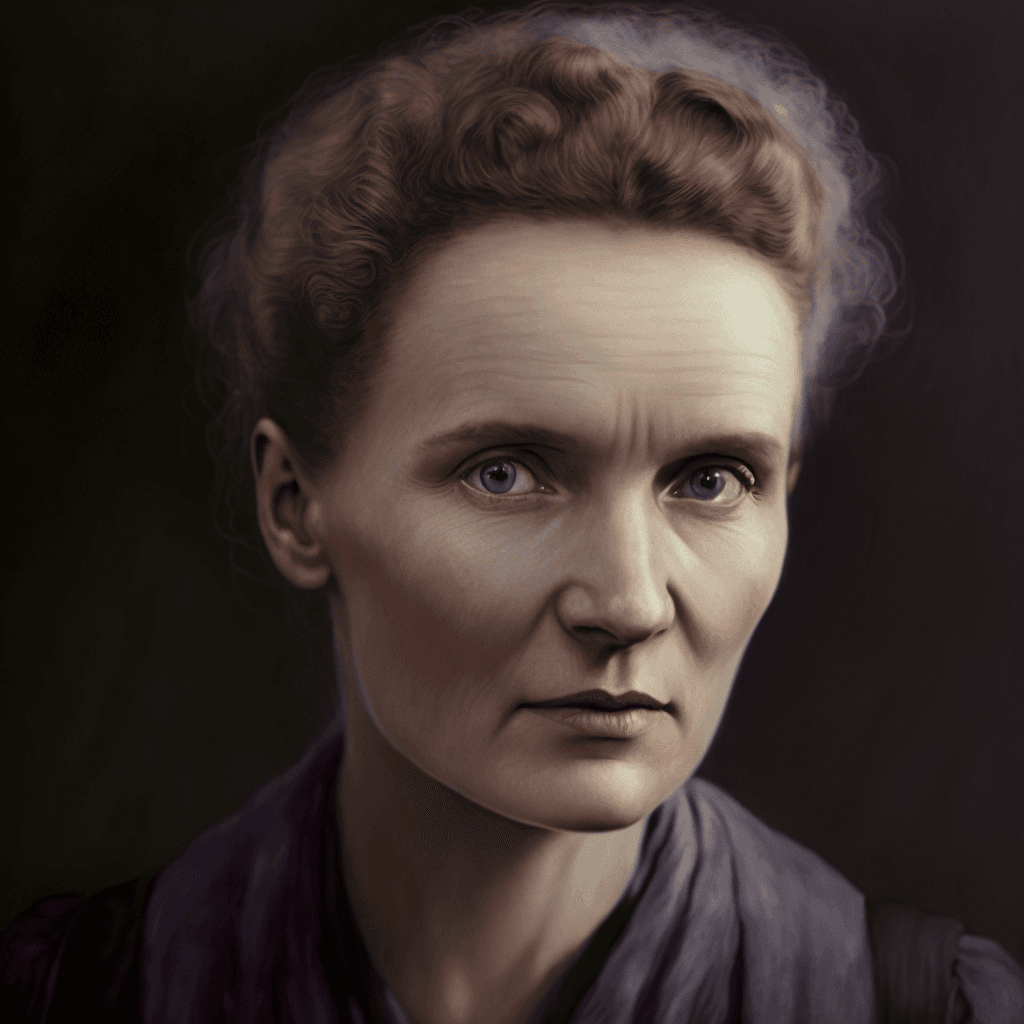
1867–1934
Scientist • Pioneer • Nobel Laureate
Maria Skłodowska est née à Varsovie, dans une Pologne contrôlée par les Russes, où les opportunités académiques pour les femmes étaient limitées. Déterminée à étudier les sciences, elle déménagea à Paris, adopta le nom de Marie et s'inscrivit à la Sorbonne. Là, elle rencontra Pierre Curie, un physicien qui partageait sa passion pour l'expérimentation rigoureuse. Ensemble, ils étudièrent les rayons invisibles émis par l'uranium, un phénomène récemment découvert par Becquerel.
Les Curie ont inventé le terme radioactivité et, grâce à un travail minutieux avec le minerai de pechblende, ont isolé deux nouveaux éléments : le polonium, nommé d'après la patrie de Marie, et le radium. Le prix Nobel de physique de Marie en 1903—partagé avec Pierre et Becquerel—fit d'elle la première femme lauréate du prix Nobel. Après la mort de Pierre en 1906, elle devint la première femme professeur à la Sorbonne et poursuivit des recherches qui lui valurent un second Nobel, en chimie, en 1911.
Pendant la Première Guerre mondiale, Curie organisa des unités mobiles de rayons X—petites Curie—pour aider les chirurgiens à localiser les éclats d'obus chez les soldats blessés. Elle mourut en 1934 d'une anémie aplastique liée à une exposition prolongée aux radiations, avant que les risques pour la santé ne soient pleinement compris. Sa vie allie découverte révolutionnaire, barrières institutionnelles surmontées et service sous le feu, faisant d'elle une icône durable du courage scientifique.
Moments clés de la vie et de l'héritage de cette figure
1867
Raised in an educated Polish family under Russian partition.
1891
Studied at the Sorbonne, earning degrees in physics and mathematics.
1898
Identified new elements while studying uranium rays with Pierre Curie.
1911
Awarded Nobel Prize in Chemistry for isolating radium and studying its properties.
1934
Died from illness linked to radiation; later interred in the Panthéon.
Jalons qui définissent la contribution de cette figure à l'histoire
Isolated new radioactive elements through years of meticulous laboratory work.
Nobel in Physics (1903) and Chemistry (1911)—the first person to win twice.
Advanced understanding of atomic structure and radiation phenomena.
Deployed mobile radiography units that saved countless lives on the battlefield.
Détails notables sur cette figure
Comment cette figure a façonné le monde que nous avons hérité
Marie Curie a ouvert l'ère atomique en montrant que les atomes n'étaient pas indivisibles et stables mais pouvaient émettre de l'énergie et se transformer. Ses prix ont brisé les barrières de genre dans la science, inspirant des générations de chercheuses. Les usages médicaux du radium et plus tard de la physique nucléaire tracent des lignées vers son travail, tandis que son histoire reste un point de référence pour les discussions sur l'éthique, la sécurité et l'équité dans la découverte scientifique.
Influence durable à travers les générations
Marie Curie opened the atomic age by showing that atoms were not indivisible and stable but could emit energy and transform. Her prizes shattered gender barriers in science, inspiring generations of women researchers. Radium's medical uses and later nuclear physics trace lineages to her work, while her story remains a touchstone for discussions of ethics, safety, and equity in scientific discovery. Death in France (1934) remains a defining moment in Marie Curie's enduring reputation.
D'autres profils de la même époque ou du même domaine
Ressources éducatives sélectionnées pour approfondir
Entamez une conversation privée via Historical Collection AI.