Electromagnetic Induction
Discovered in 1831 that changing magnetic fields generate electric current, enabling electric generators.
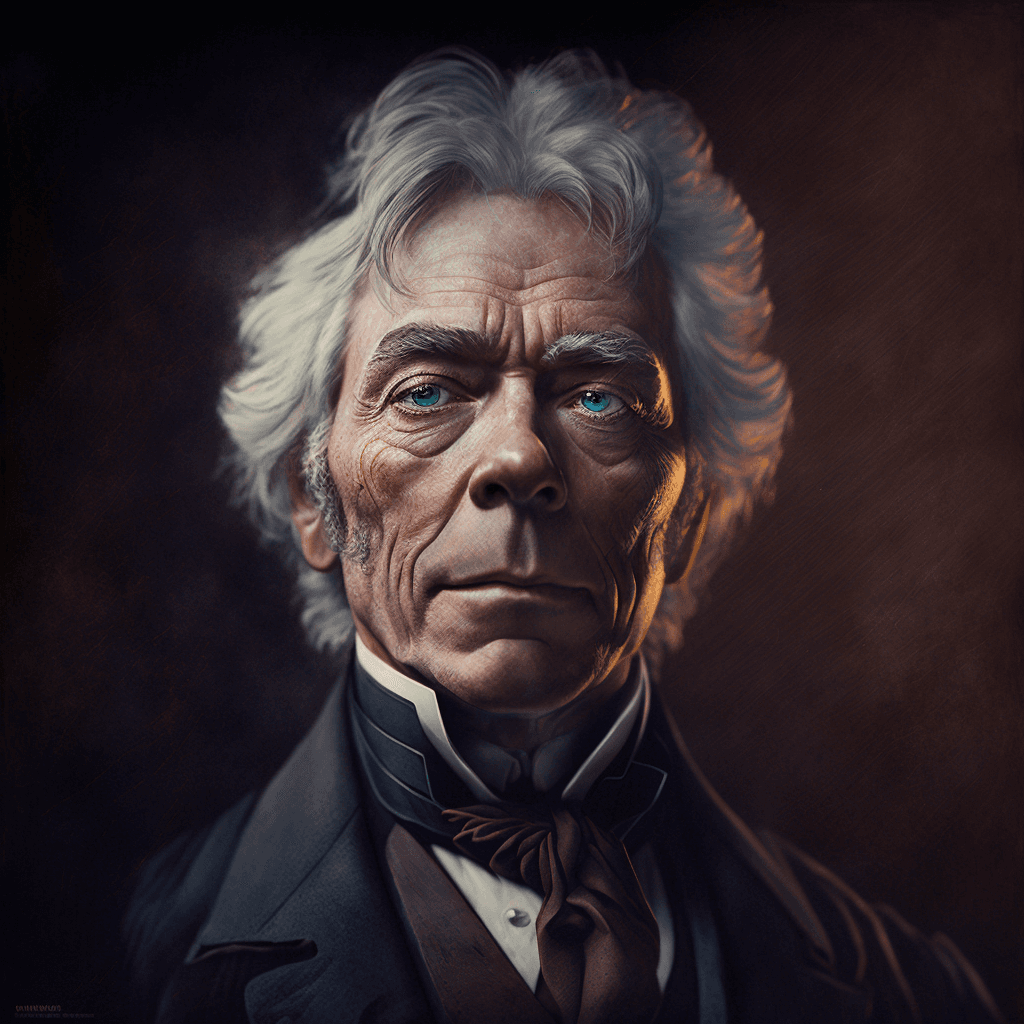
1791–1867
Scientist • Pioneer of Electromagnetism
Michael Faraday was born on 22 September 1791 in Newington Butts, south London, into a poor family of a blacksmith who struggled with ill health. Faraday received little formal schooling and apprenticed to a bookbinder, reading volumes on science that arrived at the shop and attending lectures by Humphry Davy at the Royal Institution. Davy hired him as a laboratory assistant in 1813, and Faraday accompanied the famous chemist on a continental tour, meeting leading researchers while refining experimental technique. Self-taught in mathematics and fluent in the language of experiment, Faraday rose from artisan origins to become superintendent of the Royal Institution's laboratory and one of Britain's most celebrated scientists.
Faraday discovered electromagnetic induction in 1831, showing that a changing magnetic field produces an electric current—the principle behind generators and transformers that power modern civilization. He formulated laws of electrolysis linking chemical reactions to electric current, identified benzene, and developed the concept of the field to describe forces acting through space rather than instantaneous action at a distance. His Christmas lectures for young audiences, delivered with clarity and demonstration, became a British scientific tradition continued into the twenty-first century. Though he declined a knighthood and refused presidency of the Royal Society, preferring research to court honors, his counsel shaped Victorian science policy. He advised lighthouses on optical systems and consulted on environmental pollution near the Thames.
Faraday's religious faith as a Sandemanian Christian informed his humility and suspicion of speculative theory unsupported by experiment. He died on 25 August 1867 at Hampton Court, where Queen Victoria had granted him a grace-and-favor residence. James Clerk Maxwell later mathematized Faraday's field concepts into equations that unified electricity, magnetism, and light. Engineers from Edison to Tesla built on induction principles Faraday demonstrated in copper coils and magnets; chemists applied his electrolysis laws to industrial processes from aluminum refining to electroplating. Historians emphasize that Faraday's rise from bookbinder to scientific authority embodied Victorian meritocracy while exposing its limits—he never held a university chair. His notebooks, preserved at the Royal Institution, remain models of careful observation, and his name attaches to the farad unit of capacitance and countless lecture halls worldwide.
1791 — Born in London. Born into a working-class family in south London with minimal formal education.
1813 — Joined Royal Institution. Became laboratory assistant to Humphry Davy and began his scientific career.
1831 — Electromagnetic Induction. Demonstrated that changing magnetism produces electricity, founding electrical engineering.
1836 — Faraday Cage. Showed that conductive enclosures block external electric fields, a principle used in shielding.
1867 — Death at Hampton Court. Died after decades of experiment and public teaching at the Royal Institution.
Key moments across this figure's life and legacy
1791
Born into a working-class family in south London with minimal formal education.
1813
Became laboratory assistant to Humphry Davy and began his scientific career.
1831
Demonstrated that changing magnetism produces electricity, founding electrical engineering.
1836
Showed that conductive enclosures block external electric fields, a principle used in shielding.
1867
Died after decades of experiment and public teaching at the Royal Institution.
Landmarks that define this figure's contribution to history
Discovered in 1831 that changing magnetic fields generate electric current, enabling electric generators.
Established quantitative relationships between electric current and chemical decomposition in electrolysis.
Developed the idea of force fields that influenced Maxwell's equations and modern physics.
Pioneered public science education through demonstrations that reached generations of students.
Notable details about this historical figure
How this figure shaped the world we inherit
Faraday's experiments linked electricity, magnetism, and chemistry in ways that made electric power, telecommunications, and industrial electrochemistry possible. Maxwell's mathematization of his field ideas unified classical electromagnetism, and Faraday's public lectures established standards for communicating science beyond elite universities, influencing how generations understood the material world.
Enduring influence across generations
Faraday's experiments linked electricity, magnetism, and chemistry in ways that made electric power, telecommunications, and industrial electrochemistry possible. Maxwell's mathematization of his field ideas unified classical electromagnetism, and Faraday's public lectures established standards for communicating science beyond elite universities, influencing how generations understood the material world. Death at Hampton Court (1867) remains a defining moment in Michael Faraday's enduring reputation.
Explore more profiles from the same era or field
Curated educational resources for further study
Start a private conversation and explore their wisdom through Historical Collection AI.