Statue of David
The seventeen-foot marble figure became the emblem of Florentine republicanism and Renaissance anatomical idealism.
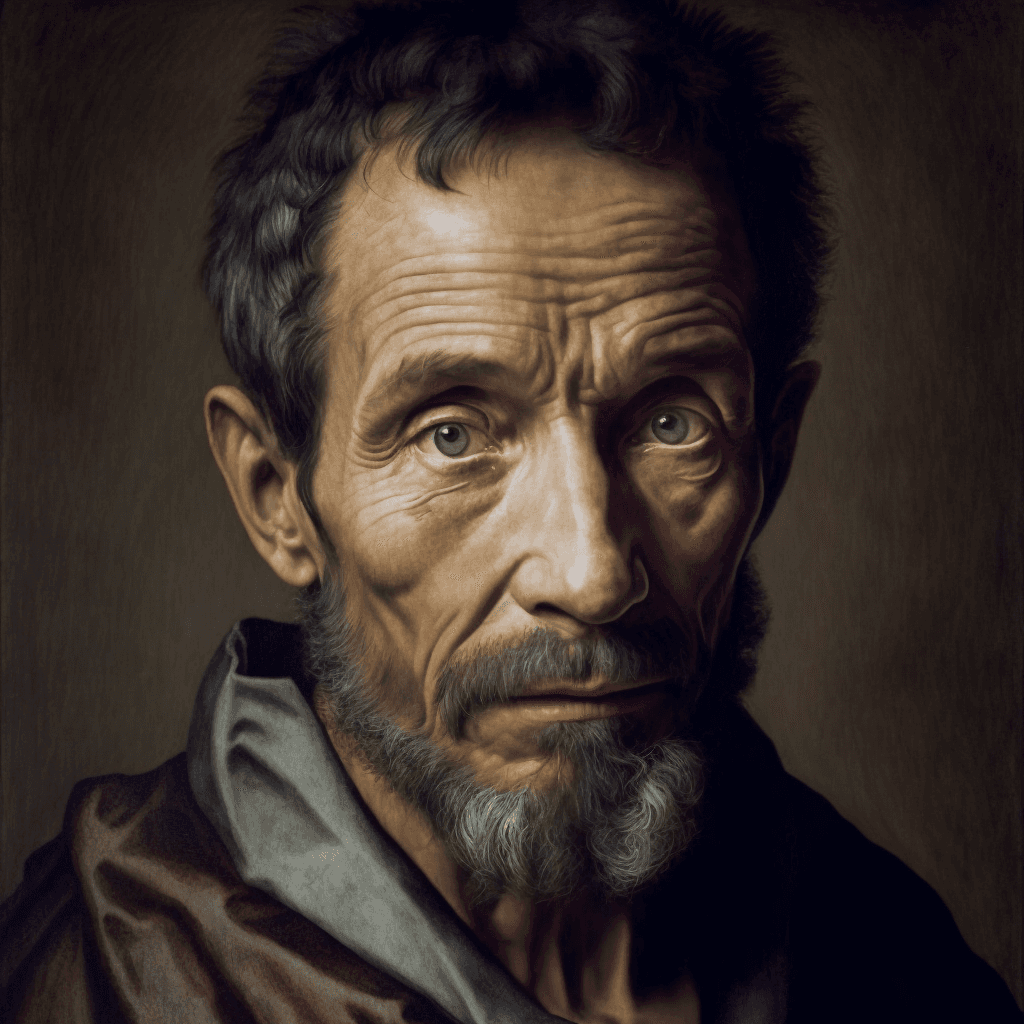
1475–1564
Sculptor • Painter • Renaissance Master
Michelangelo Buonarroti was born in 1475 in Caprese, Tuscany, and apprenticed in Florence under Domenico Ghirlandaio before studying classical sculpture in the Medici garden. Patronage from Lorenzo de' Medici placed him among humanist scholars early. He traveled to Rome in his twenties and carved the Pietà for St. Peter's Basilica, displaying technical mastery that belied his age.
Returning to Florence, he created the colossal David (1501–04) from a flawed marble block, symbolizing republican virtue. Pope Julius II summoned him back to Rome, where from 1508 to 1512 he painted the Sistine Chapel ceiling—Creation, prophets, and sibyls in a revolutionary architectural illusion. Later he completed The Last Judgment on the chapel altar wall and served as chief architect of St. Peter's, refining Bramante's plan for the basilica dome.
Michelangelo also wrote sonnets, designed the Medici Chapel tombs in Florence, and worked until his death in 1564 at nearly eighty-nine. Competitive, devout, and fiercely independent, he redefined what a single artist could accomplish across sculpture, painting, architecture, and poetry.
1475 — Birth in Caprese. Michelangelo was born while his father served as magistrate; the family soon returned to Florence.
1498 — Roman Pietà. Commissioned by a French cardinal, the sculpture was installed in St. Peter's and won immediate acclaim.
1504 — David Unveiled. The statue was placed outside Florence's Palazzo Vecchio as a symbol of civic readiness against larger powers.
1512 — Sistine Ceiling Completed. After four years on scaffolding, Michelangelo finished frescoes that drew pilgrims and artists from across Europe.
1564 — Death in Rome. He died in Rome and was buried in Florence's Santa Croce, mourned as il divino—the divine one.
Key moments across this figure's life and legacy
1475
Michelangelo was born while his father served as magistrate; the family soon returned to Florence.
1498
Commissioned by a French cardinal, the sculpture was installed in St. Peter's and won immediate acclaim.
1504
The statue was placed outside Florence's Palazzo Vecchio as a symbol of civic readiness against larger powers.
1512
After four years on scaffolding, Michelangelo finished frescoes that drew pilgrims and artists from across Europe.
1564
He died in Rome and was buried in Florence's Santa Croce, mourned as il divino—the divine one.
Landmarks that define this figure's contribution to history
The seventeen-foot marble figure became the emblem of Florentine republicanism and Renaissance anatomical idealism.
Michelangelo frescoed Genesis scenes and prophets on a curved vault, transforming Western religious art and ceiling composition.
Carved before age thirty, his Vatican Pietà balanced naturalistic grief with classical harmony and signed boldly across Mary's sash.
As chief architect, he refined the basilica's crossing dome, a landmark of Renaissance engineering visible across Rome.
Notable details about this historical figure
How this figure shaped the world we inherit
Michelangelo set a standard for artistic genius that merged physical labor with intellectual ambition. His works became benchmarks for anatomy, composition, and sacred imagery, influencing Baroque masters and modern ideas of the artist as heroic individual creator.
Enduring influence across generations
Michelangelo set a standard for artistic genius that merged physical labor with intellectual ambition. His works became benchmarks for anatomy, composition, and sacred imagery, influencing Baroque masters and modern ideas of the artist as heroic individual creator. Death in Rome (1564) remains a defining moment in Michelangelo's enduring reputation.
Explore more profiles from the same era or field
Curated educational resources for further study
Start a private conversation and explore their wisdom through Historical Collection AI.