Turing Machine Concept
Defined a formal model of computation that underpins theoretical computer science.
Discover
Explore influential historical figures from science, philosophy, leadership, art, and culture.
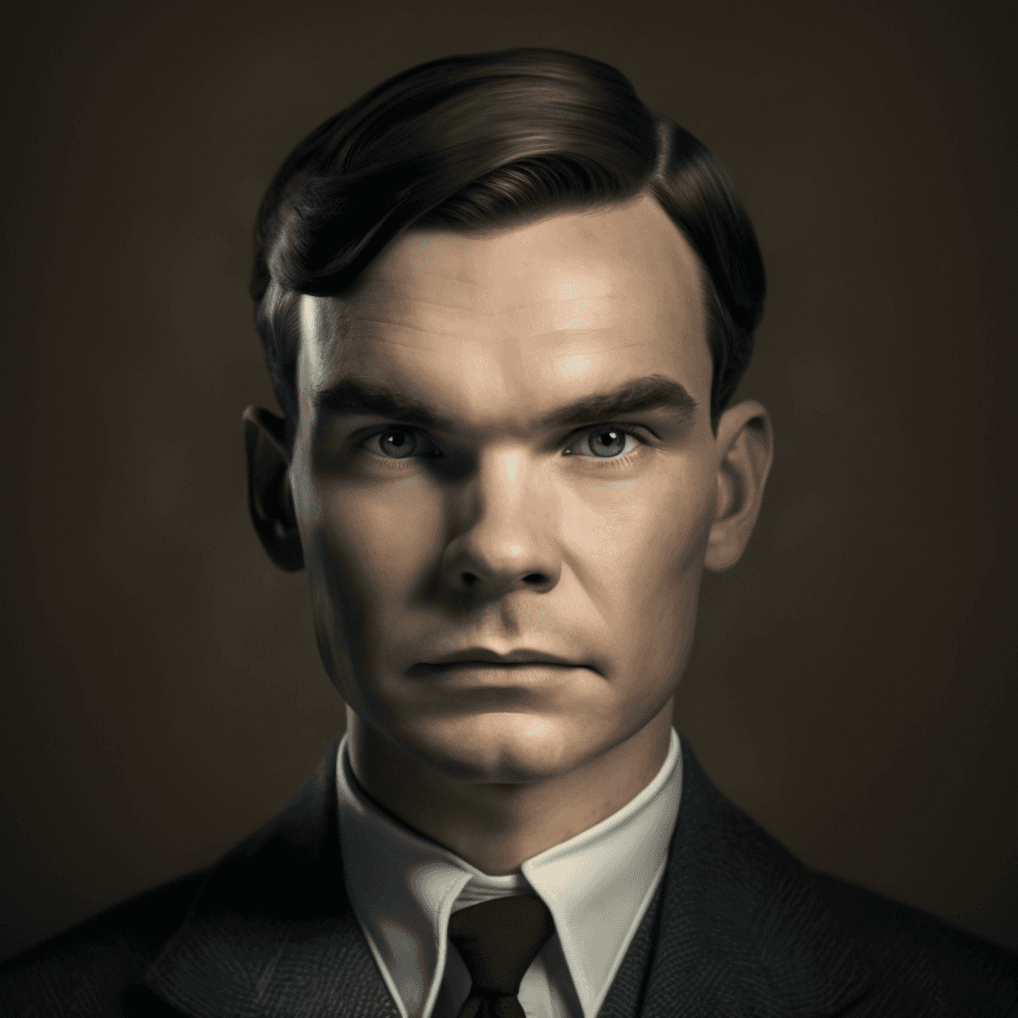
1912-1954
Computer Scientist - Logician - Codebreaker
This is a read-only educational profile. Chat, Council Mode, and AI features are not available for historical figures.
Alan Turing was born in London and studied mathematics at Cambridge and Princeton, where he developed a reputation for unusual originality and rigor. In 1936 he published his landmark paper on computable numbers, introducing the abstract machine now known as the Turing machine. That concept provided a precise model of algorithmic procedure and helped define the limits of mechanical computation.
During the Second World War, Turing worked at Bletchley Park on German naval Enigma traffic, contributing decisively to Allied codebreaking operations. He helped design and refine electromechanical methods, including the bombe, that accelerated key recovery and enabled large-scale intelligence exploitation. His wartime work remained classified for decades, but historians now regard it as one of the crucial scientific contributions to Allied victory.
After the war, Turing pursued machine intelligence, software design, and mathematical biology, proposing what became known as the Turing Test in 1950. He also advanced early computer architecture ideas in Britain at a time when programmable electronic computing was still experimental. Prosecuted for homosexuality in 1952 under discriminatory laws, he died in 1954, and later became a global symbol of scientific brilliance, ethical remembrance, and LGBTQ+ justice.
Key moments across this figure's life and legacy
1912
Born in Maida Vale and raised partly in England and India during childhood.
1936
Published a formal theory of computation and the universal machine idea.
1939-1945
Worked on cryptanalysis against German encrypted communications.
1950
Published 'Computing Machinery and Intelligence' with the imitation game proposal.
1954
Died at age forty-one after years of pioneering scientific work.
Landmarks that define this figure's contribution to history
Defined a formal model of computation that underpins theoretical computer science.
Helped lead cryptanalytic breakthroughs at Bletchley Park during World War II.
Framed an influential criterion for discussing machine intelligence and AI.
Contributed to postwar programmable computing projects and software methods.
How this figure shaped the world we inherit
Turing transformed abstract logic into the conceptual framework of digital civilization. His ideas shaped programming, complexity theory, cybersecurity, and AI, while his wartime cryptanalysis altered the strategic course of the twentieth century. Today, from smartphones to supercomputers, modern computing traces a direct intellectual lineage to his work, and his life also stands as a reminder that societies can both depend on genius and fail to protect the people who create it.
Explore more profiles from the same era or field
Curated educational resources for further study
Discover historical art and educational content on our media channels