The World as Will and Representation
Articulated a comprehensive metaphysics identifying blind will as the inner nature of reality.
Discover
Explore influential historical figures from science, philosophy, leadership, art, and culture.
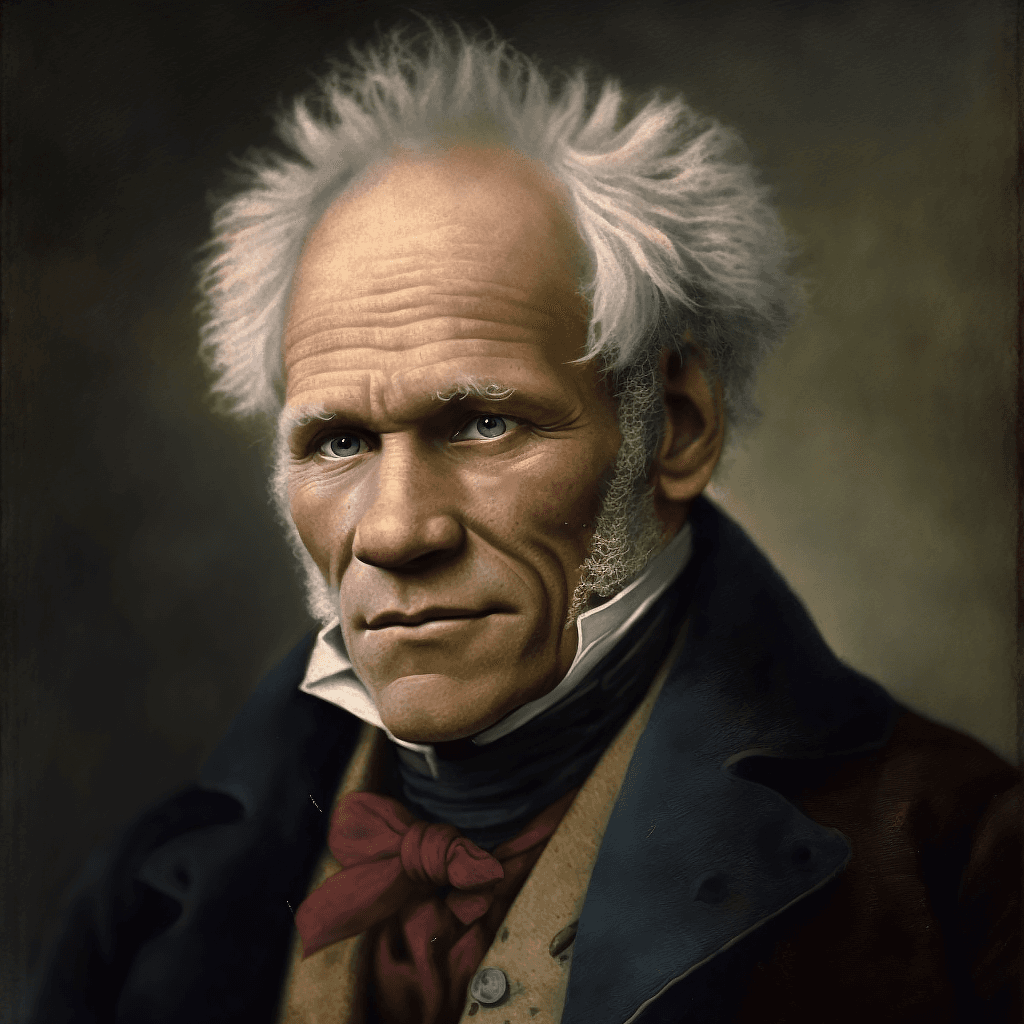
1788–1860
Philosopher • Thinker • Metaphysician
This is a read-only educational profile. Chat, Council Mode, and AI features are not available for historical figures.
Arthur Schopenhauer was born on 22 February 1788 in Danzig, then a free city within the complex political geography of Prussia and Poland, to a prosperous merchant family whose wealth afforded cosmopolitan education. His father Heinrich, a vigorous trader, arranged for young Arthur to apprentice in commerce; when Heinrich died in 1805, apparently by suicide or accident from a canal warehouse, Arthur's mother Johanna moved to Weimar and established a literary salon frequented by Goethe and the German Romantic circle. Arthur developed an uneasy relationship with Johanna, whose social success and later memoir offended him; their correspondence reveals mutual irritation that biographers treat as formative for his pessimism about domestic affection. He studied medicine and philosophy at the universities of Göttingen and Berlin, encountering Kant, Plato, and post-Kantian idealists while also reading Hindu Upanishads and Buddhist ideas in translation through Friedrich Majer's surveys. Schopenhauer received his doctorate in 1813 from the University of Jena with On the Fourfold Root of the Principle of Sufficient Reason, a work clarifying epistemological foundations he would extend in his major system. Napoleonic wars disrupted European travel and commerce, shaping his suspicion of historical progress narratives and patriotic enthusiasms he considered delusions of the will. Physically he was short, vain, and famously irritable; anecdotes of throwing a landlady down stairs and lawsuits over noise illustrate a temperament as combative as his prose. Yet his discipline was monastic: hours at desk, flute practice, poodle companions named Atma in homage to Indian philosophy, and rigid daily routines in Frankfurt am Main after 1833. Early lectures at Berlin failed to draw crowds competing with Hegel's celebrity, a humiliation that hardened his lifelong contempt for academic philosophy's institutional fashions.
Schopenhauer's masterwork, The World as Will and Representation, published in 1818 with an expanded second edition in 1844, proposed that behind phenomenal appearance lies a blind, striving will that perpetuates suffering across all living things. Individual consciousness, aesthetic contemplation, and ascetic denial offer temporary relief but cannot abolish the will's restless nature; pleasure is merely absence of pain in his famously pessimistic calculus. He read Hindu and Buddhist philosophy in translation and integrated ideas of desire, karma, and liberation into a European framework decades before comparative religion became common in universities. Music held special status in his aesthetics as direct expression of will without conceptual mediation, influencing Richard Wagner's early theoretical writings and later opera concepts. Schopenhauer extended Kant's thing-in-itself, identifying it with will rather than unknowable noumenon, thereby offering a unified metaphysics that rejected Hegelian rational optimism. Essays on freedom of the will, foundation of morality, and sexual impulse applied his system to ethics and psychology, arguing against compassion-free rationalism and for moral recognition of suffering in others. For years he lived in relative obscurity, supported by inherited capital, publishing in obscure journals while compiling aphorisms later collected in Parerga and Paralipomena. Translation of Eastern texts in European book markets provided vocabulary—maya, renunciation—that Schopenhauer adapted without systematic Sanskrit training, a limitation critics note yet contemporaries found exhilarating. His prose—sharp, aphoristic, often misanthropic—offered an alternative to Hegel's dense systematic idealism, appealing to readers impatient with academic jargon.
Recognition arrived late; in the 1850s essays on will, sexuality, and suffering gained readers among artists and critics disillusioned with optimistic Hegelian progress after revolutions failed and wars continued. Schopenhauer died on 21 September 1860 in Frankfurt, but influence expanded posthumously through Wagner, Friedrich Nietzsche, Thomas Mann, Leo Tolstoy, and later existential and psychoanalytic thinkers. Nietzsche initially admired then rebelled against Schopenhauer's pessimism, yet retained concepts of will and illusion; Freud acknowledged indirect debts while disputing direct lineage. Visual artists found in his aesthetics justification for art as temporary escape from willing; Symbolists and Decadents cited him in manifestos. Twentieth-century philosophers debated whether his metaphysics was literal or metaphorical psychology ahead of its time. Schopenhauer's comparative philosophy helped open European thought to non-Western metaphysics, however imperfectly understood by contemporary standards. Modern animal ethics movements occasionally cite his extension of compassion beyond humans, though his personal conduct did not always match ethical ideals. Academic courses now pair him with Kant and Nietzsche as a bridge figure in nineteenth-century German thought. His metaphysics of will provided vocabulary for discussing unconscious drives, aesthetic escape, and the limits of happiness in modern philosophy. Schopenhauer remains a hidden architect of cultural introspection: the philosopher who insisted that life swings on a pendulum between pain and boredom, and that redemption, if any, lies in art and renunciation rather than progress. Musicologists trace Wagner's shift from Schopenhauerian renunciation to heroic will in Ring cycle as evidence of philosophical influence even when composers rejected pessimism. Modern psychology courses cite his metaphors of will when discussing motivation, habit, and unconscious preference. Libraries in Frankfurt preserve his annotated book collection, showing breadth of reading from Hindu texts to Hume and Spinoza. Bookstores still sell pocket editions of his aphorisms to readers seeking blunt counsel on happiness and social pretense.
Key moments across this figure's life and legacy
1788
Born in a merchant family in Danzig, later moving to Hamburg and Weimar.
1813
Earned a doctorate with a treatise on the principle of sufficient reason.
1818
Released the first edition of his major philosophical work in Dresden.
1833
Moved to Frankfurt am Main, where he lived in relative isolation while writing.
1860
Died in Frankfurt; posthumous fame grew rapidly among artists and philosophers.
Landmarks that define this figure's contribution to history
Articulated a comprehensive metaphysics identifying blind will as the inner nature of reality.
Developed a pessimistic reading of Kant's thing-in-itself, linking it to ceaseless striving.
Introduced Indian philosophical themes into German thought before widespread academic study of Asian traditions.
Published accessible collections on ethics, art, and human nature that reached broader audiences than his system.
How this figure shaped the world we inherit
Schopenhauer redirected German philosophy from triumphant rationalism toward questions of suffering, desire, and unconscious motivation. His reading of Asian texts helped open European thought to non-Western metaphysics, while artists found in his aesthetics a defense of music and art as temporary suspension of will. Nietzsche, Freud, and twentieth-century existential writers all engaged his pessimism, whether to extend or overturn it, making Schopenhauer a hidden architect of modern cultural introspection.
Explore more profiles from the same era or field
Curated educational resources for further study
Discover historical art and educational content on our media channels