Critique of Anthropomorphic Polytheism
Argued that humans project their own forms onto gods, undermining traditional Greek mythology's moral authority.
Discover
Explore influential historical figures from science, philosophy, leadership, art, and culture.
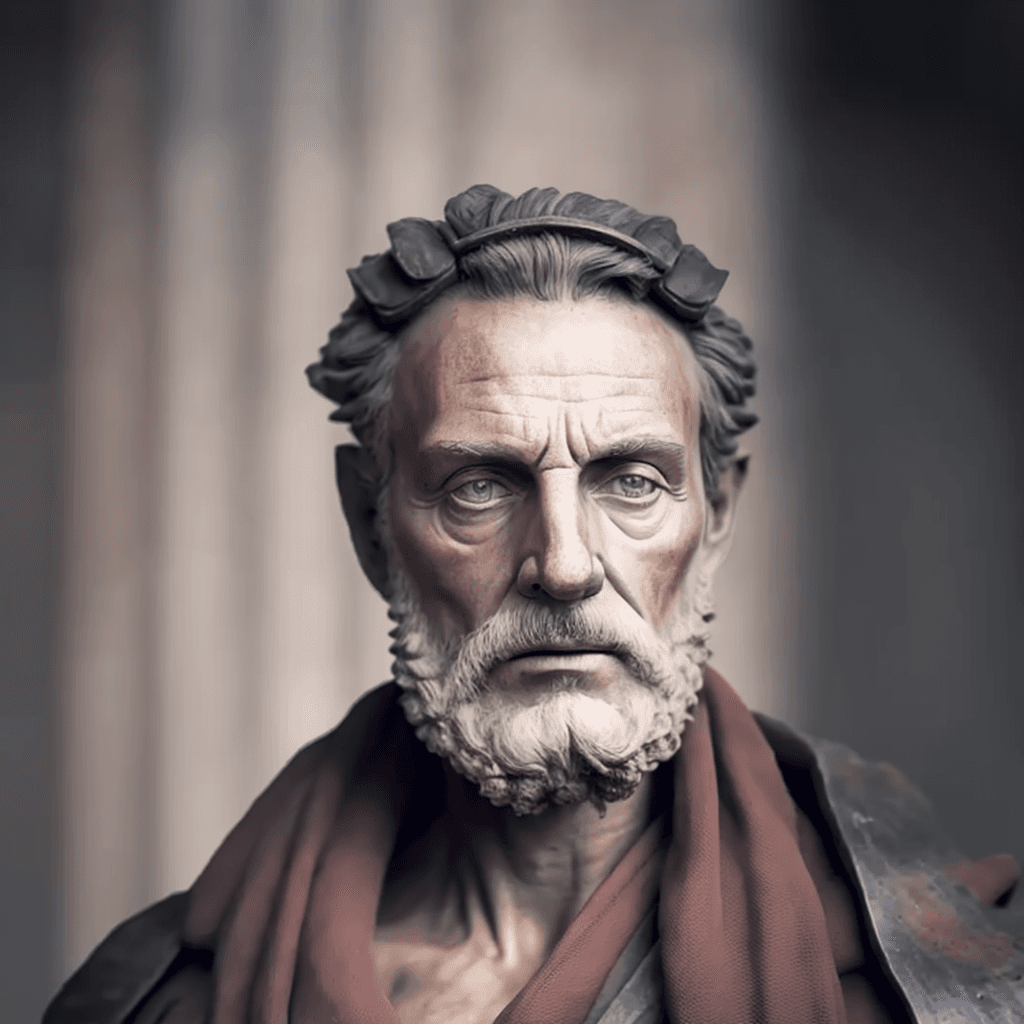
c. 570–478 BC
Philosopher • Poet • Critical Thinker
This is a read-only educational profile. Chat, Council Mode, and AI features are not available for historical figures.
Born around 570 BCE in Colophon, Ionia, Xenophanes left his city after Persian conquest and spent much of his long life as a traveling poet-philosopher in Greek colonies of Sicily and southern Italy. He recited elegies at symposia, criticizing Homer and Hesiod for attributing theft and adultery to the gods and arguing that if cattle could paint, they would depict gods as cattle.
Xenophanes proposed a single supreme god unlike mortals in body or mind—'all eye, all mind, all ear'—who moves all things by thought alone. This theological critique anticipated later philosophical monotheism and scientific naturalism. He also observed fossilized shells inland and inferred that land once lay under sea, offering an early geological insight.
Though none of his works survive complete, fragments quoted by later authors reveal a thinker who bridged poetry and philosophy. He influenced the Eleatic school, especially Parmenides, and his attacks on divine anthropomorphism resonated through Socrates, Plato, and the Western tradition of rational religion.
Key moments across this figure's life and legacy
c. 570 BCE
Grew up in Ionia during the flourishing of Pre-Socratic inquiry before Persian expansion disrupted the region.
c. 540 BCE
Left Colophon after Persian takeover, performing poetry in Greek cities of Sicily and Magna Graecia.
c. 500 BCE
Wrote satirical elegies and hymns proposing a unified, non-human god governing by mind alone.
c. 480 BCE
Noted marine fossils inland, inferring geological change—a rare empirical insight in early Greek thought.
c. 478 BCE
Tradition places his long life at roughly a century; fragments preserved by Simplicius and others ensured his posthumous influence.
Landmarks that define this figure's contribution to history
Argued that humans project their own forms onto gods, undermining traditional Greek mythology's moral authority.
Described a single greatest god unlike mortals, moving the divine toward abstract unity and moral perfection.
Interpreted fossil impressions of seaweed and fish as evidence that land was once submerged, anticipating paleontology.
His rational method and emphasis on unity influenced Parmenides and the development of metaphysics.
How this figure shaped the world we inherit
Xenophanes opened the path from mythic storytelling to critical theology and natural explanation. His insistence that knowledge grows through inquiry rather than tradition influenced the birth of Western philosophy and continues to inform debates about religion, science, and the limits of human projection in describing the divine.
Explore more profiles from the same era or field
Curated educational resources for further study
Discover historical art and educational content on our media channels