Practical Electric Lighting
Developed durable lamps and integrated systems for urban electrification.
Discover
Explore influential historical figures from science, philosophy, leadership, art, and culture.
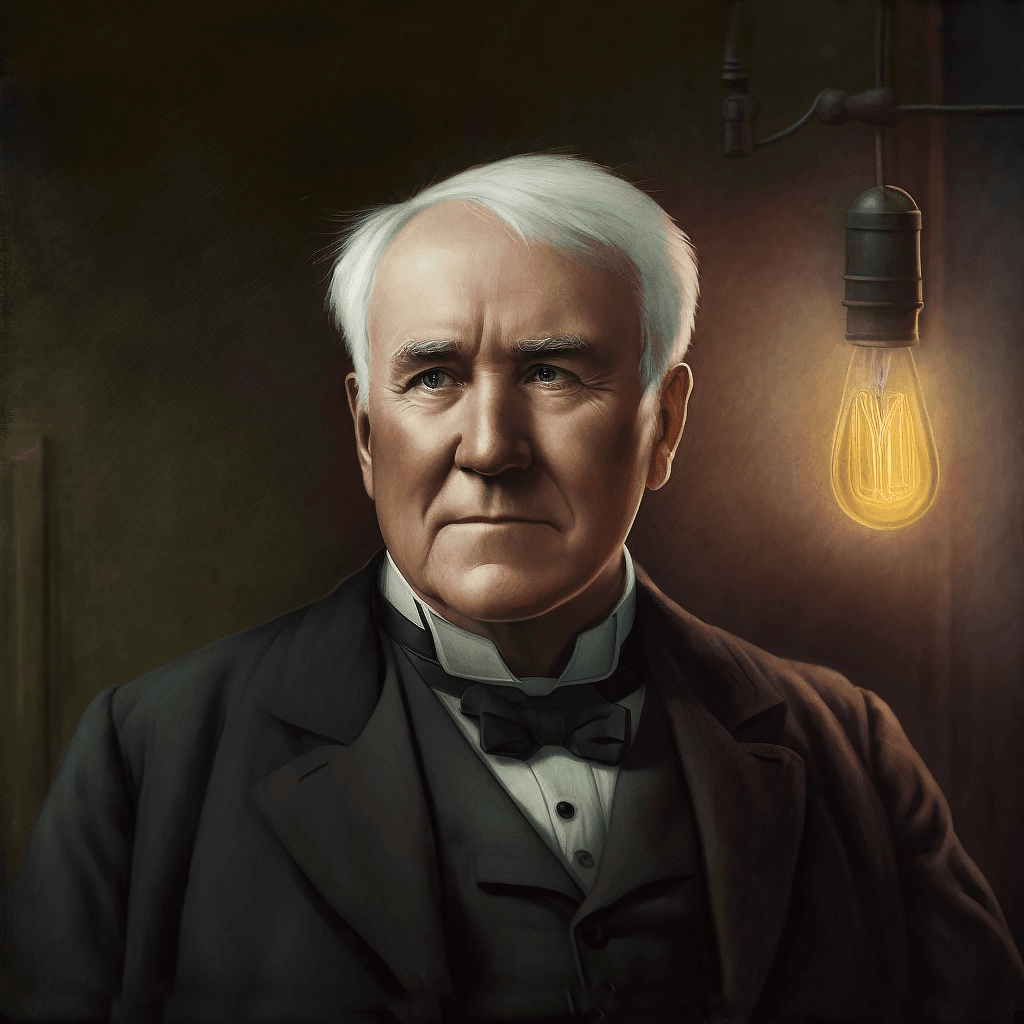
1847-1931
Inventor - Entrepreneur - Systems Builder
This is a read-only educational profile. Chat, Council Mode, and AI features are not available for historical figures.
Thomas Alva Edison was born in Ohio and worked as a telegraph operator before entering full-time invention and business. His early patents in telegraphy and sound recording gave him capital and visibility in a rapidly industrializing United States. Edison combined laboratory experimentation with commercialization in ways that helped define modern R&D enterprise.
At Menlo Park and later West Orange, he led teams developing practical systems rather than isolated devices, including electric lighting, power distribution, and improved phonographs. The incandescent lamp did not emerge in isolation: Edison pursued standards for sockets, generators, meters, and urban infrastructure. His approach linked engineering design, manufacturing scale, patent strategy, and market deployment.
Though not every claim associated with Edison was singularly his, his labs demonstrated a new model of coordinated technological innovation. He also played a major role in early motion picture equipment and electrical industry growth. Edison remains an emblem of invention culture, productivity, and the tensions between individual genius narratives and collaborative technological labor.
Key moments across this figure's life and legacy
1847
Raised in Michigan and entered technical work at a young age.
1877
Demonstrated a machine capable of capturing and reproducing speech.
1879
Achieved long-duration filament performance in practical prototypes.
1882
Opened one of the first central electric power stations in New York.
1931
Died after amassing over one thousand U.S. patents.
Landmarks that define this figure's contribution to history
Developed durable lamps and integrated systems for urban electrification.
Created one of the first practical devices for recording and replaying sound.
Pioneered team-based invention processes in dedicated R&D facilities.
Contributed to early camera and viewing systems in the film industry.
How this figure shaped the world we inherit
Edison helped make invention an industrial process linked to infrastructure, investment, and mass adoption. Electrification transformed urban life, manufacturing, communication, and leisure, while his laboratory model influenced twentieth-century corporate research culture. His legacy captures both the creative potential and competitive intensity of technological modernity.
Explore more profiles from the same era or field
Curated educational resources for further study
Discover historical art and educational content on our media channels