Satyagraha Doctrine
Developed a philosophy of nonviolent resistance grounded in truth and discipline.
Discover
Explore influential historical figures from science, philosophy, leadership, art, and culture.
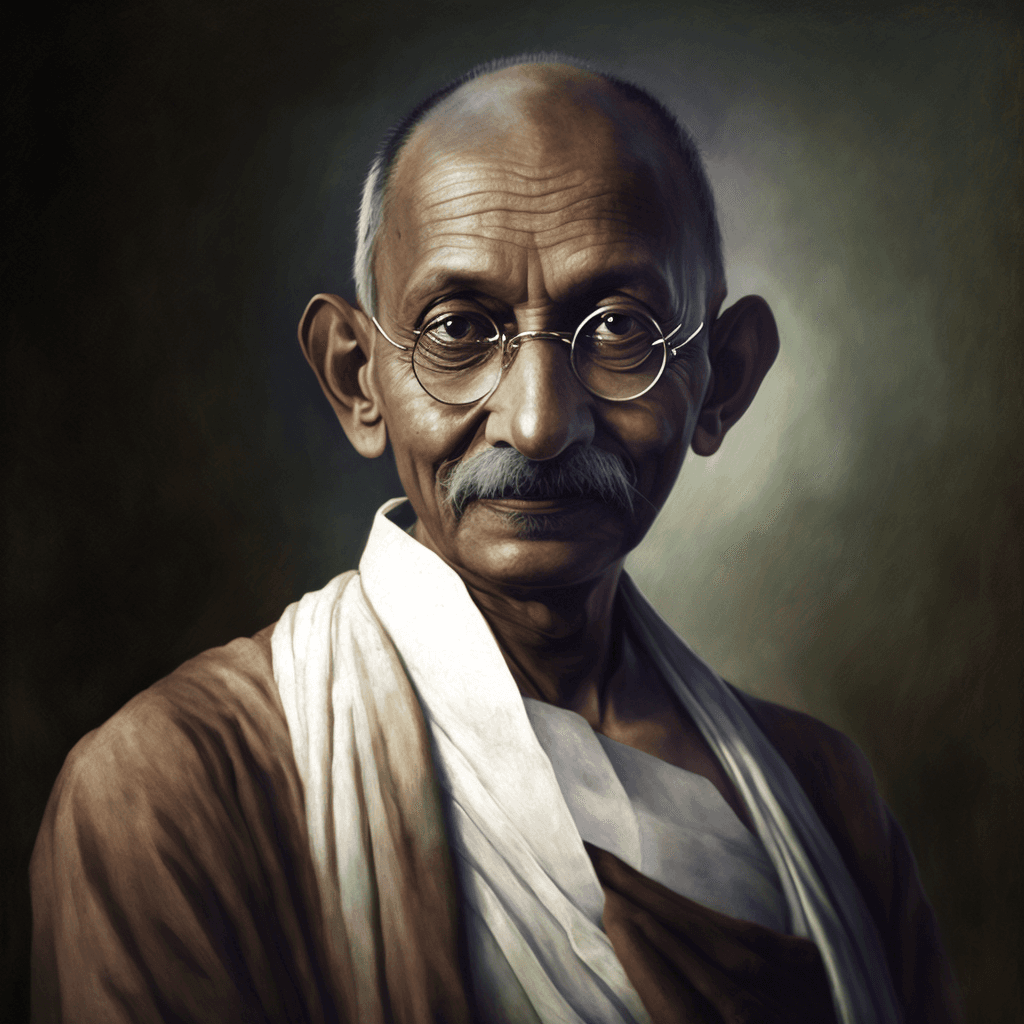
1869-1948
Activist - Moral Leader - Strategist of Nonviolence
This is a read-only educational profile. Chat, Council Mode, and AI features are not available for historical figures.
Mohandas Karamchand Gandhi was born in Porbandar, studied law in London, and first developed his political methods in South Africa while confronting racial discrimination. There he organized Indian communities through disciplined civil resistance and began articulating satyagraha, a philosophy of truth-force grounded in nonviolence and moral accountability. His approach fused spiritual practice with practical political strategy.
Returning to India in 1915, Gandhi became central to anti-colonial mobilization through campaigns including non-cooperation, the Salt March, and civil disobedience. He sought to broaden political participation across class, religion, and caste while advocating self-rule, local industry, and social reform. Though frequently imprisoned, his methods drew global attention and challenged imperial legitimacy.
India gained independence in 1947 amid partition violence that deeply distressed Gandhi, who spent his final months working for communal peace. Assassinated in 1948, he left a global legacy influencing Martin Luther King Jr., Nelson Mandela, and many later movements. Gandhi remains a crucial figure in debates over ethics, power, and nonviolent political action.
Key moments across this figure's life and legacy
1869
Born in western India in a merchant-caste family.
1893
Begins legal work and political organizing against racial discrimination.
1915
Assumes growing leadership in anti-colonial movements.
1930
Leads civil disobedience campaign against salt taxes and imperial law.
1948
Killed months after independence while advocating interreligious peace.
Landmarks that define this figure's contribution to history
Developed a philosophy of nonviolent resistance grounded in truth and discipline.
Led a symbolic mass protest that challenged British colonial authority.
Helped transform anti-colonial nationalism into a broad-based popular movement.
Inspired civil rights and liberation leaders across the twentieth century.
How this figure shaped the world we inherit
Gandhi reoriented modern political struggle by showing that organized nonviolence could challenge entrenched imperial power at scale. His methods provided practical repertoires for civil resistance movements and reframed leadership as moral performance as well as institutional strategy. Even where his social and economic views remain contested, his influence on global ethics of protest is unparalleled.
Explore more profiles from the same era or field
Curated educational resources for further study
Discover historical art and educational content on our media channels